Hi, everybody. Dr. Cobb back with you. Hope you’re having a great week like I always say. Today we’re going to talk about hanging out for Healthy shoulders.
I want to go a little deeper into some of the exercise stuff that we teach, and again, what I’m going to talk about today is actually kind of an old school remedy for chronically bad shoulders. There’s a lot of stuff that goes into this but it’s incredibly simple, it’s easy to teach, and amazingly effective for a lot of people with chronic shoulder deficits.
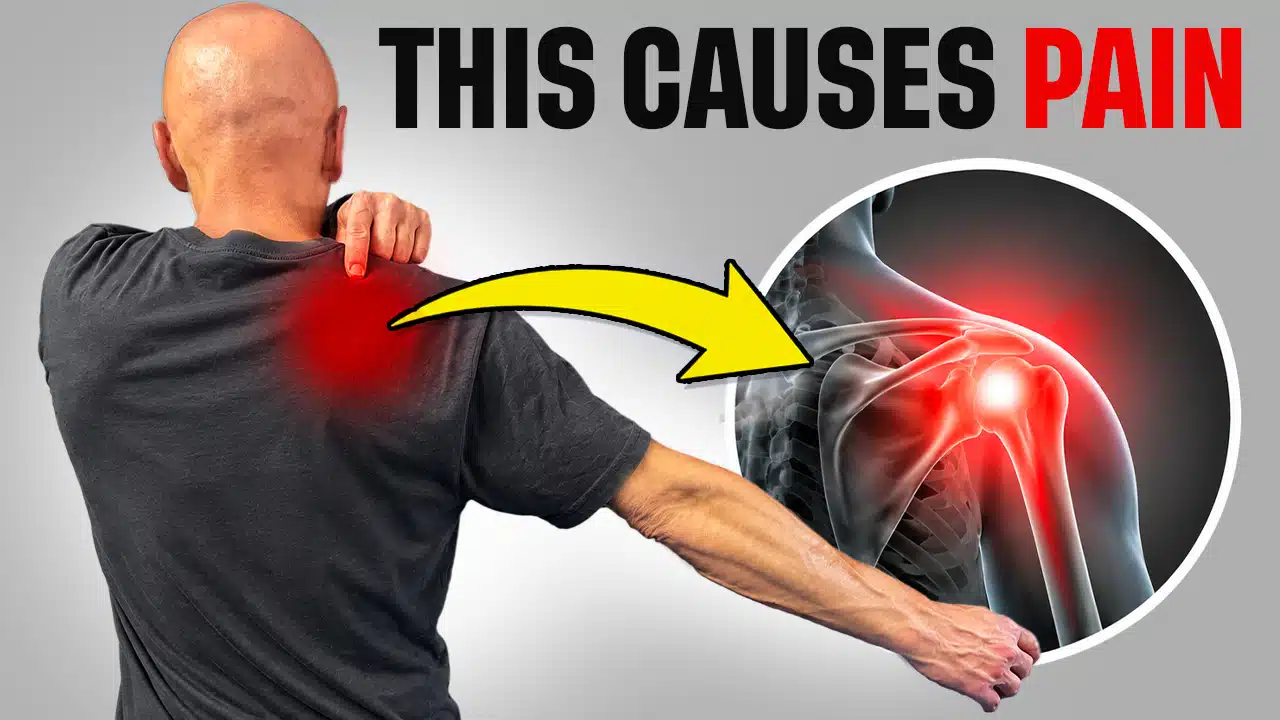
Now, this is going to be a little unusual because I’m not going to talk about the eyes and the inner ear and all the other stuff. We’re going to get a little bit mechanical on you and I want to talk about your shoulder blade. The shoulder blade’s called the scapula.
Now there’s some interesting stuff about shoulder design. If you watch the shoulder blade on this particular skeleton, as my arm begins to elevate or as his arm begins to elevate out to the side as if he was going to reach up overhead, if you watch the bottom part of the scapula you see it begin shifting toward me.
Now if I go fully up overhead with my arms, that shoulder blade needs to have t freedom of motion to rotate up and out. If it is locked in place, what happens is as the arm comes up you wind up getting what you may of heard of as impingement where the shoulder is being forced up into the bones that lie above it.
There’s again, old school remedy for this is actually called relaxed hanging from a bar. I’m going to talk to you a little bit about how to do this. It’s something that I do with a lot of regularity. Very, very powerful and very useful. Like I said, if you got chronically bad shoulders this is one you’re going to want to remember and send to people, because again, super easy to do.
Now, to make this happen you’re going to need to have some place to hang onto. If you have really bad shoulders and you can only go about this far, you’re going to have to go very carefully. I don’t want you to do anything that you health care providers have said don’t do, but be sensible, stay away from pain. Let’s just talk this through.
I’m going to come over here and I’m going to grip this bar above my head. The goal of this particular exercise is to begin to straighten the arms. Then watch, I’m going to relax and let my shoulders come up by my ears. A lot of times in the fitness industry people says if you grab something keep your shoulder blades down and back.
Well, this is actually a problem for people if you cannot let them move correctly. My feet are still on the floor so that I’m nice and supported. I’m relaxing, I’m letting my shoulders come up by my ears. Guess what I’m going to do from here? I’m just going to hang out. like I said, hanging around for better shoulders.
On the whole, the goal would be to get to the point that you can hang freely. In this case now my arms and shoulders are relaxed, my feet are not on the floor, so I’m just hanging here.
What you can see is that my shoulder blades are being stretched wide and it’s also creating some space within the shoulder joint. What I encourage people to do is work up to five minutes per day of just Hanging For Healthy Shoulders around if you’ve got bad shoulders.
If your shoulders are generally healthy but you train them a lot in a gym or you play tennis or do other stuff which could cause problems, try to get at least two minutes of relaxed, care-free hanging every day.
Now, the big problem that a lot of people run into is their grip, because their grip will fatigue very quickly, but it’s perfectly fine. If you can only be here for 10 seconds hanging out, 10 seconds is what you get. You can do supported hanging. In the beginning I’m keeping my feet on the floor and I’m only taking as much weight in my hands and my shoulders as I comfortably can bear.
What will happen over the course of usually one to two months, your grip strength will improve, you get much better, more flexible and more comfortable shoulders, and ultimately it’s also pretty good for your spine because it acts as a decompression process as well.
There you have it, guys. Old school today, good biomechanical exercise. Give it a shot.
If you have any questions around this, how it works, what it can do for you, or anything about the protocol, let me know.
Thanks.