Today, we’re going to be talking about improving your vision by making your vision Training more complex.
If you’ve been following our blog for any period of time, we have talked about eyes a lot.
You know in Z-Health we focus a lot on vision. We talk about the inner ear, and then the movement systems and how they integrate together. Because your visual system provides so much input through everything that you do, continually training it and making sure that it’s functioning well is one of our highest priorities, because poor vision often equates to poor posture and poor movement, pain, a lot of other issues.
For us, vision is a central theme of a lot of what we look at.
Now, with that said, one of the things that we’re also finding with emerging research is that very small isolated drills that you do with your visual system can be effective, but in many cases when we make them harder or more challenging, it causes your brain to adapt more quickly, just like you would think about in any other type of fitness endeavor.
The real question is, how hard do I need to make it to see a change?
One of the things that I want you to understand is, if you’ve already been doing pencil pushups, and eye circles, and eye spirals, and all the stuff in the Vision Gym product, one thing that you want to consider adding to all of this is the addition of other body movements to your visual drills.
Let me give you a simple example.
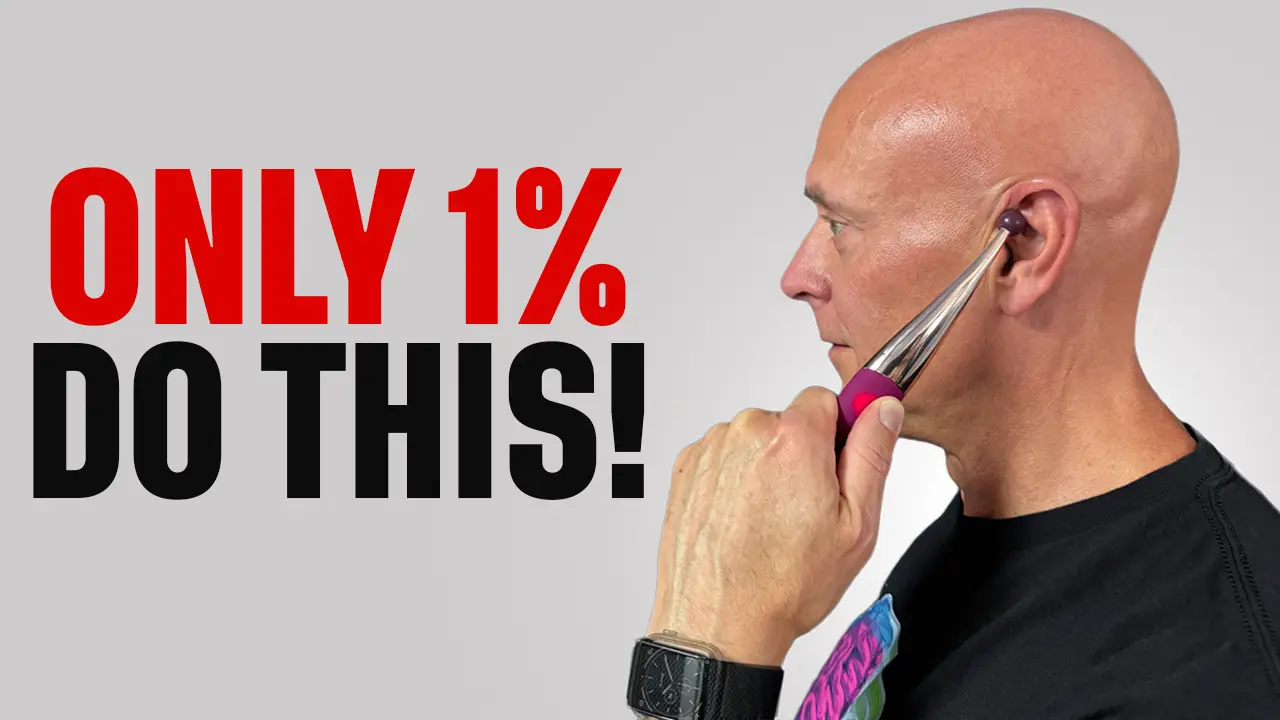
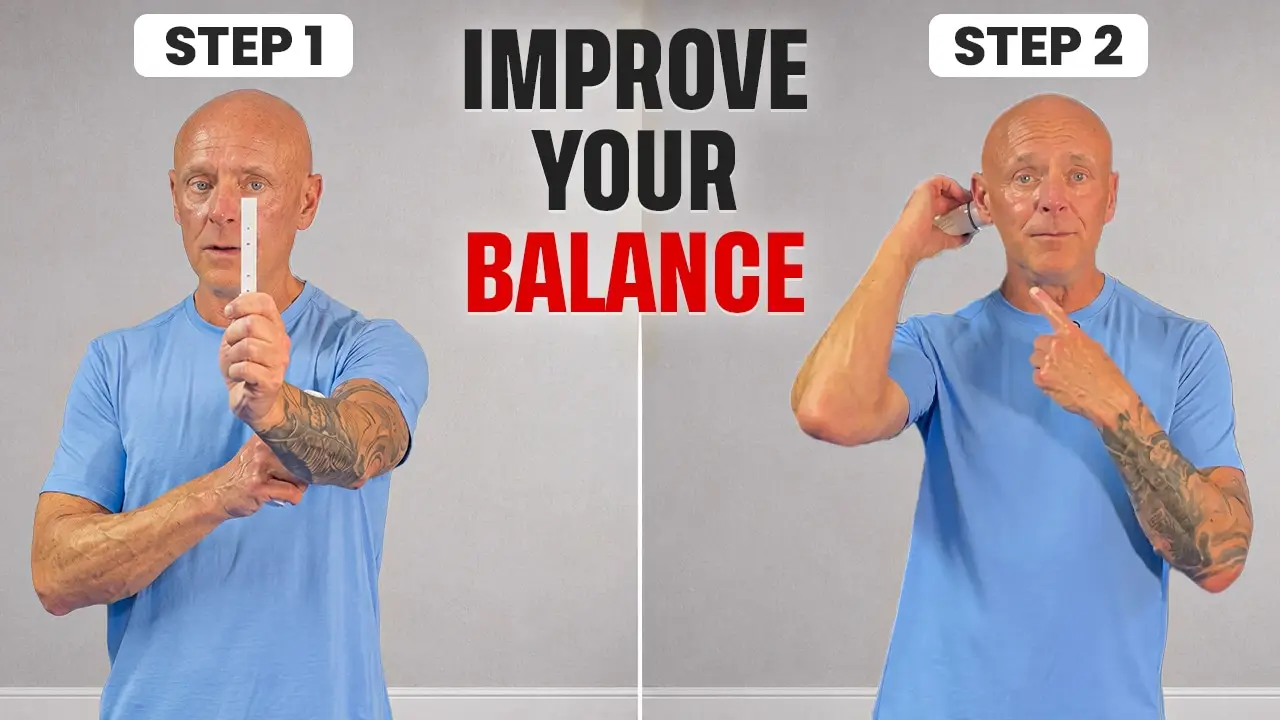
In the Vision Gym, one of the things we talk about is a simple exercise called a pencil pushup. I’m using a little specially designed pencil that has letters on it for this exercise. What I do, I’m going to focus on this top letter and bring it all the way into my nose, and then push it back out. As I do that, my eyes should come in and go out. Now, hopefully, we see that happening very symmetrically.
Very often what we’ll see when we test people is it’s quite asymmetric because the muscles and nerves aren’t working very well together. For instance, if I had a right eye problem, what I would then probably do is cover my left eye, follow this in with my right eye, and then move it across to really make sure that I’m getting some good convergence on this right side working on strengthening the musculature and also what’s happening within the brain.
That’s great.
However, in many cases, once you’ve been doing vision drills for some time, we need to complicate them so that your brain continually pays attention. One of the things we’re learning in the research around what’s called neuroplasticity and what engages the brain to create change is novelty.

We need things to not be boring, we need to make sure that the brain says, “Hey, this is important.” Very, very, simple idea that you can add into all of your vision work is combining your vision Training with head movements.
For instance, if I was here, I cover my left eye, follow my pencil in and then move it across. Now I’ve got this good position. My right eye’s working hard to stay in convergence. Now, I’m going to begin doing basic head mobility while maintaining that position. All right, so I’ve done rotation. I’ll reset. Now, flexions and extensions. I’ll reset. Lateral tilt.
One of the greatest challenges to things like this is you’re adding in the need to control the head and neck and make the eyes and the head and neck work together.
Now, there’s some anatomical pathways that are involved in all that, so it’s really, really, essential like I said to consider adding in some movement complications or movement challenges. Once I’ve done that with one eye, now I may go back, join the eyes together, and repeat the same things.
It’s actually a very interesting and intriguing process.
Very often, what will happen is you’ll find specific portions in your neck movement where, all of a sudden, something that was clear now becomes blurry. What that’s telling us is that our coordination, the muscles in our eyes and how that’s sending information to the brain is, perhaps, being challenged by that specific position.
It is something you need to explore.
Now, the next level of all that is, once you’ve achieved some success with maintaining those drills with head and neck motion, now you might want to add movement to it. A final example would be to do pencil push-up, turn my head left, and then walk, and walk backwards, turn my head right, walk, walk backwards. This is one of the things that I encourage people to do.
I’m always trying to get our clients to walk and move more.
The addition of your vision work to walking, as long as you can do it in a safe environment, again, challenges the brain in a very different way that’s much more relevant to how we actually use our eyes and our body together in real life.
As you think through the exercise you’ve already been doing, or if you’re not familiar go back through our blogs for vision Training , as you start to develop the basic skills, consider adding, then, head and neck movement to it, and then full body movement to it.
I’ll think you’ll find tremendous benefit.
Good luck.
Let us know if you have any questions.