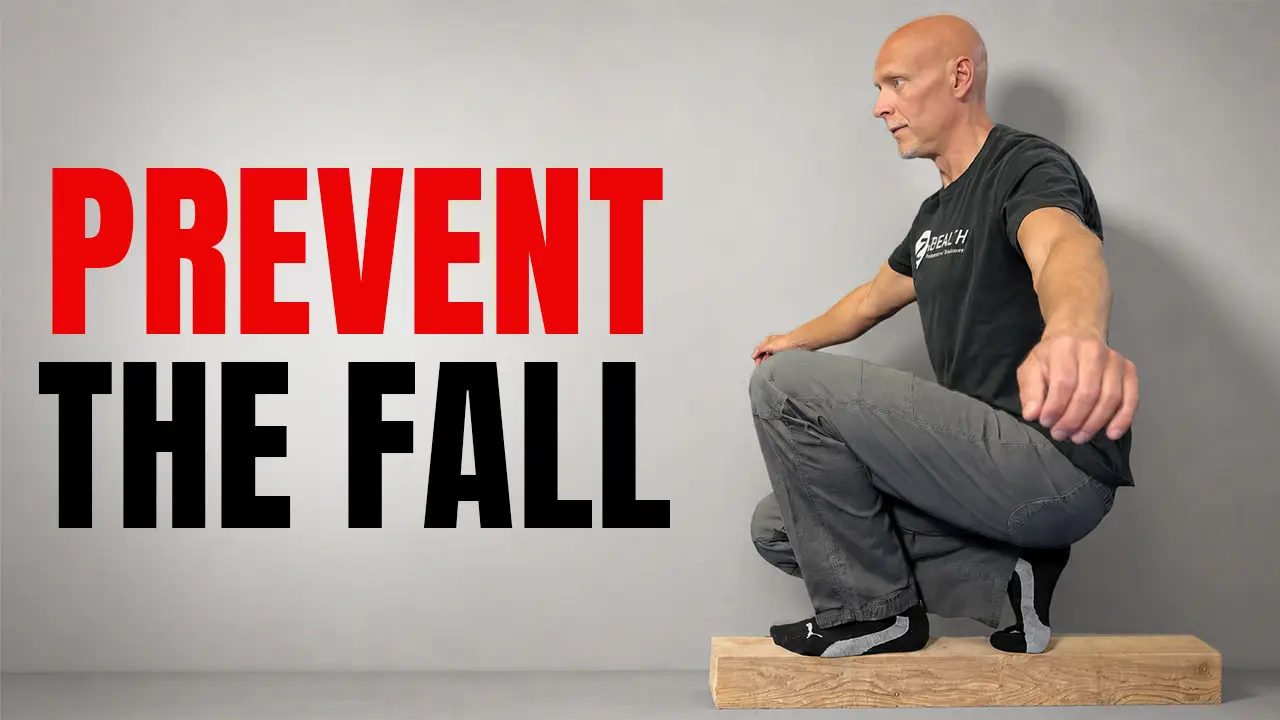
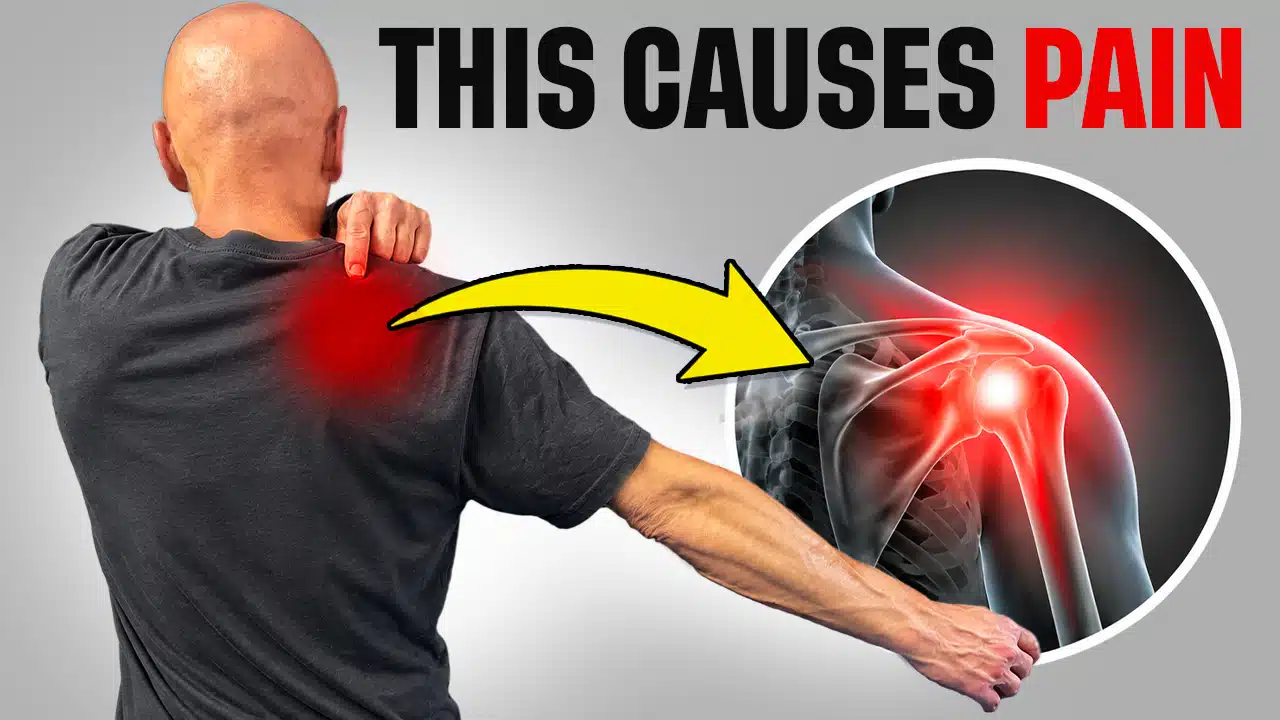
Hi, I’m Dr. Eric Cobb with Z-Health Performance, and today we’re continuing our discussion of building better strength characteristics to prevent falls. If you did not watch last week’s blog, please go back and check it out, because I talk about eccentrics and isometrics and ballistic isometrics, and all of that information’s gonna come into play today. But now we’re gonna talk about the Ankle Strength lower body.
In last week’s video, we were talking about forward falls, right where I lose my balance, I’m going forward, and I have to be able to stop myself. Now, whenever we actually look at falling, as I’ve mentioned previously, we have to note that we’re gonna train people in case they fall forward, if they fall to the side, if they fall backward and sideways or they fall backwards.
So in other words, we have a clock around us, and as movement professionals, if we’re trying to work on fall prevention and injury prevention in falling, we have to train our athletes to handle every direction. So today we’re specifically focusing on what happens whenever I lose my balance sideways. Whenever we look at the muscle activity and the joint activity that’s involved in recovering balance, a lot of research is pointing more and more toward the essential nature of the ankle strength. In fact, it was a really interesting study published last year. They looked at people standing eyes open, standing eyes closed with some perturbation, and what they found was about 98% of the time, between 95 and 98% of the time, the area of the body that every person used to try to recover, balance and maintain balance was the ankle. Now, when they specifically broke that down, what they found was that in falls where I’m falling to the side, the most important motion that my brain has to be good at is what is called aversion. Now aversion, if you think about it, maybe the easy way to remember this is most people have heard of an ankle sprain when you do this.
That’s an inversion ankle sprain, INV. So e-version would be the opposite direction. Now, if we’re thinking about that, why would that make sense? Well, if I’m falling to my left, look at my ankle, my ankle’s gonna need to do what? It’s gonna have to catch me and drive everything that way to bring me back up, hopefully upright.
So a weak ankle specifically weakness in aversion is a very, very bad thing for fall prevention. When someone’s falling to the side, what do we do about it? Same thing we always do. We have make it stronger. We’ve have make it smarter. So if you’ve been through our courses, you know anything about us, we do a lot of joint mobility.
I have probably 30 videos already on YouTube for ankle strength and foot mobility, so go back and check those out. You have to test sensation, you have to make sure the nerves are functioning, et cetera. But eventually, we also just need to make the area stronger. And whenever we’re making it stronger, we need to think of two things specific. So again, if I’m falling this direction, I need to be able to drive my ankle into aversion. So the easiest way to do that is to work with a band, particularly one of these mini bands, or a strap or a rope. I’ll just demonstrate this really quickly. I love to have this particular exercise available because I can just have my clients send at home while they’re watching a rerun of Game of Thrones, put their ankle straps or put their mini band on, and I tell them, touch your big toes together and then move them as far apart as possible. We’ll try that slowly. All right, so this is just basic ankle strength work. Now, what I would recommend here is that you’re going to try to work to fatigue however many repetitions that is. Obviously, this is the area of the body that’s highly loaded all the time, and so sometimes you’re gonna have to do a lot of volume to get it to pay attention. Once you are starting to get a little bit of fatigue, you also want to work on the concentric aspect of this and the eccentric aspect. So we’re gonna do a fast concentric. So we’re gonna evert hold for two seconds and then do an eccentric contraction, a lengthening contraction, back into a inversion of about three seconds. All right, so contract hold, and then slow eccentric. That’s gonna be exercise number one. And just like I mentioned last week, you’re gonna probably work on that for four, six or eight weeks. Most people, usually within three or four sessions, they auto, they start noticing,”
Hey, my ankle strength feels a lot better. I feel more stable. So if you’re already having them do balance work and balance challenges, that little bit of ankle strength work can be huge. But now we have to take the next step, which is to look at the ballistic nature. If I’m here and I’m falling to the side and my ankle is inverting, this motion back into aversion is not going to be slow and easy and gentle. Probably gonna be a relatively ballistic movement that will hopefully, again, pull me back to the midline. Practicing ballistic movements of these small joints can be very essentially threatening if done incorrectly. So the way that we like to approach this is the use of ballistic isometrics. So in this particular case, what I’m gonna do is I’m gonna go to my isometric strap, which I have anchored low on my little wall. This is now going to go into a wrap around my ankle. So now I have to think about it. All right, I’m inverted, so I’m gonna invert my ankle as if I’m falling. I’ll move out until I have a little bit of tension, and then I’m going to do small ballistic aversion movements of my ankle. Now, I’m not gonna be able to go a long way because it’s an isometric activity for the most part, but because the band and my skin have a little, and the, and the the mat have a little bit of give, there’s gonna be maybe a quarter inch of movement.
But the goal here is the isometric, the ballistic nature of the isometric exercise. So instead of a long hold, I’m getting tension, bam, and then I’m actually adding as much speed to it as I can over time. You want your client to work up to, as I mentioned in the previous video, 30 to 60 ballistic repetitions of, you know, a quarter second up to about one second, if you try this yourself, I would highly recommend that you do some balance tests before balance tests after. And what you may notice is that just that simple progression makes a tremendous difference in how much more aware you are of your ankle and how much more quickly it can respond to that lateral perturbation. Alright, this is the kind of one of the basic strength ideas that you’re gonna find in our upcoming course, which is called Defined Gravity. This is our fall prevention class from a brain-based perspective. It’s happening in June, both live in Las Vegas and live stream. So if that’s of interest to you because you’re movement pro, check it out. Otherwise, we’re an education company. We work with movement professionals, doctors, coaches, and therapists. So if you’re interested in bringing neuroscience into your work with clients in a very practical way, make sure to also check out all of our free resources online and subscribe to the channel.