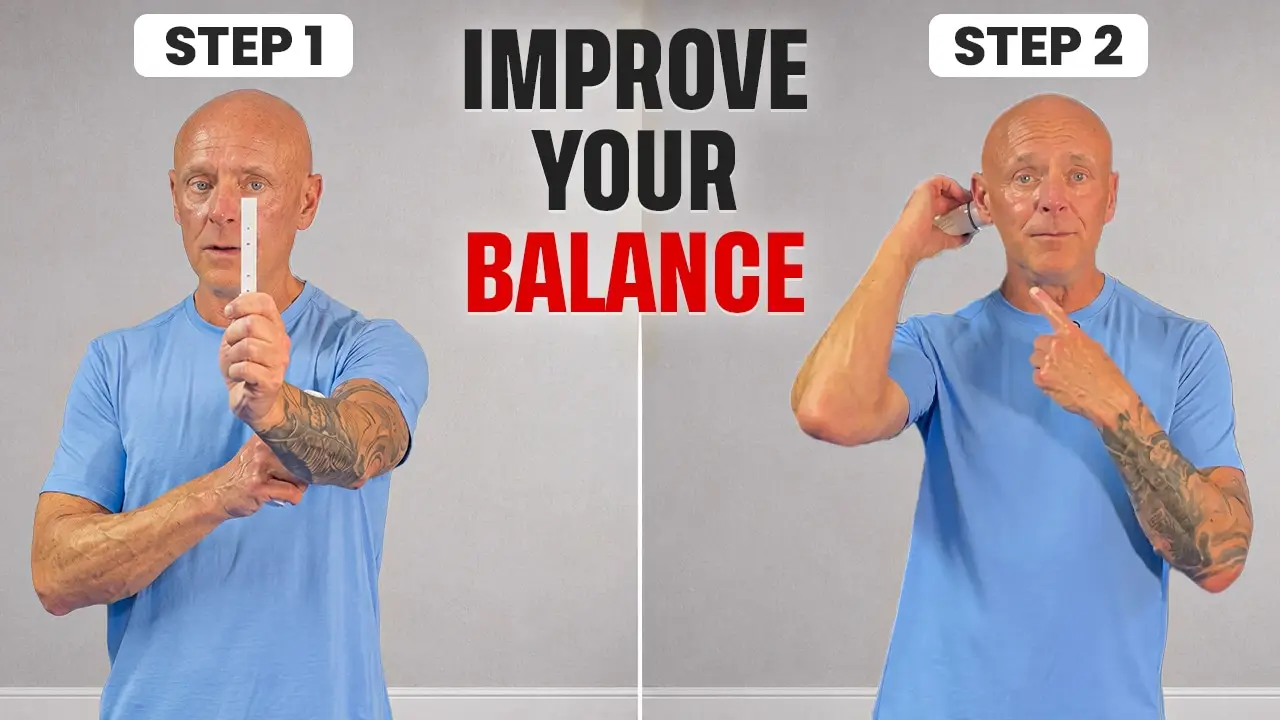
Today we’re going to talk about using isometric exercise to improve proprioception and motor control. Now, if you’re not sure what proprioception is, it basically is your brain’s map of where your body is in space and how it is moving. Now isometric exercise by definition is strength training or actually working a muscle when it’s not moving.
So how in the heck is that going to translate into proprioception? Helping your brain know where you are in space better. Well, it comes down to what’s called motor intent. Motor intent is basically the command that your brain is sending to the periphery to tell your muscles or body what to do. And what we’ve seen in the research, as a brain based training company, is that different forms of intent when we’re performing isometrics can change the benefit.
I mean, this is one of the things we’re always talking about in our courses. As brain based practitioners, we want the highest return on investment that we can get for everything we do for ourselves and for our client. So if you’re going to use isometrics and you’re going to try and use them in a therapeutic way or for rehabilitation, then you need to know what type to do in order to get the biggest and fastest benefits.
So let’s quickly cover what this looks like. There are basically two types of isometric contractions when we talk about intent. So if I were to take this strap, stand on it, so hopefully it’s not going to slip and I just start doing a bicep curl. All right. It’s slipping a little bit. All right. So I’m going to stand on it.
I’m doing a bicep curl. What I’m doing right now, my brain is saying, Hey, Uh, Doc, Eric, whatever I call myself, pull this strap to the ceiling and toward your shoulder. So I’m basically trying to break this strap. That’s called an overcoming isometric. An alternative version would be for me to go to something like a band or a weight.
Or put, you know, weight on the end of that strap, and now I can be in the same position. However, the band is trying to pull me to the ground, and instead of trying to overcome it, I am simply trying to resist the band pulling me back toward the ground. This would be called a yielding isometric. In the research, If you’re trying to improve joint accuracy, proprioceptive accuracy, you want to bias the majority of isometric work you do to the yielding version.
Right? What I just did with the band. Uh, this is a really, really cool area of research, uh, that we’ve only seen really come out in the last couple of years. What we see right now is that I can use overcoming, the one with the strap, to enhance cutaneous or, or sensory, uh, a capacity in the skin of the areas around the muscle that are being worked.
But if I want to improve my ability to feel the joint, move the joint and control the joint, then I want to focus on using yielding isometrics. So this is a little tweak. It sounds like a little tweak that has huge ramifications in terms of programming and in terms of results. And like I said, this is really what we are all about as brain based practitioners.
We have a new module coming out. It’s called The Brain-Based Practitioners Guide to Isometrics coming up really soon. So this is just a small sample of about eight hours of a deep dive in how to use isometrics for everything from blood pressure control to pain relief to maximizing hypertrophy, improving athleticism and speed.
So there’s a lot of stuff included in that, but it’s all in this window or under this umbrella of. How does the brain communicate to the body and how does the body communicate to the brain when we’re using this specific tool? Uh, if you are new to Z Health, we are a brain based education company. Uh, we specialize in working with doctors, coaches, and therapists who are looking to integrate cutting edge neurology with biomechanics, with kinesiology, with the things that they’re already awesome at to improve outcomes.
So if that’s you, make sure to check out our free courses, subscribe to the channel, etc. Other than that, I hope you enjoy playing with this and remember, it’s all about the intent.