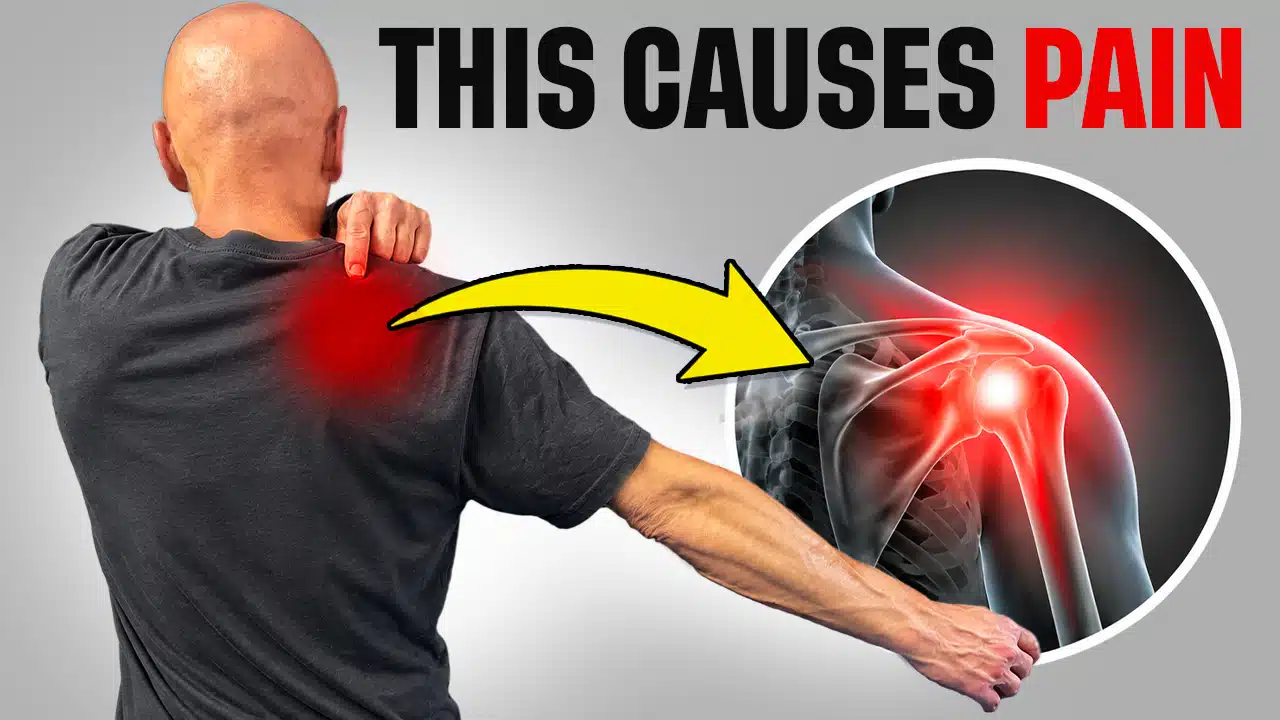
Everybody wants a fast fix for shoulder pain. I’m gonna do my best to give it to you right now by looking at three very overlooked nerves. Whenever we look at people with shoulder issues, whether it’s I have problems in abduction or it hurts when I reach out or I can’t reach behind my back, people often confuse neural issues with tissue issues. And what I mean by that is a lot of times we can take a picture of your shoulder and it will show all kinds of terrible things. You have arthritis, you have a torn labrum. But if we are able to find the correct sequence and look at the correct neural tissues, very often regardless of what you look like on the inside, we’re able to create a massive reduction or elimination even of pain.
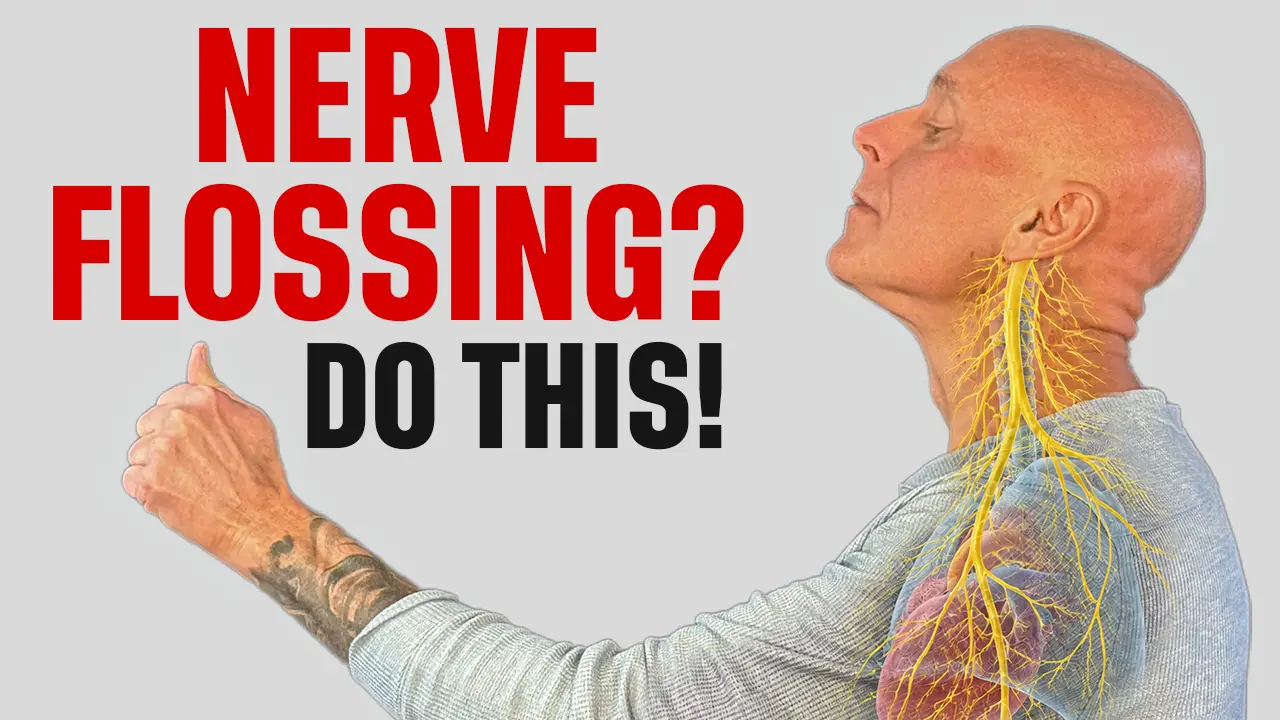
So what we’re gonna dive into are three nerves that we’re gonna show you how to do what are called neuromechanic exercises for. People have talked about nerve flossing. There’s a lot of different ways to describe this. But the simple idea is that your nerves that travel from your spinal cord out into the tissues must be free to move and stretch. They can become entrapped in tissues. And if you know specifically how to target them, you can create incredibly fast changes in range of motion and in pain.
So if you are in pain, I want you to go ahead and test what’s bothering you. Test your shoulder range of motion. Do the thing that you can’t do, all right? And just get an idea of how badly it hurts. And then after we go through these three different exercises, I’m gonna have you retest and see if it creates a big change for you.
Now, if you are a movement professional of any kind, a doctor, a therapist, a coach, Pilates instructor, yoga instructor, whatever it is, you need to understand neuromechanical exercises. You need to know when to tension a nerve, when to slack a nerve, when to floss a nerve. This is one of the things we cover in our level four course. But most importantly for me, if you work with the human body, you have to understand the nervous system and how to work with it kind of mechanically as well. So if that’s of interest to you, you can click the link and schedule a call with us because we’d love to share more with you.
Now, shoulders. Most of the time, whenever people are looking at nerve flossing, they will look at and find things online for the median nerve and the radial nerve and the ulnar nerve. And these are specific positions that when we hit them and we do everything right, we can actually create kind of a tingling sensation in the distribution of that nerve. And that’s what we’re trying to achieve. But there are some rules.
Rule number one is whenever I take you through any of these exercises, make sure that you keep the tension at a three out of 10 level, all right? Nerves are very sensitive to tension. And if you over tension them, you can actually injure yourself. So please understand that less is more in this particular instance. My issue, as I said, when we talk about shoulders and arms is very often people have only ever seen or learned one or two or maybe three different nerve tensioning exercises. And most of those are used to target the hand for something like carpal tunnel. They do play a role in shoulder pain, but there are some nerves that are a little bit more specific. And those are the ones we’re gonna cover today.
The first one is the musculocutaneous nerve, which is gonna innervate your bicep, which is a really kind of a big deal for shoulder issues. The way that we’re gonna do this, the way I teach clients, I say, okay, I’m gonna have you stand nice and tall, reach with your index finger and touch the big bump on the back of your neck, all right? That’s typically gonna be C7 or T1. And then I want you to go up a couple of spots, typically two fingers widths, keep your finger there, tuck your chin and lift up to the sky. Hold that position. And now I just want you to pull your shoulder blade down on the side that we’re gonna be working. Try to memorize what that feels like. This is kind of going to be the starting set of body positions that we need to really meticulously and precisely tension the nerves that we’re after.
All right, so now for the musculocutaneous nerve, we’re gonna take our thumb and we’re gonna grab it. I’ve taken my thumb, I’ve grabbed it with my fingers and now I push my wrist forward. As I push my wrist forward, I lock my elbow in place. Now, with that, I’m gonna pull my shoulder blade down the same time I lift up from that spot in my neck. Now, as I do this, if I’m getting significant or sufficient tension on the nerve, I will start to feel kind of a stretch and maybe even a tingling sensation through my forearm all the way down into my thumb, all right? So I’m gonna hold that position. And now I may turn my arm out a little bit or turn my arm in a little bit. I may need to take it behind me very subtly and I’m trying to find that spot where, okay, I’m like, okay, that’s a three out of a 10. If I still can’t achieve the three, I’m like at a one, I’m gonna tilt my head away, right there. That jumps it for me from a one to a three, just that small amount of motion.
So once I’m here, I’m now going to begin utilizing one of the joints of the body to take tension off the nerve and then reapply it. So for instance, if this is my position, I’m here, I may bend my elbow, straighten my elbow. I may tilt my head, untilt my head, okay? I may tilt my wrist back and forth. All that I’m trying to think about is every single joint involved in the exercise is something that I can bend and unbend. And generally that will help me begin to move the nerve through the tissue more easily. So that’s exercise number one, the musculocutaneous nerve for your bicep.
Next one is the axillary nerve. Axillary nerve is for your deltoid, all right? Got those big cannonballs, but you can’t move your shoulder. You’re having difficulty, you have pain. This one is super important. It’s also a little bit more subtle. So I need you to go through it with me. We are gonna use the same idea. We’re gonna preset, remind ourselves, okay, my shoulder blade has to stay down. My neck has to stay lengthened. Once I’m in this position to get to the axillary nerve, I’m now gonna bend my elbow slightly, right? So I’m gonna flex it a little bit. And then I’m going to turn my shoulder in. I’m not turning my hand. I am actually holding this, the scapular depression. I’ve got my little elbow flexion and I’m rotating my entire arm. Now, as I do that, particularly if my head is tilted away, I should begin to feel that same kind of neural tension building up in a band around my deltoid. If I’m feeling it anywhere else, I’m doing it wrong. All right, so again, nice and tall. We’re gonna flex the elbow. We’re gonna pull the shoulder blade down. We’re gonna internally rotate. And right there is where I really start to feel it. I can now apply the same things. I can tilt and untilt my head. I can unrotate and rotate my shoulder. I can elevate and depress my scapula, et cetera.
Now, when you’re doing this, again, keep it three out of 10. How many reps should you do? This is debatable, but for most people, we want to create somewhere between around 50 and 100 tensions per day. That sounds like a lot, but one of the things that we’re learning as more and more research comes out about the mechanical influences of tension on nerves, nerves need tension. And so particularly if you’ve had chronic shoulder pain or mobility issues, you need to accumulate some reps. Just don’t do 100 at a time, all right? Do 20 or 30 different motions. Stop for a few hours. Do it again in the afternoon. Do it again at night. Okay, it’s incredibly powerful. So, so far, musculocutaneous axillary.
Now we’re gonna move up. All right, we’re gonna move up toward the top of the shoulder. We’re worrying about the trapezius now. We’re now gonna move to the third nerve, which is the suprascapular nerve. This is going to help with shoulder pain that is above the shoulder, basically into your trapezius area. This is probably the most complicated tensioning exercises that we teach. It’s just because it’s hard to actually create correct tension on this nerve. Without some little yoga-esque complications, it’s not that hard, but it is a step-by-step process. All right, so here’s how you’re gonna do it. Nice and tall again. Lengthening up to the crown of your head. You’re going to flex your elbow to 90 degrees. Flex your shoulder to 90 degrees. Now you’re gonna drop this in as far as it will comfortably go into internal rotation. Now here’s the fun part. You need to pull your elbow toward the midline of your body. Typically when people do that, they do this. Don’t do that. You have to maintain the internal rotation, pull it toward the midline of your body, and then I like for people to hold it there. Now we’re gonna get to the point, or the part where the nerve tension is really going to come into play. So I’m gonna turn so you can see what I need to do. From this position, I’m gonna pull my shoulder blade back, and I’m gonna pull my shoulder blade down, and then I need to tilt my head away and bring it forward. In this position right here, it’s going to feel like a very unique stretching sensation, typically from the upper part of your neck all the way down into the top of your scapula. You may even feel it into your trapezius. You’re gonna apply this exercise the same way that you would the musculocutaneous and the axillary. Superscapular is an extremely powerful tool for dealing with any kind of upper trap or shoulder pain.
So once again, we keep all these three out of 10 or less. We aim for somewhere between 50 and 100 mild tensions per day. And I’m gonna recommend right now, if you don’t really know what’s going on with your shoulder, try all three. If any of them create pain, obviously you’re gonna stop doing them. If you have something really chronic or really problematic, make sure you clear this with your healthcare team before you start applying it. But these are things that we use literally every single day for almost every client that we’ve run into with a shoulder issue. As an athlete myself, doing a lot of different things with my arms, I use Nerve Glides every single day, all right? I go through the whole series. They are incredibly useful for maintaining mobility, maintaining strength.
So try them, go through this flow. Once you understand it, it’ll only take you a couple of minutes at most to get through all your different tensionings. Do that in the morning, do it in the afternoon, do it at lunch. Hopefully it’s gonna make an enormous difference in your shoulders. And finally, once again, if you are a movement pro, doctor, therapist, coach, instructor, whatever it is, and you wanna know more about how to blend this type of work and what you’re already doing, click the link and let’s talk.