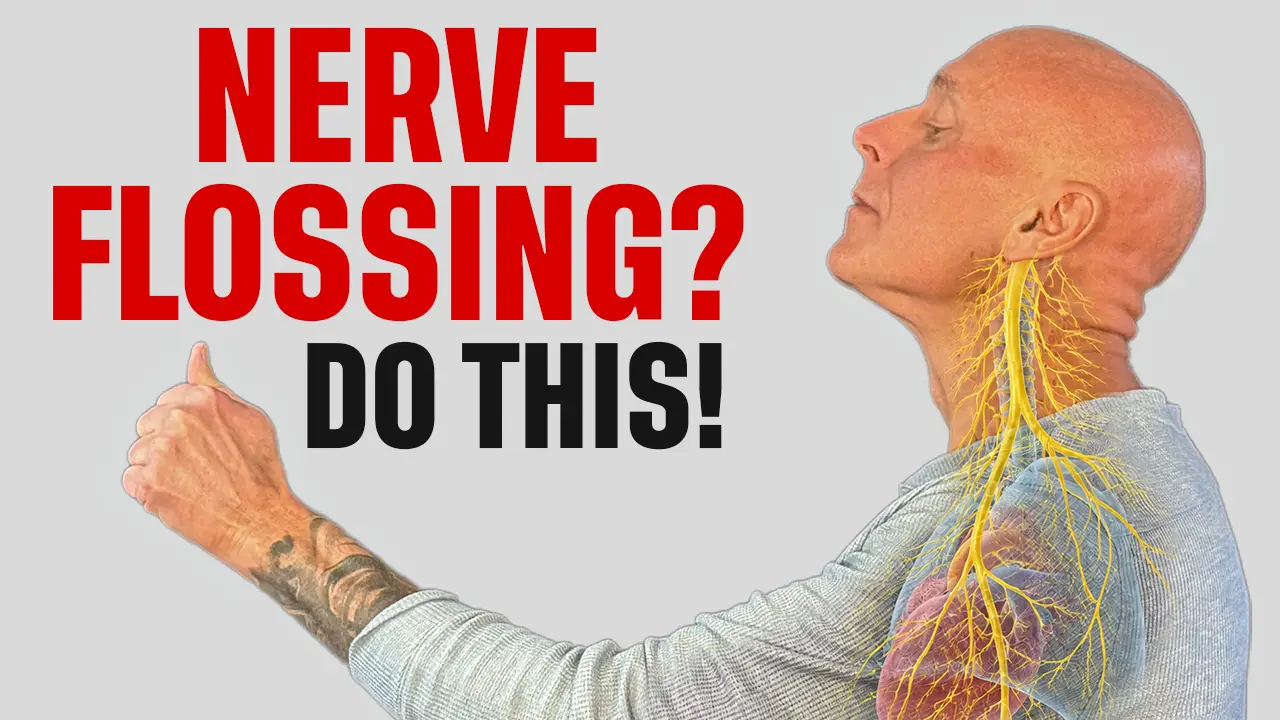
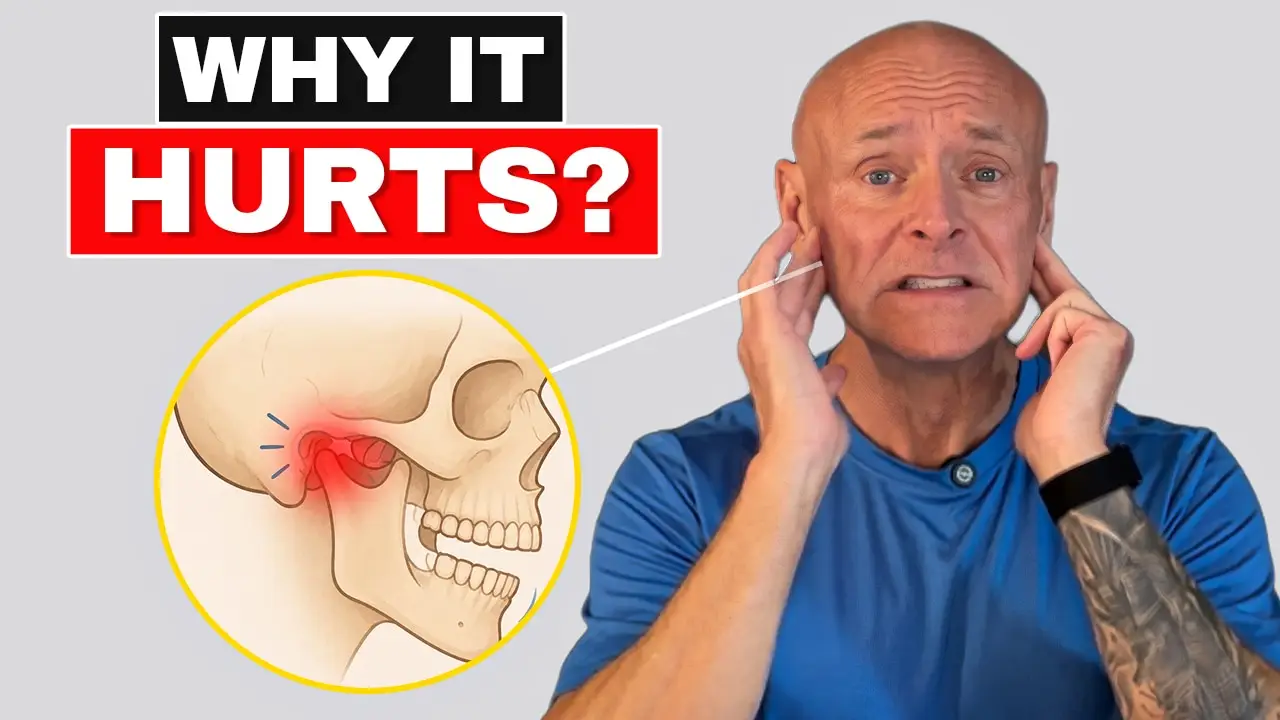
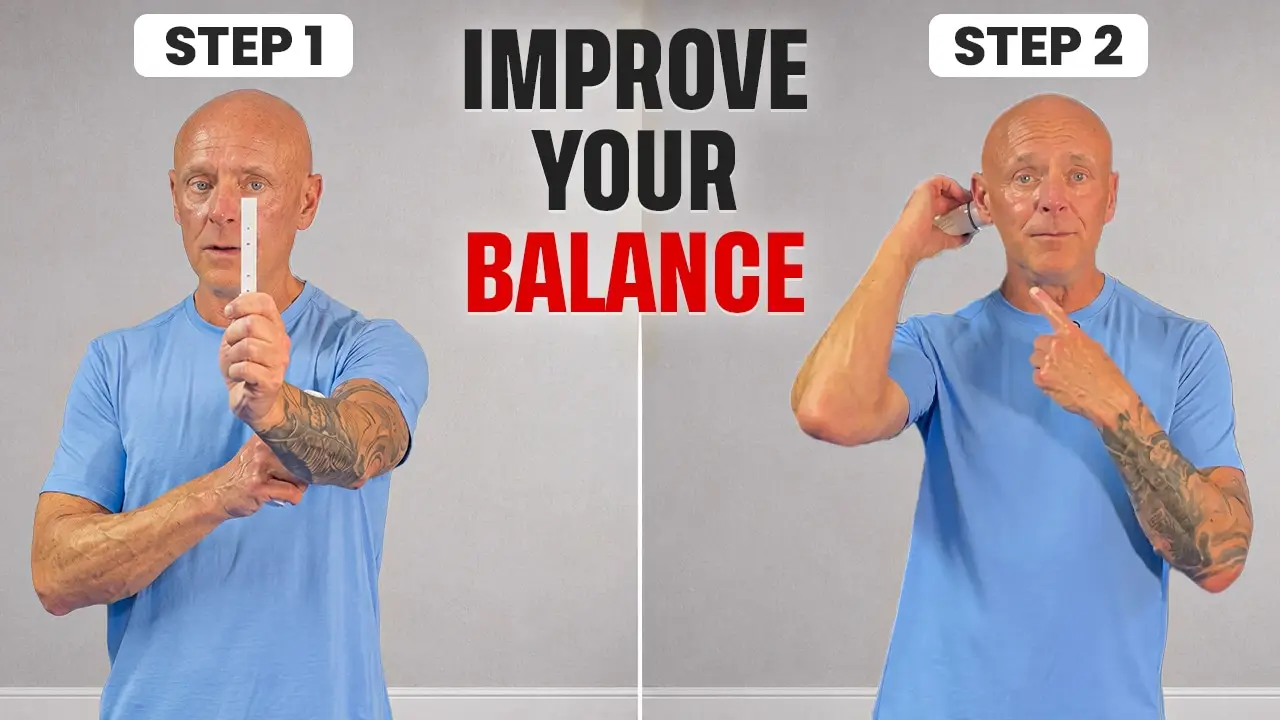
You have heard of your vagus nerve, I’m sure. If you have been in the movement, biohacking industry of any kind or whatever over the last decade, you’ve probably heard people talk a lot about the vagus nerve. Today, we’re going to look at something that almost no one is talking about, almost no one is showing, and that is how to do a neuromechanic or neurodynamic exercise, something specific to basically floss the vagus nerve.
The vagus nerve is one of the longest nerves, if not the longest nerve in the human body, and it is often termed the wandering nerve. Now, when we look at the anatomical structure of this nerve, it’s quite interesting. Basically, it starts in your brainstem, in the bottom part of your brainstem called the medulla.
It then exits your skull, and then basically after it exits the skull, it’s going to travel deep to or inside your mastoid process, which is this bone here on the base of your skull. It then follows along with your carotid artery and then goes into your thoracic outlet, basically where the nerves from your neck are going to go down either into your arms, or in this case, down into your trunk. The vagus nerve then passes through and begins sending branches out to your heart, to your lungs.
It then is going to go down into your abdomen and innervate a whole lot of stuff related to your gastrointestinal tract, your spleen. It does all kind of cool stuff in the body. The reason the vagus nerve is so popular to discuss is that it is generally tied to parasympathetic nervous system activity.
That is an oversimplification, but what most people will talk about in this space is, hey, if you are wound up all the time, you have chronic stress, you have a low heart rate variability that you can’t ever improve, you have ongoing GI issues, you have heart arrhythmias. There’s a whole bunch of stuff that goes into this, or if you take it even a step further, you have autoimmune diseases where you have a lot of inflammation. The vagus nerve is tied to all of those things, and what has been shown in numerous studies, and there’s a lot of different devices out there, is that whenever we stimulate the vagus nerve and actually improve its function, some pretty ridiculously cool things can happen in the human body.
Now you have a lot of people talking about hacking the vagus nerve. I hate that term because it’s not a computer, so we’re not actually hacking it, but there’s a lot of things that we know that actually stimulate the vagus nerve. Things like sticking your face into a cold or ice cold bucket of water or a sink full of water or whatever. That actually causes the vagus nerve to become more active. You can hum. You can gargle.
There’s a whole lot of things that you can actually do to stimulate the vagus nerve, and those tend to happen on a more reflexive level. What we’re going to talk about today, however, is something very different. We’re going to talk about actually mechanical stresses of the tissues that the vagus nerve passes through impacting on the function of the vagus nerve.
Now before I get into this, if you’re a doctor, a coach, a therapist of any kind, movement professional, Pilates, yoga, martial arts, personal trainer, and you’re interested in blending neurology with what you are already awesome at, go to the pinned comment and get in touch with us because we’d love to share more with you about our curriculum and see if it’s a good fit for you. Now getting back to the topic at hand, the vagus nerve and the mechanical structures, the mechanical effects that we’re interested in. If you’ve been following us for any length of time, you know that we talk a lot about peripheral nerves and how flossing them, tensioning them, slacking them, sliding them is a really cool thing to be able to do.Maybe you’ve seen stuff where we’ve worked on the median nerve or the ulnar nerve.
The whole idea is this. Nerves are not just electrical cables.In other words, it’s not just a conduit through which your brain communicates to the rest of your body and the body communicates to the brain. They are actual living tissues and those tissues have to physically interface and move through and work with the tissues through which they pass. In the case of a median nerve, we talk about median nerve entrapment.
In some cases what we’ll find, people have carpal tunnel syndrome, you can look at a couple different spots and maybe the median nerve has become impinged or is being prevented from moving through the tissue normally. What is specifically designed are exercises that allow you to target the area where the nerve is not moving appropriately through the tissue. One thing to know about nerves is that they are super, super susceptible to pressure.
Even small amounts of pressure can dramatically decrease the function of any given peripheral nerve. Mechanically, we think the same thing probably happens to the vagus nerve. The question has been out there for a really long time.
We have all these cool what we call neuromechanic or neurodynamic drills for the median nerve, the ulnar nerve, the radial nerve, axillary, all these different nerves, peripheral nerves. The question has been, can we find some way to mechanically stretch and mobilize nerves that pass through the thoracic outlet into the trunk, specifically the vagus nerve? The cool thing is, the answer is yes. There are a couple studies that were done. I believe the first one was in 2021. The next one I saw was in 2024, 2025. We now know that there is a validated way that we can actually access that vagus nerve.We can put it under stress and strain. We can create measurable, noticeable changes in the body.
Now, what I’m going to show you is our extrapolation of what has been shown in the research literature. Because when it’s done in the research literature, it is being done to someone. In other words, you have someone laying on a table and a therapist is actually putting them in position and applying the technique to them. That is very, again, similar to what we see when people have median nerve issues and ulnar nerve, etc.
Often, it is an outside therapist that is applying the technique. We have long been in favor of self-guided or self-performed nerve work because, again, nerves are very sensitive to pressure and tension. I prefer that you be in charge of your own nerves rather than me.
Again, we have decades now of experience of this being an incredibly successful approach. I’m going to show you, again, our version of a vagus nerve nerve flossing exercise. I’m going to talk you through the specifics of how to apply it.
What you’re going to do for this one is you’re going to sit in a chair. I’m going to sit down here. I need you to remember the mechanics of this. Remember that the nerve starts in your brainstem. It passes medial to your mastoid process. It goes down through your neck. It passes through the thoracic outlet. It goes into your chest. Heart, lungs pass through your diaphragm, and then you get into the abdomen.
What we’re going to do is we’re going to be using a head position as well as pressure on the abdomen to create some mild tension on the vagus nerve. First thing I need you to do is sit in the chair. I do not want you sitting back like this.
I want you to be as upright as you can comfortably be. At this point, I’m going to have you take a couple breaths in and out. What I want you to do is I want the inhale and exhale to take a total of 10 seconds.
I don’t care if that’s a three second inhale and a seven second exhale, but I want you to take a few breaths and just practice breathing in and out for 10 seconds because that is the breathing pattern that has been used in the studies that we’ve seen. It correlates with something called resonance breathing, and it can be by itself a potentially really useful tool for enhancing parasympathetic activity. We’re going to connect the mechanical movement with the breathing.
You practice the breathing first. Just make sure that as you’re breathing that you’re allowing the abdomen to relax because that’s going to be a key piece of this. Next piece is just going to be your hand position.
I’m going to have you take your right hand or left, whichever you’re preferable. Put it between your umbilicus, your navel, and the bottom of your sternum. Just in the middle of your abdomen, take the heel of your hand and put it there, and then cover it with the other hand.
We’re going to be putting some pressure in and down every time we exhale. We’re going to practice that two or three times. Take a breath in, exhale.
Let the hands press in slightly and down slightly. You can see I’m not trying to give myself a Heimlich maneuver. It’s a pretty small, easy pressure, but we’re going to be doing this repetitively on every exhale.
That’s what’s going to happen with the hands. Push back and push down on the exhale. The visualization here is that you are creating a small stretch of the nerve that’s going to wind up in your skull.
Just think about that as you are pulling down. We’re trying to get a little bit more tension on the nerve. To make it now very specific to the vagus nerve, here’s our head position.
I’m sitting here in neutral. First thing I’m going to do is from the base of my head, I’m going to flex my neck. I’m going to work on my right vagus nerve.
I’m going to tilt my head to the left and I’m going to turn my head to the right. In this position, I am trying to notice if I feel any stretching sensation just in front of my mastoid process. If I don’t feel much of a stretching sensation, I will adjust typically by adding a little bit more lateral bend.
This is the position right now. I can feel it very nicely here. This is going to be the position that I’m going to practice this vagus nerve neurodynamic exercise in.
I have my hands in place. I have my head in place. I feel a light stretch here.
I’m going to try and get a little bit taller to increase stretch not just here but also into my neck. I’m going to take a breath in and as I exhale, my hands are going to push in and down. I’m going to do this again on that 10 second count for the inhale and exhale.
That’s it. It’s very gentle. People that struggle with this often it’s because their neck gets really tight in this particular position.
If this is stressful at all for your neck, what you need to do is just relax the amount of tension. In other words, you can decrease the amount of flexion. You can decrease the amount of lateral tilting. You can decrease the amount of rotation. In the actual studies, it actually is a fairly minimal position that they use. Again, that’s a little bit easier when someone’s on a table and it’s being done to you as opposed to you holding it yourself.
This is the basic position. Here’s the key. If I’m working on my right vagus nerve, I tilt my head and I flex my head. Then I tilt to the left and I rotate to the right. In other words, I’m going to turn my head to the nerve I want to stretch. That’s for my right side.
If I’m doing my left side, I need to flex my head, tilt to the right, turn to the left. That’s the only difference in going after the right side and left side. Now, why is that important? In the studies that they’ve done on people with chronic stress, when this was applied and they were comparing a breathing technique to breathing technique plus this neurodynamic sequence, what they found is that combining breathing, the 10 second breath, so six per minute breathing with the vagus nerve stimulation actually had a stronger impact on multiple HRV parameters.
Here’s the big key. After it was all done, the people maintained the improvements. Now, they were being compared to people who just laid on the bench and breathed for 15 to 20 minutes in the six breaths per minute style.
What they found with those people is that while they were doing the six breaths per minute, their parasympathetic nervous system and heart actually got better. Then as soon as they stopped, it actually seemed to have stressed them out and their sympathetic nervous system jumped back into play. That did not happen whenever we added in the exercise.
It’s very important to me that if you’re going to really try to maximize what’s happening for your vagus nerve, we want to combine the breathing with this particular exercise and then we have to do it for the appropriate amount of time. In the studies, what we’re seeing is that you can create change in symptoms like if someone has gut pain or chronic IBS or something and you’re working on the vagus nerve. Within usually one to two minutes of this, they can start to notice sensation changes where they’re having issues.
Conversely, in the study where they were looking at people with chronic stress, they actually applied this for six minutes per side. Imagine this for yourself. You’re here.
You set a timer for six minutes. You’re holding this position and you’re breathing. Then you do that again on the left side.
If you want to follow the actual research protocols, that’s what it calls for. Now, I don’t recommend that in the beginning again because the head position and the tension that can build up from all that is a little bit different for people. I say start with one minute for the right and left vagus nerve.
You’re doing two minutes. Do that a few times a day. Notice how you feel.
If you wear an Oura ring, if you wear a garmin or whatever and you’re tracking your HRV in the mornings, notice over a week or two, do your HRV readings begin to improve. If not, then you can actually begin increasing the time. Again, we’re trying to find the minimum effective dose here.
If you can get away with one minute and it makes your HRV better and you generally feel better, stick with that. Just remember that in some cases we’ve seen particularly people with high stress levels and they have to go beyond that up into the five, six minute range per side. All right.
This is again something that you will probably not find almost anywhere else because people really aren’t talking about this just yet. It’s only in the last few years that people actually talk much about median nerve and ulnar nerve and how to work with those peripheral nerves. This is way out there, but it again has some significant studies behind it at this point.
We have found it clinically and in the training environment, incredibly effective for a lot of people. I wanted to make sure that I shared it with you. Finally, again, if you’re a doctor, a therapist, coach of any kind, movement professional, and you’re interested in learning hundreds of more things like this, go to the pinned comment and get in contact with us and we’d love to see if our education is a good fit for you.
Otherwise, good luck and enjoy.