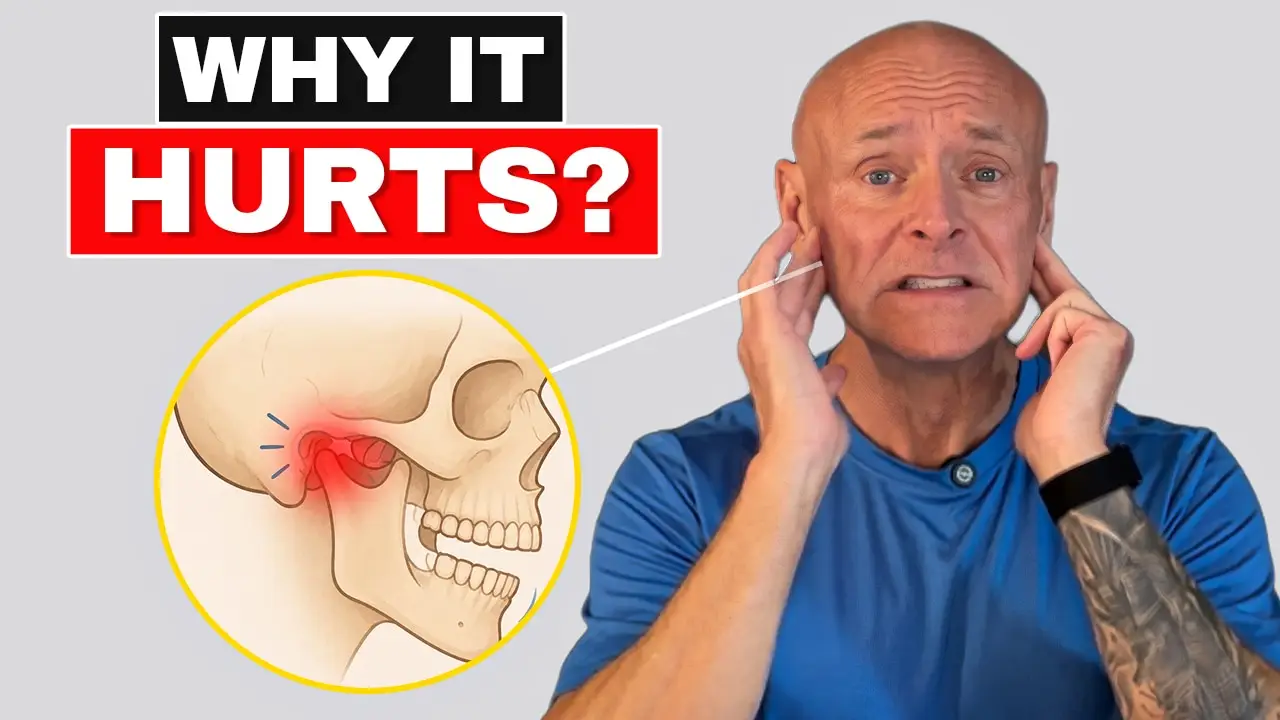
One of the things you have to understand if you’re a movement professional is that pain is not always about damage. It feels like it, but if you treat everything like pain equals tissue damage, you are absolutely holding your clients back. Now, this is something that we hammer on always in every certification course that we teach because modern pain neuroscience has proven over and over and over again that pain is a construct of the brain that is designed to be protective in nature.
It’s so hard to understand this for a lot of people because if the knee hurts, you assume there’s tissue damage in the knee. But over and over and over, we know that that is not the case. Tissue can be a big player in pain, but it’s not the only one. And obviously, as I just mentioned, pain is a construct. It is a protective process that the brain uses to try to get us to stop doing dumb things.
So, like I said, if you have clients. And you are working with them and they have pain and you’re reinforcing for them that, oh yeah, this must be your meniscus, or this must be this or must be that, and let’s keep working on that.And their pain isn’t getting better. You’re actually putting them in a position that can make them worse in the long run. And this is something that we need to address.
If this is kind of already clicking with you and you’re thinking, yeah, that makes sense ’cause I’ve actually seen that happen. I’ve done all the good stuff for somebody and they didn’t get better. Then you need to talk with us. we have so many courses available. We have a core curriculum, uh, that is for movement professionals who want to bring modern pain neuroscience into what they do. If that’s of interest to you, DM us on Instagram, that’s the easiest way to get in contact with us or. Go to the pinned post or in the description you’ll see our email or phone number. We’re real people. You can talk to us because we really like to share this information with you.
Now, let’s talk about a very practical example of this. I had a client just a few days ago with. Knee pain, duration, about nine months. Uh, right knee pain with swelling. No really inciting event, just kind of came out of nowhere.
And then a few weeks later after it started, , she got hit by a dog, uh, from the side. And that was, uh, the initiating process here. Now, it got so bad that she couldn’t walk. She went to the emergency room, they did a bunch of evaluations on her. She said, they wiggled my knee around. They took pictures of it and they’re like, well, there’s nothing broken.
Nothing that we can see. Testing seems like maybe you have a meniscus injury. So she was given drugs and then referred to an orthopedic surgeon who basically repeated the same stuff and then was like, okay, well we need to do an MRI. I’m pretty sure it’s your meniscus and you know you’re gonna go through PT and we may be looking at surgery because you’re having such a hard time walking.
That was a general story. She sat down, we started talking about it, so I asked her. Basic historical questions. When did it start? What happened around that? And she said something super interesting right away. Well, she said two things interesting. First thing she said was, you can do whatever test you you need to do on my knee, but I can’t guarantee you that I won’t cry.
And what she said basically was any, if anything touches my knee or anyone starts moving it around, I’m so scared about it, it actually makes me feel emotional. I was like, okay, noted. What does that tell me about her threat bucket? Her threat is really, really high around this knee, and she has a ton of fear about it because she thinks something’s wrong because she’s been told multiple times something’s wrong and you need probably to have this very invasive procedure done, at least in her mind to fix it.
So that was number one. And then number two, what happened? She said, well, when it first started it was weird ’cause it wasn’t really hurting, but it was like I couldn’t control my leg. Tell me more about that. She’s like, well, I can. I was, I was walking, it felt like my foot was flopping and I couldn’t really place my foot like I wanted to, and I knew I was walking weird, but I just couldn’t control it.
Then I lost my temper because if someone tells you that they’re losing control of an area, the likelihood of that being just a tissue problem, like you have a meniscus injury. It’s pretty low. As brain-based practitioners, the capacity to maintain control of your body, pretty big deal. It usually is telling you something about the brain, the spinal cord, or the peripheral nerves.
With that little background, I sat her down, started doing a little bit of testing and when with people who are in pain who have tons of fear, we start off really softly. Hey, can I touch your knee? Sure. Okay, let’s do some sensory testing. Based on her history of, I couldn’t control my leg, I was thinking, well, maybe there’s a nerve entrapment.
So we went through and we tested all of the skin using light touch and a little bit of I think vibration, um, what we would call like dorsal column sensations and spinal thalamic sensations. These are two, two different pathways from the periphery to the brain. So we tested a bunch of those and what was very evident really quickly was that her right leg, which was the problematic leg, had completely different sensory competency than her left leg. Her left leg felt normal. Her right leg was like weird, can’t feel it at all. Or hypersensitive in some areas. And that is indicative immediately that there is a neural component to this. Next thing I did was, okay, I’m gonna, I didn’t even do in the beginning, didn’t even do orthopedic tests.
I’m like, I don’t care. I just wanna see what she’s experiencing. So I said, they say it’s a meniscus problem. She had pain on the medial side of her knee. So I went around the medial meniscus and I pushed and she was like, Ooh, that’s really painful. And I said, okay, give me a scale. One to ten, how bad is it?
She’s like seven or eight. With the pressure I had now based on where she was having a loss of sensation, I was concerned about what’s called the saphenous nerve. If you don’t know the saphenous nerve, look it up. Super important for medial knee pain, medial leg pain, issues in the foot. It’s a nerve that runs from the back all the way across the front of the hip, down the leg. And like I said, you’ll often see medial knee issues with it.
Now a lot of people. Ignore it because it’s not a motor nerve, it’s just a sensory nerve. So like it can’t play any role in people that are limping. That’s absurd. Of course it can, because you can’t feel something, you can’t move it correctly. So just above the knee.
So you go to the top of the kneecap, you move to the inside of the leg, you go up three to four fingers widths, and you dig around. You’ll find a little hole there, and that’s the saphenous nerve. You press on it and be like, woo. Okay, that’s a little tender. So I got on her meniscus. It’s currently seven or eight.
I found her saphenous nerve and then I did what I typically do when I first test things. I decompressed it, physically. So I grabbed the skin around that area and I did this whoop, like I was using a, a cup from Chinese medicine, just decompressed the area over the saphenous nerve. And then I pressed on her meniscus again.
And she was like, what did you just do? And when you hear that question, you know, you’re on the right track. Because I said, what do you mean, what did I just do? She’s like, it’s a, it’s gone. They’re like, there’s no pain. That led into a great discussion of look, a lot of times you can see, , tissue damage on an MRI and it has no correlation to pain.
There’s so many studies about this. Now you can look at 2000 knees. About 80% of them will have a torn meniscus, and those 2000 knees are all asymptomatic, meaning there’s no pain there. So just ’cause you can see it doesn’t mean it’s playing a role in her particular case. Very simply, we started to figure out she had probably a saphenous nerve entrapment along with some other issues.
And as soon as we began doing some decompression work around that, her posture changed. Her gait changed. She probably sped up, uh, like almost doubled her gait speed. Literally, she went from walking with a limp and bent over to upright. It was very cool to see all of it. Took about 25 minutes. I gave her some work to do at home for the next several days.
The swelling went down because believe it or not, swelling can also be driven by the brain. So as soon as her brain began to feel safer about everything that was going on. And she understood that it wasn’t necessarily tissue, that it was the brain just trying to protect itself because it wasn’t getting good sensory information.
It didn’t know where this knee and foot was in space, was in space because of the compression around the nerve. All of a sudden, her brain was able to relax and it made an immediate and intense change for her, for something had been going on for eight or nine months that she was, uh, completely terrified about.
All right, so this is the reason that we work with the nervous system. You have to understand that a brain-based approach can make everything that you do, 10 times better. And I, I say that, uh, in kind of a silly way, but it’s also very true because whenever we survey our students, we see most people that do our certifications get a 10 to 11 x ROI. That’s just in terms of money. But then their confidence goes up, their ability to work with complex cases goes up. So if your movement professional, and this sounds interesting to you, make sure to DM us on Instagram. Call us or email us because we wanna talk to you.