Here’s what you need to train balance, even if you don’t currently experience vertigo.
We’re talking about something called subclinical vestibular dysfunction. This is something that’s been talked about more now in the research literature over the last 10 years or so, and here’s basically what it means.
Your inner ear is not binary. It’s neither on or off all the time. In fact, it’s constantly kind of rolling along, and if you have inner ear problems that are not yet manifesting in, whoa, the room’s spinning, that doesn’t mean it’s not affecting you.
In the research literature, this is called noise. What does it mean? It means that maybe through head trauma, through some kind of weird infection, through the basic process of aging, the inner ear has begun to deteriorate a little bit. Why this is really important is that your brain depends on your vestibular system every moment that you’re alive, because what does it do? It tells us where we are in space. Which way am I going? Which way is up? These are kind of critical things to staying alive, and so your brain depends upon hyper-accurate information from the vestibular system in order to keep you safe.
Now, whenever we start to suffer from this kind of subclinical issue, what does that mean? It means that if you go to the doctor, they’re not going to be able to give you a diagnosis. They’re not going to say, oh, yeah, you have X disease or X problem, but you may feel a little bit more wobbly than you used to, like, ah, I just can’t catch my balance as quickly. Maybe you’re becoming more fearful of movement. Maybe you’re noticing that as you go through your day, you’re feeling worse as you move more rather than better as you move more. All of these things for us as brain-based practitioners point to the idea that one of our higher-order systems, typically the inner ear, is beginning to dysfunction, and it is very important for us to catch this early, because when it then rolls over into something we can put a name to, things get often even worse, because you may start to get actual vertigo. You may begin to develop a lot of other issues that go along with more significant vestibular dysfunction.
Now, before I show you what to do about it, if you are a doctor, a coach, a therapist, and this sounds familiar, maybe we’re describing you or your client population of, yeah, I have a whole bunch of people that they come in, they exercise, they feel better, they go home, they sleep, they feel good when they wake up, and then they get worse throughout the day. That is a often clear indication of subclinical vestibular dysfunction. I have a lot of clients that are anxious all the time, that are kind of depressed, also associated with, guess what, vestibular dysfunction. You can dig into the research literature around all of this, but if you want to save a ton of time, subscribe to the channel, click the link, talk to us, because this is what we do. We spent 25 years educating professionals about integrating neuroscience and what you’re already great at, so we’d love to talk with you.
Now, subclinical vestibular dysfunction, what the heck do we do about it? Well, first, we understand the vestibular system, the basics, right? We have five receptors on each side. We have three that are for head movements and helping stabilize our visual field, and then we have two that are more for linear translations, accelerations, forward and backwards and side to side, up and down. If you’re going to get really precise about this, you have to deal with all of those. You have to assess each side. You have to assess each of the motions, but what I want to do today is just share with you some super basic stuff that you can do to get started.
I’ve got a client. They fit the bill, right? They’re a little bit more wobbly than they used to be. Maybe they’re having some memory issues. Yes, vestibular system is connected to memory issues. Maybe they are beginning to go, you know what, everything’s good, except when I try to climb a ladder, I start to feel a little bit weird. All these different things.
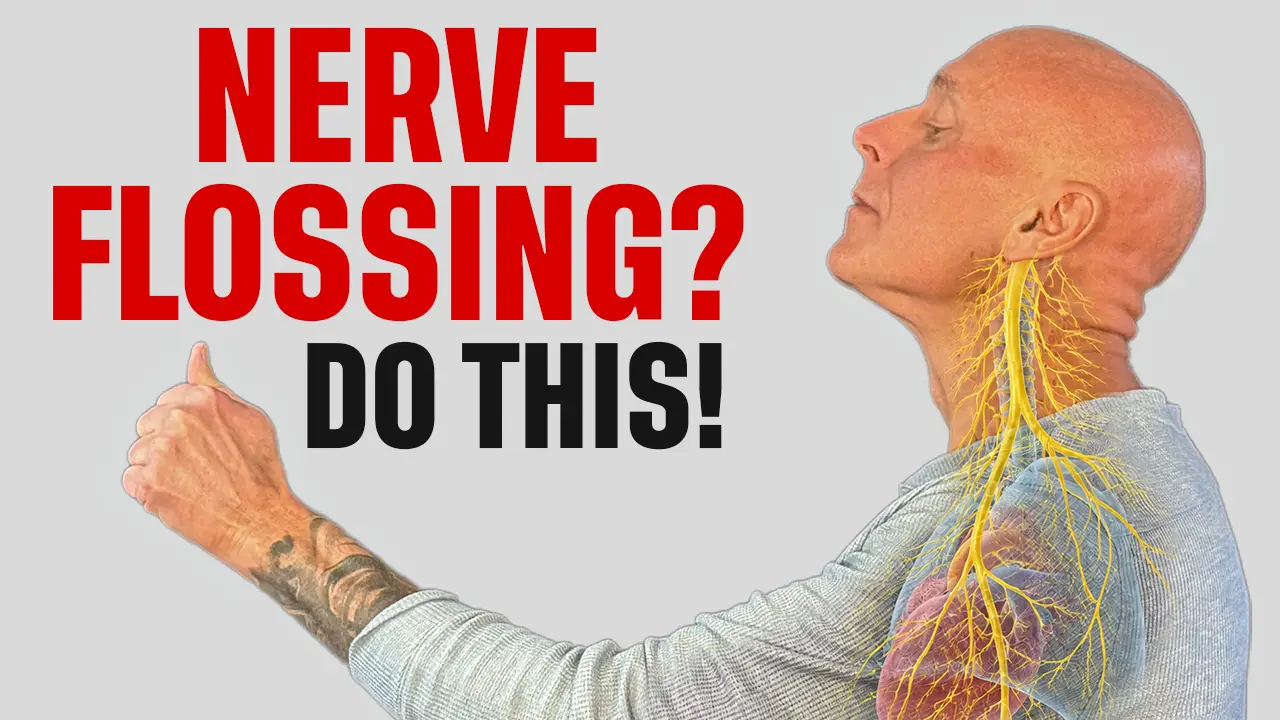
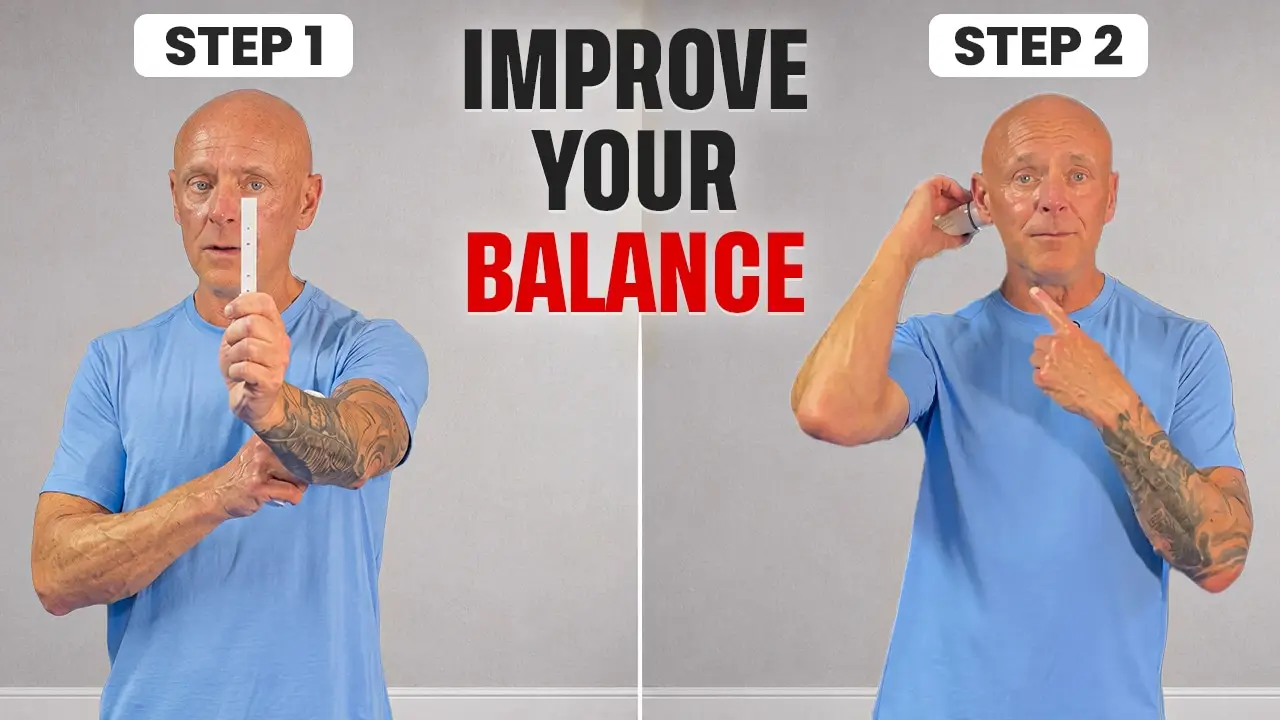
Here’s a good place to start. You start with something called VOR. All that we have them do is we stand them, typically in a stance that is relatively comfortable, shoulder width stance, or maybe feet together if they’re a little more advanced. Have them hold their thumb out in front of them, tuck their chin down about 30 degrees, and then we’re going to have them slowly rotate back and forth. What you can see happening right now, hopefully, is that my eyes are not leaving my thumb, but my head is moving. This is to trigger off something called the vestibulo-ocular reflex. We like to do that in rotation, in flexion and extension, and then also in diagonals. You can aim for about 30 seconds for each of those different movements. A lot of your clients with subclinical vestibular dysfunction will make about 15 seconds and go, I don’t know why, but I need to stop. If they say that, you know that you’re on the right track.
After we do that, we want to begin to up-regulate their vestibular system through something called sensory reweighting. Complicated words for what’s very, very simple. Close your eyes. Now you’re going to have them do some movements. You’re going to have them do something as simple as stand with your feet together, turn your head with your eyes open, close your eyes. Whenever we take the visual system out of it, because our brain typically relies on our eyes to tell us where we are in space and to confirm what the vestibular system is telling us, when we close the eyes, the brain automatically begins to pay more attention. That’s called sensory reweighting to the vestibular system and our proprioceptive system. You can start having them do 20 to 30% of their exercises with you in the clinic or in the gym with their eyes closed. Just make sure they’re doing it safely. That will drive the brain to pay more attention to this area that is currently not giving them great information.
Finally, we want to connect all this to dynamic movement so we can have them do that same VOR while they are walking forward and backwards. Very, very simple whenever you look at it, but it’s actually way harder than it sounds for a lot of people that have vestibular issues. Start with these three things. If you’re not familiar with vestibular training, I have probably 50 or 80 or 100 blogs on it here on the channel, so subscribe to the channel, go in the search bar, look for that. More importantly, again, if you are a movement professional of any kind, a doctor, coach, therapist, Pilates, yoga, martial arts, it doesn’t matter. We love working with people who teach movement, so click the link. We’d love to set up a call with you, chat with you about what we do, see if it’s a good fit. Other than that, good luck.