Hi, I’m Dr. Eric Cobb with Z-Health Performance, and today we’re discussing headaches in kids, their eyes, and headaches. This is a relatively well-known topic, especially for those of us working in my field, which is very brain-based in its approach. When someone presents with headaches, neck pain, or back pain, we invest a considerable amount of time examining their eyes, inner ear, and other systems crucial for navigating the world. In adults, a strong correlation has been established between eye strain, computer vision syndrome, headaches, migraines, etc. However, until recently, a definitive link between vision issues in children and headaches hadn’t been established.
I’d like to briefly address this today. A large study published in Nature Neuroscience a couple of years ago marked one of the first large-scale investigations into children experiencing chronic headaches, neck pain, and back pain. The study explored the possibility of the visual system, specifically the eyes, contributing to or even being the primary cause of these issues.
The researchers examined both control group children and those experiencing headaches, conducting eye evaluations and extensive physical examinations. Their findings revealed that children with visual impairments were two to three times more likely to experience headaches and neck pain compared to the control group. While this discovery was significant in the scientific community, it hasn’t received widespread attention. Hence, I wanted to ensure we address it in this quick blog.
When delving into the literature, we find that these children spend considerable time at school, focusing on screens or textbooks, which can exacerbate their vision-related problems. Certain aspects of vision, particularly related to accommodation—the ability to focus on an object, shift focus, and return focus—were found to be problematic among these children, predisposing them to headaches and like I said, a lot of neck and shoulder pain. So here’s basically what they found. The kids that were struggling the most and then subsequently experiencing the pain issues, a lot of them suffered from a deficit in what’s called accommodation, the ability to focus on an object, to look away from that object and return your focus of that object for a period of time.
And normally what we see when we deal with people that have accommodative disorders is that they are not great at having the eyes come together in a coordinated fashion, stay working together in a coordinated fashion, and then shift focus in a coordinated fashion. So that’s the reason I’m holding this, this string. A couple of weeks ago, we put out a blog talking about the Brock string.
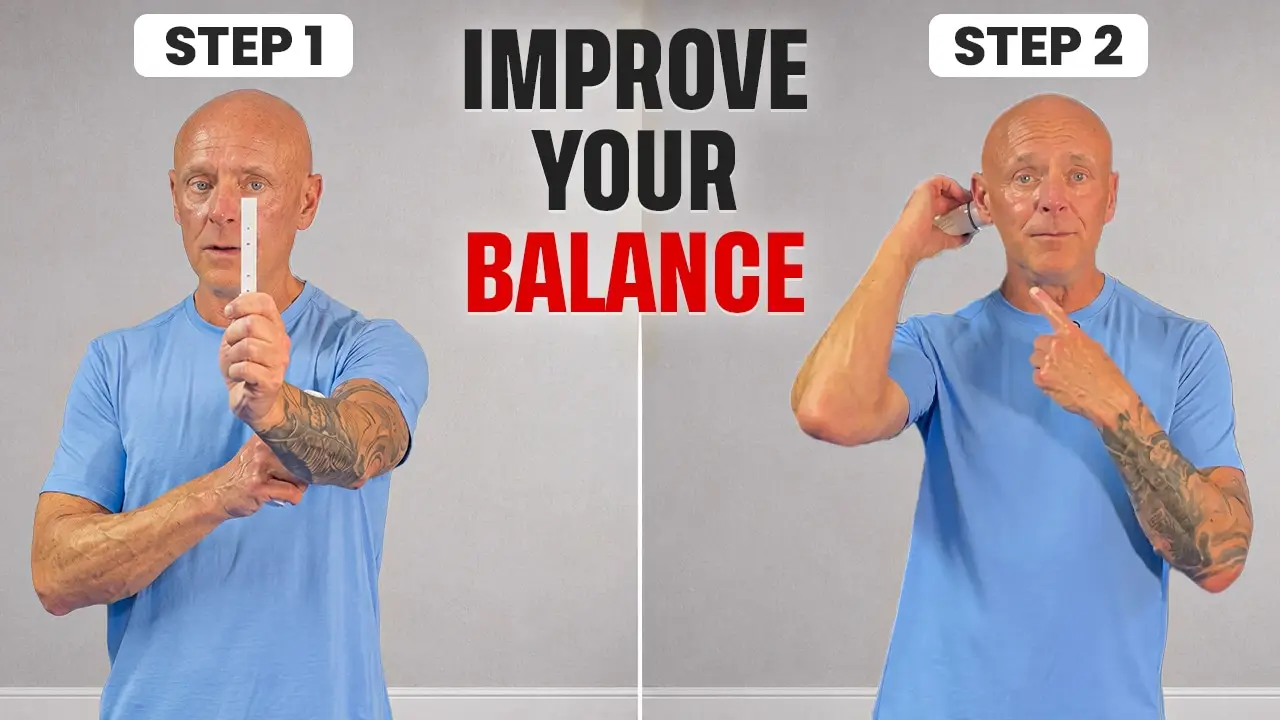
I also wrote a blog that’s hard to say. I wrote a blog about a Brock string, and this is a tool used in vision therapy. It’s been around for almost a hundred years. This is an amazing way to be able to identify whether or not you or your kids are maybe experiencing a type of what’s called binocular visual dysfunction. The way that this thing works is I hold the string up to my nose, it’s got a bead on it, and if my eyes are functioning correctly, even though it sounds weird, I should see two strings going into the bead, forming this nice V with a point at the bead. If we were to look at these kids in this study or having headaches and neck pain, etc., most of them would not be able to do that.
In fact, they would look at this and they would go, oh, there’s one string wrong. That tells us that there is a binocular visual dysfunction. Now, usually also what we see with that is that these kids will have difficulty with convergence, which means the eyes coming together. If I’m gonna look at something up close, my eyes have to do this.
Many times whenever we evaluate kids or adults with headaches and neck pain, whenever we ask them to do a convergence exercise, which basically could be as simple as take your finger in front of you, bring it all the way into the tip of your nose and follow it, we’ll see one eye coming in nicely in the other eyes, take a trip to Hawaii or whatever.
So we will often see problems with convergence. And in the therapy world, that is called convergence insufficiency. All of this is to tell you, if your clients have kids and they’re experiencing headaches on a regular basis, they’re experiencing neck pain or back pain or shoulder pain on a regular basis, the research is clear. You need to test their eyes. If you don’t know how to do that, refer them to someone that does. In most cases, what we found is that with working with their optometrist or ophthalmologist to improve or upgrade, if you wanna call it that they’re prescription. If they’re wearing prescription lenses, checking for astigmatism, etc., and then incorporating some basic vision therapy for them to make sure that their eyes are learning to work together, you can make near miraculous changes in how many headaches they suffer, how much back pain they suffer, and ultimately, this has a huge impact as well on their ability to focus and do their work in school. So there are academic, cognitive and emotional factors that eventually roll out from all of this as well, and it all boils down to how well these are working.
Alright, if you’re new to Z Health, we’re a brain-based education company. We work with doctors, coaches, and therapists, and this is the stuff that I love. It is very easy to blame pain on a given structure, and 90% of the time we’re wrong. When someone has neck pain, we think, oh, it must be the neck.
Usually it’s not. Usually it’s something else. They have back pain. Hey, it must be the low back. It must be the disc. Usually it’s not. Those structures are playing a role, but they’re not the causative factor. Often it’s something else, more complex, but often also simple. Maybe it’s the eyes, maybe it’s the inner ear.
So brain-based practitioners, this is what we excel at. And then blending this with traditional modalities like mobility and strength, etc. So if that is you and that is of interest to you, make sure to check out our free resources. Otherwise, just subscribe to the channel. Keep coming back. We’ll keep showing you weird devices and give you updates on how to think more holistically in a scientific way about your body.
Download our Free Neurofundamentals Ebook