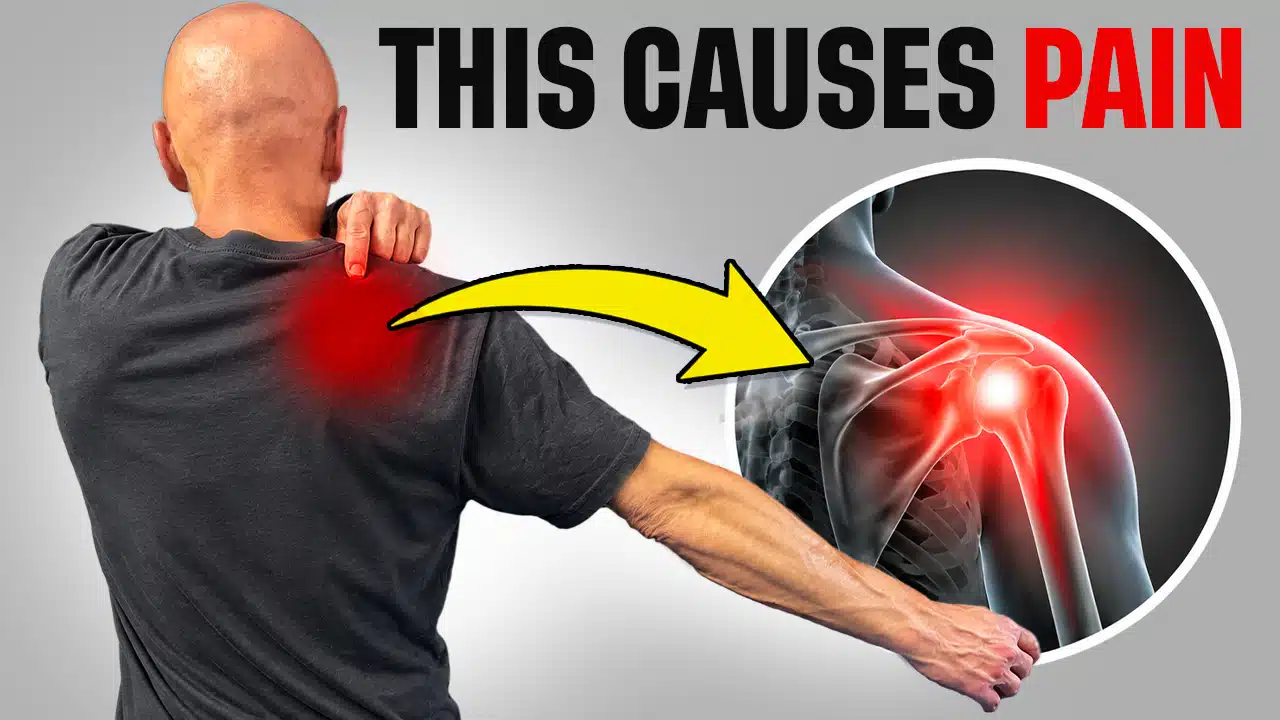
The solution to your shoulder pain may be in your hands. Whenever we look at the research around people that have limited shoulder mobility and chronic shoulder pain, one of the things that we almost always find is that they have an excess capacity to flex their hand and they’re pretty bad at extending their fingers. And if you think about it, if you are an athlete, you do a lot of training, what you’re going to wind up doing is a ton of grip work, whether you want to do it or not. If you’re picking up dumbbells, you’re doing pull-ups, it doesn’t really matter. Our flexors tend to be overworked consistently compared to our extensors. And whenever we look at this neurologically, we have a couple of different nerves that feed that into the hand, ulnar nerve, median nerve, radial nerve. And whenever we are constantly gripping and we’re constantly creating more and more tension in a flexion pattern, very often that can begin to tether the nerves distally, which ultimately is going to create proximal issues, right?
So what we’re going to talk about really quickly are a couple of different nerve exercises that you can do and some very simple finger retraining that can make literally all the difference in your shoulder. All right. Another reason for this is neurologically. If you look at the distribution of brain areas in relationship to our body, what you will see is that your hands are huge in the brain. So if we have poor motion, poor mobility, poor control and excess flexor tone, whatever it may be in the hands, it’s going to be typically reflected in other areas of the body. And what we typically see is shoulder issues.
Before we jump into this, if you are a movement professional, a doctor, a therapist, a coach, a movement professional of any kind, and you’re interested in learning how to blend applied neuroscience and what you do, click the link below and make sure to give us a call. Cause we’d love to chat with you. Now let’s get into this.
Typically when I am dealing with shoulder issues, I’m going to start off testing a few things. Um, I’ll do some sensation testing in the hand. I’ll do some strength testing in the hand. Uh, and often what we will find is that people have mild sensory deficits. Let’s say that my right hand or right shoulder is my problem and I’m testing skin sensitivity on the pinky, on the index. I’m going through all the fingers and I compare it to the other side. Very often it’ll be like, it feels a little less precise on the problematic shoulder side. And then maybe we do some strength testing. I can use a dynamometer. You can just always have them shake your hand really hard on each side. You can compare strength or you can do more specific muscle testing if you know how to do that.
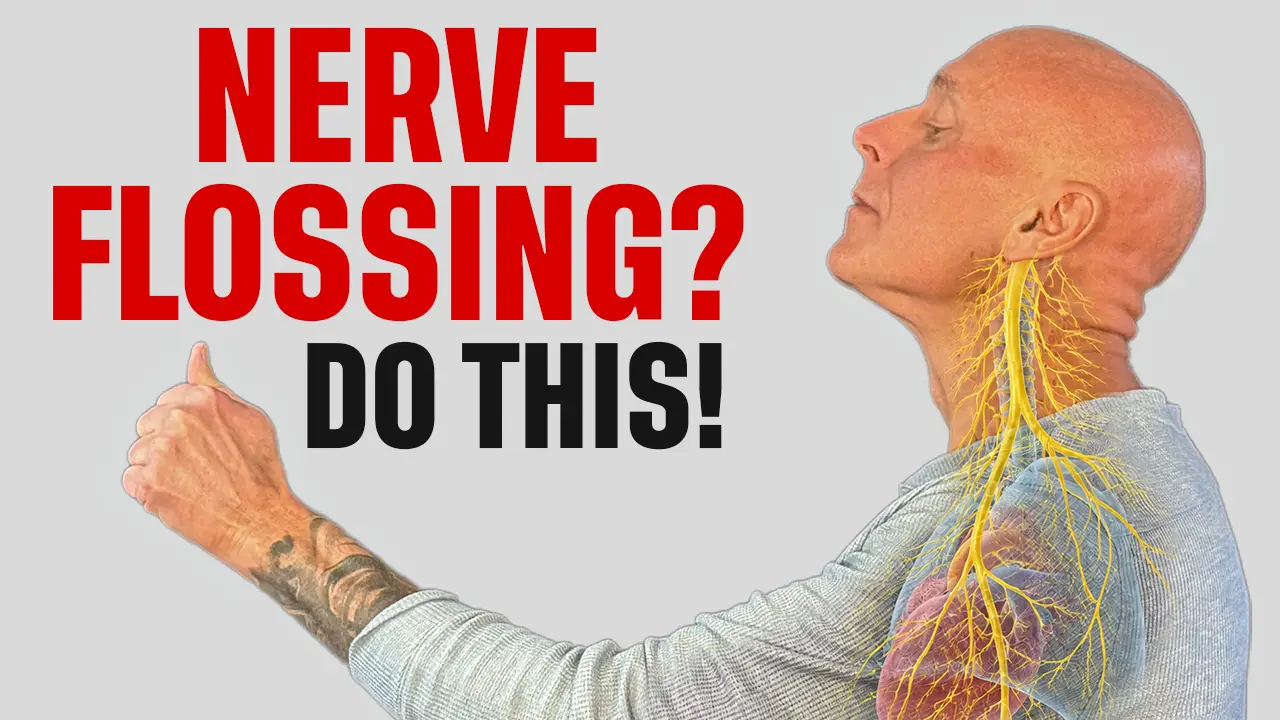
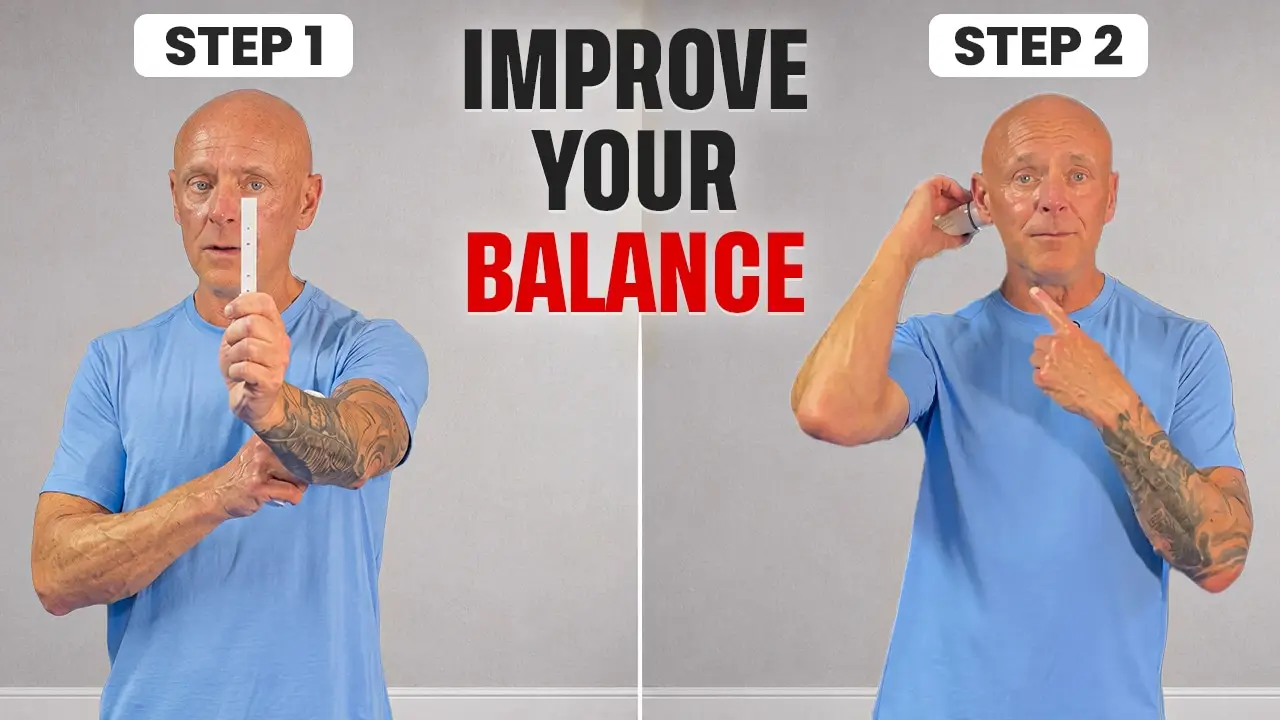
So if I find sensory or motor problems, either one in the hand on the involved side, I’m typically going to go through two neuromechanic drills. These are nerve flossing or nerve tensioning exercises. The first one is for the median nerve. If you’ve never done this, you can look at about 17,000 other blogs I’ve done. I’ll go through it quickly. You’re going to get nice and tall. You’re going to pull your shoulder blade down. You’re going to extend your fingers, extend your wrist, lock your elbow, externally rotate, everything abduct, pull your shoulder blade down. Now, once you’re here, you’re going to feel some tingling typically in your thumb, your index finger and your middle finger. What we want is very mild tingling three out of 10 intensity. And from there you’re going to tilt your head away. And we may just pump our shoulder blade a few times and then hold all of that. And then pump my neck a few times. And then maybe my wrist a few times. Again, the whole idea here is that we want to work through the chains are all the different joints involved in that chain of tension. You want to accumulate around 30 reps and then you’re going to switch. The next nerve that you’re going to go after is the ulnar nerve. Now the ulnar nerve looks cool. All right, we’re going to do this again. It’s get nice and tall, pull our shoulder blade down a little bit. Or again, we’re going to extend our fingers, extend our wrist, but now we’re going to flex our elbow and we’re going to flex our shoulder. And then we’re going to roll it out to the side. Now in this position, I’m going to turn and look at you. I’m going to tilt my head away and I’m going to pull my shoulder blade down a little bit more. And then I’m going to rotate my thumb forward. And if I do everything correctly, you get that nice tingling sensation in your index and ring finger. So basically for the median nerve, we’re going to cover your thumb, your index and your middle and the ulnar nerve. We’re going to go after your ring finger and your little finger. When we do that, we’re going to be in affecting most of the intrinsic muscles in your hand, which is where some of these nerves can become tethered from too much flexing. So you’re going to do about 30 reps, like I said, of light tensioning of both those nerves. And you’re going to follow that up with a super complicated exercise. You’re going to grab a rubber band. Now you can go to, you know, different therapy companies and get those super cool little extensor training, finger training rubber bands that you have a little hole for each finger, or you can just get a rubber band and you can find some that are just strong enough so that you wrap them around your finger and you begin working on finger extension. Most of my clients are absolutely shocked that about 10 reps of finger extension, they’ll be like, this is a rubber band and my forearm is burning. My hand is burning. And after 10 reps, I go, okay, relax it and retest your shoulder. And probably about 80% of the time people go, my shoulder feels better. Correct. So again, we have to counteract some of the stuff that we, it is created by the nature of being humans. We are flexing most of the time, grabbing things most of the time, and we are rarely getting sufficient levels of extensor activation to make sure that the proximal portions of the body are getting the sensory input and motor input that they need from the hand.
So for today, if you have shoulder issues, don’t forget the hands. All right. They make play enormous role. And if you have to guess, guess on rubber band exercises median and older nerve glides, because they were probably 80 to 90% of the time are going to be a primary solution for you to try.
So again, if you are a movement professional, a doctor, therapist, coach involved in movement at any level, and you’re interested in blending cutting edge neuroscience into what you do, click the link and give us a call. We’d love to chat with you.