If you have right shoulder pain, it is possible that you are getting referred pain from your liver or gallbladder or diaphragm. What? Yes, your right shoulder pain may have nothing to do with your right shoulder at all. So if you have right shoulder pain and you have stretched it, mobilized it, manipulated it, given it shots, massaged it, shocked it, iced it, heat, and nothing’s happening, it may be time to look elsewhere.
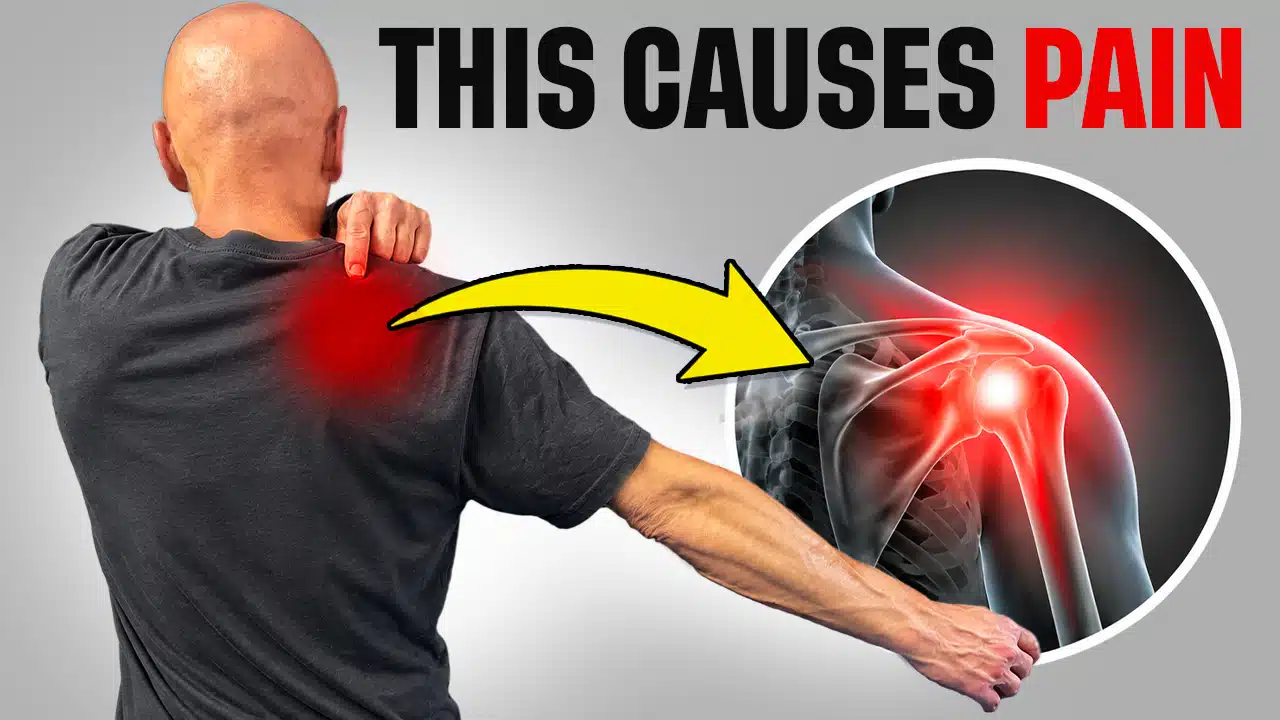
Now, there are lots of other things that might cause right shoulder pain, but literally one of the most common reasons for the right shoulder to hurt is low grade, and important to hear here, non pathologic, meaning I don’t, you don’t necessarily have to have a liver disease or a gallbladder disease or a diaphragm disease for it to create shoulder pain, low grade inflammation or mobility issues that are creating aberrant signals to your spinal cord and central nervous system can cause what’s called viscerosomatic pain, meaning it’s coming from the, the viscera, your guts or wherever, but it’s showing up in the somatic system, a muscular system.
We have known about this in the movement world since the late 1800s. In medicine, these are called head zones. You can get on Google and go head zones, what are they?
And it’ll show you these cool little maps of, Hey, if you’re having a liver problem, this is the most common place for you to have pain here. And in that, that little spot right beside your scapula, that one spot that’s always hurting, which most people go, ah, it’s my rib. Sometimes it is, sometimes it’s not. Sometimes it’s your liver or diaphragm.
If I have diaphragmatic issues, it’s often the upper traps. If I have kidney issues, it’s in my lower back. Now, the reason that this is important, number one, it’s an interesting neurophysiologic fact that the viscera and the soma, the body share space in the spinal cord. And our brain maps, muscles and joints and tendons and all that stuff much better and more accurately than it maps the interior of the body. And as a result, if there is a problem with the interior system, whether that is your liver, your gallbladder, your stomach, whatever, it is incredibly common for us to feel pain from that in a body tissue. And so often a movement, almost say a movement issue, but something that feels like a movement problem or a muscular problem is actually related to deficient signals or incorrect signals coming from the viscera.
So how do we test this on ourselves? Let’s say you have right shoulder pain and it hurts when you lift your arm, or it hurts when you do internal rotation, or you have ongoing right trap pain. What we can do is we can come in and we can change what’s happening around the diaphragm on the right side of the liver, just with some physical pressure.
So the way that I like to do this, take your fingertips, come underneath the rib cage on your right side. And press in and roll your fingers up a little bit. Now, it will help if you bend your knees and you tuck your pelvis a little bit and you try to have kind of a relaxed abdomen. Now, once you’re there, you’re gonna take a breath in and you’re gonna then breathe out.
As you breathe out, you want your fingers to move up a little bit further. You’re gonna curl them up and you’re looking for sore or tender spots or areas that have more tension than what’s around them.
Now, on your next breath, don’t let your fingers go. Keep them in that newly found position. So now as you breathe in and the diaphragm has to move down on that breath in, you’re actually gonna get more contact and more pressure into the diaphragm itself.
Do three or four or maybe five reps of that, and then come and stand back up and retest your shoulder. Retest your trapezius and note if it changed, if it made a significant difference, meaning you have less tension, you have less pain, guess what? You can maybe stop doing so many scapular mobilizations and whatever you’re doing, and instead do some breath work with some hands-on work around the diaphragm and liver on the right side and that may actually be the solution to your right shoulder pain. This is just one of the concepts that we talk a ton about in our T-Phase course, which is kind of our hands-on course and our core curriculum. So I would like to share this information because I have probably over the course of my career, seen more right shoulder and right trapezius problems go away after dealing with head zones than I have ever found from trying to do something very specific to the right shoulder itself. So this is worth testing and it’s worth investing some time in.
If you are new to Z-Health, we’re a brain-based education company. We specialize in teaching doctors, coaches, and therapists from all over the world how to blend neuroscience driven brain-based training into what they’re already great at.
So if this is of interest to you, subscribe to the channel, check out our free resources. We would love to share more with you.