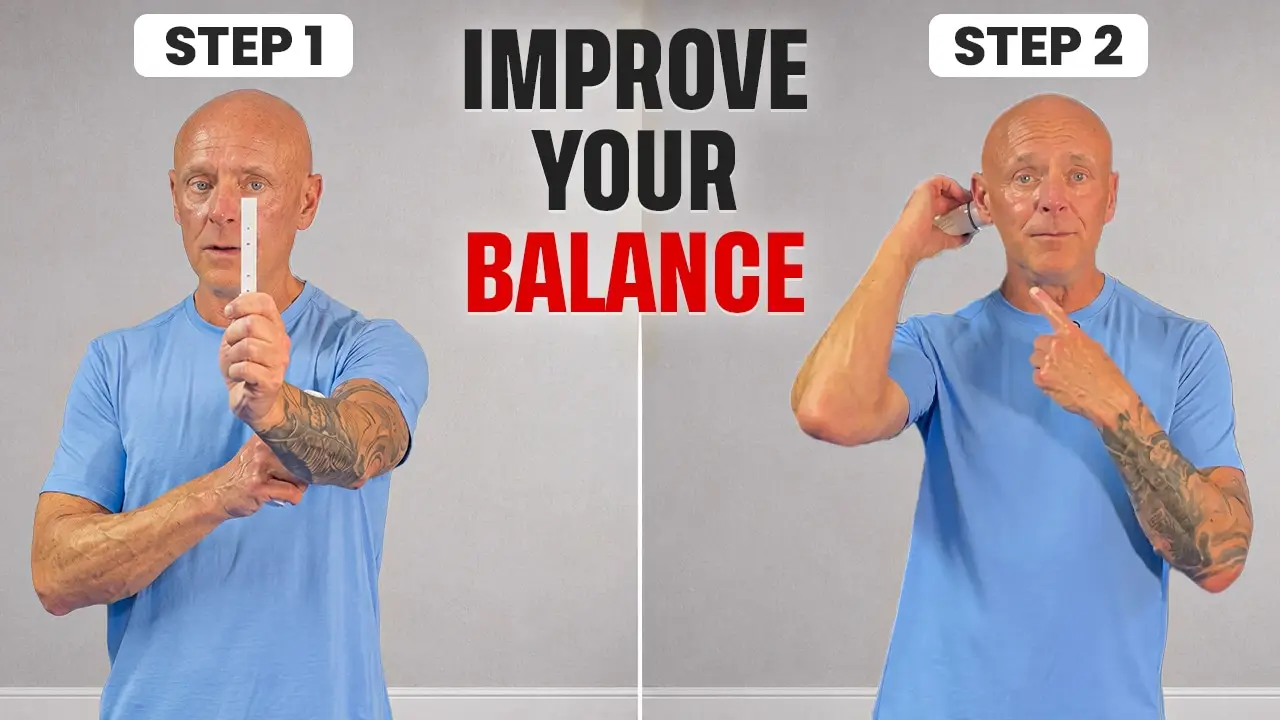
Your eyes are probably the most important part of your entire body when it comes to actually moving through the world appropriately. What’s weird is that it is almost never trained.
What do I mean by that?
Well, if you actually look at the fitness industry, the health industry, the rehab industry, how many people are actively incorporating eye exercises into what they do? This is becoming more common, thankfully, over the last two decades, but it’s still probably less than 1% of the general population or the athletic population are actually training their eyes with any regularity.
Now, why is that a huge deal?
Well, like I said, your eyes are the most important system in terms of how you move through the world. For sighted individuals, and even sometimes in unsighted individuals, whenever we look at brain space dedicated to visual function, it is enormous.
Depending on who you read, they may say anywhere from 30 to 70% of your brain is dedicated to, or at least partially involved in, visual processing.
That is because vision allows us to look around the world and figure out what’s dangerous and what’s not dangerous.
So what we’re going to talk about today are six exercises that I think should be a part of every single human being’s training program. If you do work with unsighted individuals, I actually still do a lot of these with people who are blind because we’re going to start off just working with muscles.
Your eyes have muscles and just like any muscle anywhere else in the body, if it is stuck in a given position all day, every day, eventually that’s going to create problems.
So whenever we look at the eyes, we have what are called extraocular muscles. We have six muscles around the eyes that help us move them.
All right, those muscles are controlled by three cranial nerves. Those cranial nerves have huge impacts throughout the brain because our eyes are not just involved in seeing. They’re involved in our balance. They are involved in pain modulation. There’s just a ton of things.
So whenever we start to train these, you can have body-wide effects immediately. So if you have something right now where you are stiff or tight, let’s say your back is tight, you have knee pain, what I want you to do is I actually kind of want you to warm it up and I want you to notice what you’re currently experiencing in your body because every time we do an exercise with your eyes, I’m going to have you retest it because I want you to see for yourself if vision exercises make an immediate impact on how the rest of your body is performing.
Again, having done this for two-plus decades, if I am teaching at a big conference and I have 400 people and I want to pick one exercise that will, from the stage, if I have everyone do it with me, probably make an immediate difference in people’s range of motion or pain, I do a vision drill. That’s how powerful it is. And that’s how much I’ve come to trust that we need to train the eyes.
So again, let’s say you have tight shoulder range of motion, your hamstrings are tight, your back hurts, your knee hurts when you do a lunge, whatever it is, test it, get a baseline and then let’s get started.
All right. So the first exercise that we’re going to do is eye isometrics.
I want you to imagine that you are staring at a compass. So we have north and south, we have west and east, and then we have our southwest, southeast, etc. So basically eight points.
What we’re going to do is we’re going to take our eyes and we’re going to go to each of the points and we’re going to hold there for five to 10 seconds.
This doesn’t look super exciting when you do it, I promise.
All right, we’re just going to hold. So I’m going to go up and then I’m going to go down for five, and then I’m going to the right for five and the left. I’m going to go up and left, up and right, down and right, down and left.
If you are a normal person that does not really train your eyes very much, I can almost guarantee you that two or three of those positions were actually uncomfortable. You went into position and it actually maybe hurt a little bit or it felt like something was stretching or it felt odd.
I don’t want these to be that uncomfortable for you, but I do want you to be aware that that’s telling you that your eyes have been caged for a long time.
If you think about any body part, if you never stretch your hamstring or you never reach over your head for 20 years, what do you think that’s going to do to the musculature? It’s going to change its ability to function. The same thing is true of our eyes.
So in very short order, we do five seconds in each position. We’re going to get a pretty good window into, hey, how are my eyes just in terms of the ability to move them?
What I typically have people do is five to 10 seconds in each position and then follow up with three to five eye circles.
What I mean by that is exactly what it sounds like. You’re going to put your finger in front of you. You’re going to follow your finger in a circle and you’re going to try to emphasize going in a full range.
If you want to make it more challenging, you can bring it really close because typically the closer it is to your face, the larger the range you will force yourself to use. I want you to challenge yourself to go as far as your eyes can go.
Now, obviously, like I said, if it causes any issues with you, if you start to get a little dizzy or sweaty, or your eyes are hurting, stop. But I want you to understand that yes, they are that powerful.
So after you’ve done your one minute or so of movement exercises going after those six muscles, go back and retest and see how you feel.
Immediately for me, big changes in both my shoulder internal rotation and my basic forward bend. And I’ve been doing this for a really long time, but my eyes are a little tired today. I’ve been staring at cameras for a long time under lights.
So for me, even at the end of this session, what am I going to go do? I’m going to go move my eyes.
So that’s exercise number one. Now, exercise number two, we want to start to work on something called smooth pursuits.
Smooth pursuits are very simple exercises where we are going to be trying to pursue a moving object smoothly. That’s the name. In neurology, this is a very standard test.
The key here is that we’re going to start and we’re going to be following our own finger.
The way that I’m going to have you do it, you do two versions. Get nice and tall, look at your finger and you’re going to start moving it to your right and then take it up and take it down and then back up and across.
Now at this point, switch fingers, keep your head still and just follow the moving finger. Not at that speed. Really, really simple. This is called a smooth pursuit.
Now, if I was doing this clinically, I’d be watching your eyes because people that really struggle with this, what they’ll do is they’ll look at the finger and then the finger will start to move and since they can’t follow it well, they’ll jump ahead and then as it moves, they’ll jump back to it.
Or they’ll start moving, the finger will start moving, they won’t look at the finger and then they’ll try and catch up to it. Plus, they’ll move their head a lot.
So, you may actually have to figure out with your own head and neck using a camera if you’re actually keeping your head still and just moving your eyes.
That’s exercise number two.
I want you to aim to do that for 30 seconds to a minute, just the big H pattern. And then for another 30 seconds, you’re going to do the same thing that we did previously just to stretch the muscles.
You’re going to be doing it in a circle, but rather than doing a really, really big circle, you’re going to do a smaller one and you’re going to move a little bit faster and you’re going to do it in both directions. Very simple. Smooth pursuits.
So we’ve worked the muscles into full range of motion. We’ve now trained them to track moving objects. That’s two.
We have to keep going, but before we do that, if you are a movement professional, a doctor, a physical therapist, a movement coach of any kind, Pilates, yoga, martial arts, personal trainer, you work with people in pain. If you work with people that move and they have eyes and you’re interested in bridging the gap between what you know and this kind of new modern neuroscience-based approach to improving movement and pain, go to the pinned comment and get in contact with us because we’d love to share more of our information with you.
So, we have done two exercises. We’re going to go to the third one now, which is a saccade.A saccade is a quick shift in our focus.
If my head is still and I have a target to my right and a target to my left and I’m looking at my target on the right, if for some reason, let’s say this one moves over here, I’m going to do a quick switch to that. That’s called a saccade.
In normal life, we often micro-saccade hundreds of times per minute. Like if I’m looking at someone, I think I’m looking at their eyes, I’m actually not. I’m saccading constantly.
And we actually are wired, when something moves, to move our eyes to that newfound stimulus to make sure that it’s safe. This is one of the most classic tests that we use in neurology to see what’s happening in different parts of the brain. So to train your eyes, in part, you have to work on saccades.
The easiest way to do this is to either use your fingers or put up two Post-it notes on the wall.
It doesn’t really matter and they don’t always have to be level. They can be level. They can have one up and one down because guess what? We saccade up and down. We saccade right and left. We actually saccade near and far sometimes.
So we have a lot of different versions of saccades.
Your job is to work on this for 30 seconds to a minute at a speed where you can very quickly move your eyes.
But here’s the key. I want you to make sure that every time you move your eyes, your head doesn’t move, and you’re seeing the target clearly. Whatever it is that you’re moving to, if it’s just a blur before you go back to the other side, we’re not really training the brain as well as I would like. All right.
Now, we’re doing this in a really gross way. In a clinical setting, we put goggles on you and there are a lot of other ways now using computers and VR that we can actually test your eyes to make sure that your saccades are accurate. But this is an essential piece of vision training. It impacts not just your cortex, but also your brainstem. So again, you need to include this. So you’ve done your range of motion work. You’ve done your smooth pursuits. Now you’ve done some saccades.
Next, we’re going to go to near-far switches or accommodative training. What does that mean?
Really simple. You’re going to put your thumb close to your eyes. You’re going to look at it and then look out the window.
And what I’m going to do is switch to something far away and then come back to my thumb.
Very, very easy in concept.
It’s actually much harder to do for a lot of people than it sounds because your job here is that this has to be clear, whatever’s close, and whatever you look at in the distance needs to be clear.
For a lot of people, particularly with aging eyes, it will look like this: I’m looking at my near target. It’s clear. I’m looking at my far target. Clear. Near target. Clear.
That is what you will see for a lot of people.
That tells us that our accommodative system, which requires ciliary muscles and our nervous system to change the shape of our lens, has probably become undertrained.
Now, there are a lot of other reasons that we can have problems with accommodation, but this is something that, again, is essential for us all to train.
What are our timeframes? Once again, 30 seconds to one minute.
And I do recommend that you don’t just do this with something directly in front of you.
Over time, your far target can be up right, to the right, left, and you can switch hands. You can also vary the distance of your near target.
But this is one of our essential tools that I think belongs in the toolbox of everyone that actually wants to have a better visual system.And based on everything we’ve been discussing, hopefully everyone does.
Now, in between each of these, what should you be doing? You should be retesting to see how your body is responding.
What you will likely find is that one or two of these will probably give you a really positive impact on your pain and your range of motion, and the others probably won’t be as impactful.
That just tells us that that particular exercise is really important for your brain right now. But I want you to remember all of them.
So we have done our range of motion exercise. We’ve done our smooth pursuits. We’ve done our saccades. We’ve done our near-far training.
Now, what we’re going to do is convergence exercises.
A convergence exercise basically means I’m going to put my thumb or pencil out in front of me. I’m going to bring it in as close to my nose as I can until the target splits into two.
This is much easier to do with a thumb. It’s much harder to do with a pen. So we typically call these pen or pencil push-ups.
Because in general, people with untrained eyes, people that spend all day staring at a computer or a phone, when they start bringing that pencil in, it will often get really blurry or split into two at four to six inches from their eyes.
That, for me, is not great.
We want to make sure that our eyes are able to converge and stay focused on a target. There’s a lot of other stuff that goes into this. But your goal should be to get your convergence target at least to two inches from your nose without splitting.
And if you are an athlete and you’re really trying to push this, I like to have my athletes be able to get this all the way to the nose without it splitting.
Now, it will eventually get blurry. But again, if we can really converge our eyes, our eyes coming together, we should be able to get really close to our nose without actually having it split.
So that is our convergence exercise.
The last thing that we want to do for our eyes is we want to make sure that our eyes and our inner ear are connecting and talking well with one another. So we’re going to finish up with basic VOR exercises.
A VOR exercise is I’m going to put a target out in front of me. My eyes are going to stay focused on that target as I turn my head right and left, as I take my head into flexion and extension, as I right and left lateral tilt, and if you’re feeling really spicy, you can do nose down and left, nose up and right, and nose down and right, up left.
In each one of those motions, your eyes can never leave the target. You want to start off nice and slow, and then eventually move to a much faster pace.
Now, these have the potential to make you dizzy, make you feel weird. So if you have any of that, stop, talk to your healthcare provider, or do them slower, smaller, sit down, and make them feel safe.
But this is a menu. If you use this menu, you can accomplish all of this in about seven minutes per day to train the system of your body that is probably the most important one that we have for moving through the world safely.
You should have already gotten a personal experience of, wow, when I do that, my pain gets better. My range of motion gets better. These three exercises work great for me. Start incorporating those into your programs.
And if you are a movement professional, a doctor, a physical therapist, Pilates, yoga, if you teach movement for a living, please start incorporating these types of assessments and drills into your work with clients because they are absolutely life-changing, even though they seem too small to make a difference.
It’s just good neurology being applied in our movement settings.
All right. So again, if you’re interested, go to the pinned comment, get in contact with us because we’d love to share more information with you.
Otherwise, good luck.