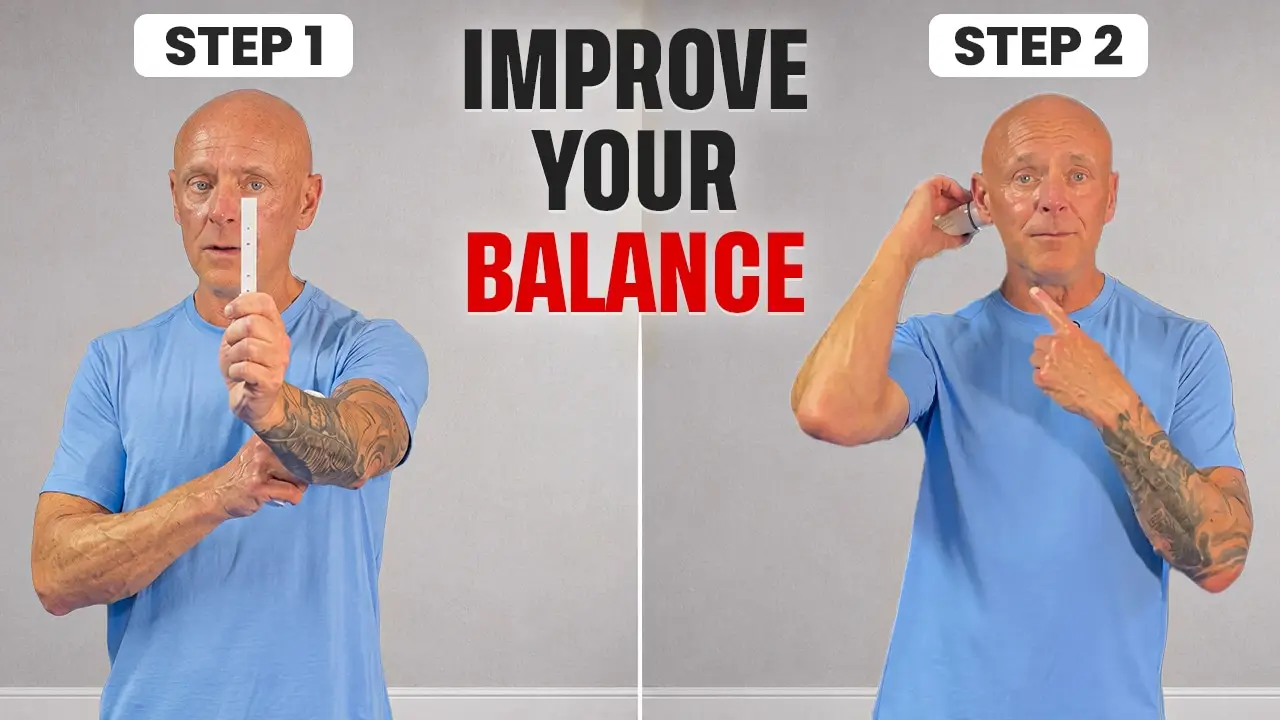
Pain does not equal injury and injuries is not equal pain.
This is a really important concept because today what I want to talk about is if you have been struggling with an injury that has not healed after weeks or months, I’m going to give you a reason as to why and it’s really important you understand it’s not because your body is broken.
Whenever we start talking about the idea of long-term problems, a lot of times people will talk to me and say, look, I hurt my knee eight months ago and it still hasn’t healed. It’s just not healing well. And I will start off with this first caveat. It is possible that if you have had a very serious injury, you got hit by a car, your leg was shattered or whatever and it’s eight months post-surgical repair, yes, you may still have some tissue healing that has to go because a lot of stuff goes into this. If you’re diabetic, if you have blood flow issues, there are a lot of things that can delay healing. That does happen.
But right now what I’m talking about is not that because if you have something that’s been delayed, you’re probably already talking to your surgeon or your medical team about that. I want to talk about something a little bit different, which is, hey, I hurt my knee eight months ago and it just doesn’t feel right. It just keeps coming back or it’s never quite felt the right way. It could be your foot. It could be, I’ve been dealing with plantar fasciitis for three years. I have a bad low back. I have heard that so many times in my career. I have a bad low back. What does that mean? Well, it drinks. It’s smoked. It’s not problematic. It shows up, hey, I’ve been over the time I choose and it hurts.
Whenever we start looking at issues like that, the question is why? The biggest problem that I see is that people don’t understand modern pain neuroscience because whenever we have something that’s lingering, it’s been there, it’s been there, it’s been there, we immediately tend to still, both professionals and non-professionals, try to figure out what in the tissue has not healed. You have to understand that tissues actually follow a pretty, well-documented time frame for healing where you go through some acute inflammation and then you go through what’s called a proliferation stage where you lay down tissue to repair the injury and then it remodels over a period of time. We actually know these stages that have known them for many, many, many, many decades of how things typically heal, but this is the problem. People think healing means the same thing as being pain free. It’s not the same thing at all because pain doesn’t come from the tissue, pain comes from your brain deciding that it doesn’t trust that area or trust something else in your system.
Our brains are constantly trying to protect us as we’re moving through the world and if they feel, our brains feel as if something is unpredictable or something is potentially threatening or dangerous, it will enact tools to change our behavior to prevent us from participating in that dangerous thing. It’s number one tool most useful from a developmental perspective is pain.
Whenever we’re going to do something and our brain says, that’s scary, it says, hey, I wanted to put the brakes on this immediately so it makes stuff hurt. So your first job, if you have been dealing with something for months and months and months is I need you to number one, stop equating healing with pain. They are not the same thing. You can have a fully healed tissue that can be excruciatingly painful. You can also have an excruciatingly bad injury and feel no pain. You probably have experienced that or you know people that have. So again, in our minds, we have to separate healing from pain because until we do that, we tend to wind up stuck.
Now before I go into what to do about all this or give you some examples, if you are a movement professional of any kind, a doctor, a therapist, a movement coach, personal trainer, you teach soccer, tennis, basketball, yoga, martial arts, if you work with movement of any kind and you’re interested in blending what you’re already amazing at with applied modern neuroscience, please go to the pinned comment, email us or set up a phone call because we would love to share information with you. All right.
So I’ve kind of labored, you know, I don’t want to belabor the point, but hopefully it makes sense to you the idea of separating healing from pain. Now we have to go, okay, how then do I start to deal with something that’s been lingering in my body? Well, you have to know a bunch of different systems. You have to start to understand the basic pain creation process in the human brain is all about signals that are coming in and your brain’s ability to integrate them and understand them.
So anytime someone has lingering issues, we will look at their visual system because your eyes guide you in the environment. So if you have problems with your eyes, it’s very common for you to have lingering pain, even though they don’t seem to be directly connected. The next thing we have to look at is your inner ear, because our inner ears designed to keep us balanced as we move through the world. So guess what? If your inner ear is problematic in any way, then every step that you take can be potentially dangerous. And whenever things are dangerous, what does our brain do? It likes to protect us. How does it protect us? It often uses pain. From there, we have to look at other things like, hey, you had this injury. Let’s say you did have a knee injury because you slipped on some ice, you landed on your knee and it’s been hurting now for eight months. Most of the time, whenever we do therapy on that or people do stuff around that, they’ll go, okay, we’ll get the swelling out and then we need to make sure that you have good mobility and that you have good strength. So you strength train, you mobilize it. Well, my first question is, you can’t even freaking feel it. And what do I mean by that?
As an example let’s go ahead and have you try something I’m assuming you’re watching this because you have something going on all right or you’re a movement pro.
So, let’s say you have pain in your neck. Let’s try neck. Rotate right. Rotate left. Look up. Look down. Tilt right. Tilt left. Do a chin thrust forward. Pull back. All right. Forward and back. Find something maybe a diagonal motion. Up and down. Find something that’s maybe a little bit uncomfortable. All right. And if you have chronic neck issues, then you already know. Yeah. It’s when I tilt my head and I look down. Ah, that’s when it comes in. So, what I’m going to ask you to do is we’re just going to now do a quick test based on something that I talked about. We’re going to talk about your trigeminal nerve. Trigeminal nerve is one of our cranial nerves, cranial nerve five. And it typically supplies sensation to the face. What most people don’t know is that if you actually go into the neurology of the trigeminal nerve, it’s also very tied into pain from pretty much anything in the upper extremity because of where some of the nuclei for the trigeminal nerve live in our brain stem.
So, here’s what we’re going to do. Let’s say for me, if I tilt my head left and I tilt my head down, I get a little bit of right upper trap pain. All right, cool. Now, you’re gonna do this. You’re gonna use your fingers or a Kleenex or something, and I want you to go on the right side of your face, and I want you to stroke over your forehead on the right, stroke over your forehead on the left, and ask yourself, do those feel the same? And then I want you to do it on your right cheek and your left cheek. And you ask yourself again, do those feel the same? And then along your right jaw and left jaw, do those feel the same? And then the right side of your neck, left side of your neck.
Now, we’re moving away from the trigeminal nerve there, but that’s okay. Now I want you to go above your right ear and above your left ear. Do those feel the same? Often what you’ll find if you have neck issues is that somewhere in that just basic evaluation, even doing it with your own fingers, which is the worst way to do it, you may find that hey, yeah, these actually feel somewhat different. Maybe the painful side feels a little bit more hyper sensitive.
So let’s say for me, because I have had neck issues in the past from some old injuries. Right now, as I’m doing this, my right side feels a little bit more sensitive than my left side. In most cases, when I’m dealing with pain, I’d go, okay, we want to try to create some symmetry. So, what I’m going to do is I’m going to actually work on the side that is less sensitive. So, in my case, it’s the left side. Now, if we go in neurology, when I touch the left side of my face, that’s going to cause stimulation on the right side of my brain. Right side of my brain typically helps control pain on the right side of my body. Huh, pretty interesting.
So now all of a sudden I’m going, okay, I’m just going to keep doing this. I’m going to keep paying attention to it. And now I’ll test again. Those feel almost the same. And so now I can retest the painful thing in my neck. Tilt in there. And I feel nothing. That is a very kind of maybe ridiculous demonstration, but it is a true demonstration of how neurology actually functions. And one of the reasons very often that people again fly around the world to see us. Because whenever you start to understand pain is separate from injury, it’s separate from healing. and that all of our systems are involved in getting rid of pain. It becomes very very clear that as movement professionals of any kind that we have to step up our game and make sure that we understand how neurology works.
So once again, if you are a movement professional of any kind, a doctor, a coach, a therapist, and you are interested in really diving deeply into how neuroscience blends with what we were taught in school and often enhances it tremendously because we actually understand the control systems, go to the pinned comment, make sure to subscribe to the channel, but also from the pinned comment, you can email us or set up a call. We would love to share this information with you. So, good luck with this and remember, pain does not equal injury, and injury does not equal pain.