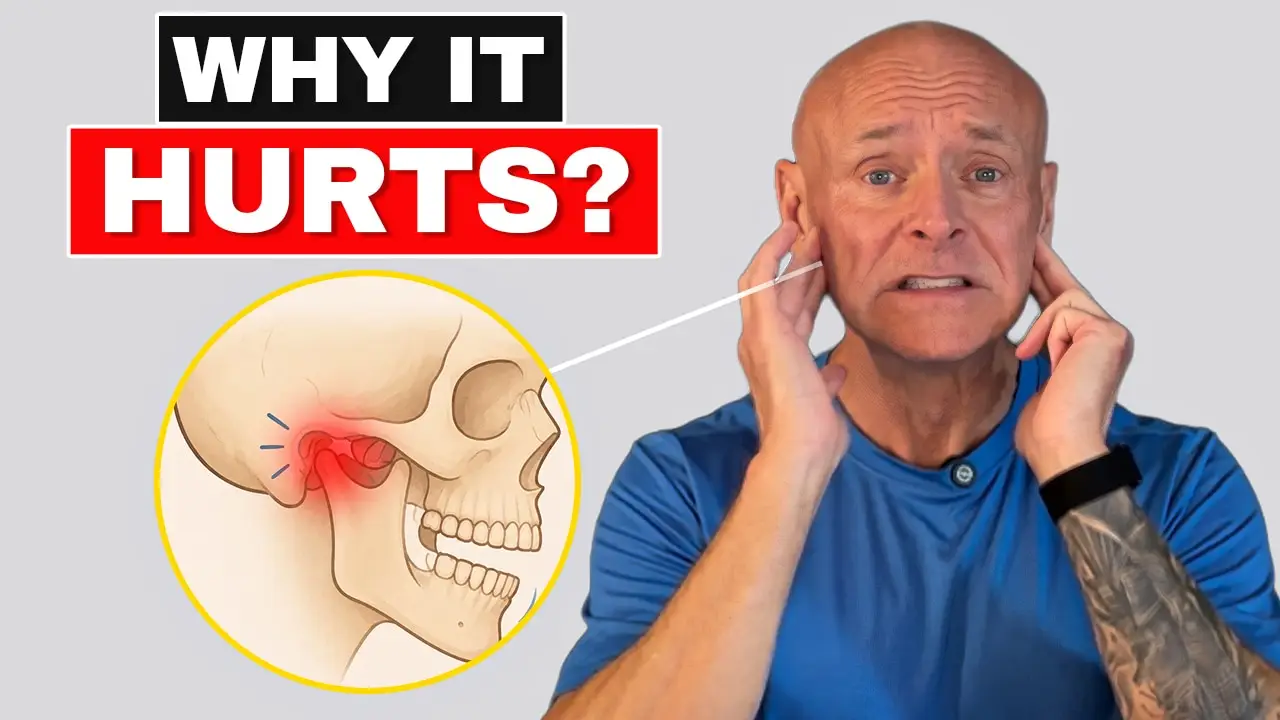
Posture is a brain problem, not a muscle problem.
I know it’s a little bit frustrating to hear that because if you’ve been in this world for any period of time, you’ve probably heard people give you all kinds of instructions around how to improve your posture.
And they will tell you to stand up straight, pull your shoulders back, tuck your pelvis, et cetera, et cetera.
They’ll back you up against the wall and get you into this rigid position. And you hold it for about 30 seconds and then you go to get a cup of coffee and your posture goes right back to what it was previously.
And there is a huge reason for this because, like I said, there is a muscular aspect to holding a position that we’ve commonly referred to as posture.
But really all this is being governed by your brain.
I need you to start understanding that if you are a doctor, coach, therapist, movement professional of any kind, that whenever we discuss posture with people, we need to be giving them a more accurate perspective on what it is.
Posture is a symphony of integrated inputs and your brain’s decision about what those inputs mean. Number one.
Number two, posture is not a static position. Posture is a type of movement control.
Whenever we can start kind of framing it from that perspective, all of a sudden, a lot of things that have been traditionally ignored in relationship to working with posture, hopefully begin to make sense.
So let’s just think about it for a second. What are things that could impact your posture?
Well, if you’ve ever noticed, if you can’t see very well, like you’re walking around in a dim or dark environment, do you think that you maintain your typical beautiful, upright gliding posture? Or do you become a little bit stiffer, a little bit more guarded?
Typically people become stiffer and more guarded because they are unsure about their balance. They’re unsure if they’re going into an obstacle. So we know that vision plays a huge role in posture.
Our eyes are telling us, is the horizon level?Are vertical lines actually vertical?
If those things are skewed in any way, our body will try to adapt to what our eyes are telling us.
So if you have vision issues, guess what?
Your posture is going to have to compensate for your vision issues.
What about your inner ear?
Well, if you know anything about the inner ear, the vestibular system, its primary job is to tell you which way is up and which way you’re going.
And so if there is any kind of skewed input, aberrant input from one side or the other side of your vestibular system, once again, guess what has to compensate for that? Your posture.
If you have joint issues, let’s say that you’ve broken your ankle in the past and no one ever told you that part of good rehabilitation is making sure that the sensations are the same as the other side.
And you maybe recovered good movement, but if I were to test the skin on your ankle, the skin of your foot, maybe you feel less on that previously injured side. Guess what?
Your brain has to take that into account as part of your whole movement map, and as a result, your posture will adapt to that. So we have the eyes, we have the inner ear, we have proprioception, we have tactile or cutaneous perceptions.
Everything that makes you up as a human being is contributing to your posture, which again, if you understand that, all of a sudden it makes the stuff where we stand you up against the wall and have you bend your knees and then tuck your pelvis and then pull your shoulder blades down and back and then lift your chin to the ceiling and say, there you go. That looks great. Hold that for how long? Forever.
Stops making so much sense because you can now have that posture and then go to work and you sit at work and you work for eight or 10 hours a day looking at a small screen.
And maybe like most people, it’s too low and it’s off to the side while you’re doing other stuff and talking to other people.
And your eyes and your inner ear and your fascia and your muscles are adapting to that long held position.
So does it make sense to you that you’re going to now solve that postural issue with some scapular retraction exercises?
At some point we have to go higher in the chain and think about what is actually involved in the system and how do we begin to solve it? All right.
So with that little introduction, again, if you are a doctor, a therapist, a coach, movement professional of any kind from Pilates, yoga, martial arts, sports, personal training, obviously posture for all of us tends to be a very big thing. Although most of the research on it does not point at all to postural dysfunction relating to pain, which is what we were all told.Look at the research. It’s kind of interesting.
But still, whenever we watch people move, we like for that to have a certain aesthetic.
We like for them to look a certain way.
And there probably is some things that we can look at from a biomechanical perspective that are altered in a less optimal direction whenever we have posture that is far from kind of our standardized ideal.
So for most of us, posture is a big deal.
So again, if you’re in that crowd, number one, go back and listen to the introduction again. And number two, if you want to see a modern kind of neuroscience-driven approach to dealing with posture and pain and performance, go to the pinned comment and get in touch with us because we would love to chat with you.
So how can we prove this to people? Well, we do a lot in Z-Health of what we call assess reassess. And this is basically for clients where we do a show and tell.
We say, okay, let’s look at your current functioning, let’s give you a brand new information, and then let’s see what happens to your function.
So that’s what we’re going to do today. We’re going to actually take a quick look at two of the most under-trained and overlooked systems that play heavily into posture, your eyes and your inner ear.
So the way that we’re going to do this is I’m going to have you do some kind of movement test.
Now, people sometimes when they hear me talk about this will go, well, why would I test movement if I’m interested in posture? Because of what I just said. Posture, it’s not a static position. It is a frame of reference to gravity and the world and how you’re moving through it.
So posture has a static and a dynamic component to it.
But if I’m standing upright, trying to look great in posture, and then I’m bending over to tie my shoe, my brain is still using all the same systems to determine my relationship to gravity and what my structure should look like in order to support my movement.
So it is actually often more important to do some type of movement assessment and reassessment when you’re trying to solve a postural issue than it is to simply take a picture, do a drill, and then take another picture to see how you look in the mirror. So keep that in mind.
So what I’m going to ask you to do is I’m going to have you test extension of some kind.
I would like for you to either test cervical extension or full spinal extension or shoulder extension or hip extension. Why?
Because whenever we look at a lot of postural dysfunction, we often see extension issues.
I actually am wearing these shoes for a specific reason.
If I turn to the side, you can see really, really high heels.
Now, the reason that I wanted to wear these is because whenever we look at things biomechanically, we know that the more I elevate the heels, the more the posture has to adjust and adapt.
Typically, we’ll see an anterior pelvic tilt occur the higher the heels, as opposed to, let’s say, one of my little Xero shoes with zero drop, right?
So there’s no change between the front and back.
Something as subtle as that can make a huge difference in what your muscles are doing.
But again, you can, as you’re looking at that, remember I said extension is a very big deal when we talk about posture, the footwear can drive people into extension and fix them there, right?
So it’s not only about, can I move into extension comfortably?
It is also about, am I held there in a fixed way?
So what I want you to do again, like I said, is either test cervical extension, test spinal extension, test shoulder or test hip.
And I want you to warm it up.
I want you to do five to 10 repetitions of whatever you’re doing and notice how far you can go and the level of comfort with which you can reach that limit.
That’s the most important piece of this is to go, okay, whenever I do these drills, does something change internally that actually makes the movement easier?
Now, once you’ve got your baseline established, first thing we’re going to do is a very, very simple, smooth pursuit exercise for your eyes.
I said, your visual system is hugely important.
One element of the visual system is the ability to follow something that is in motion.
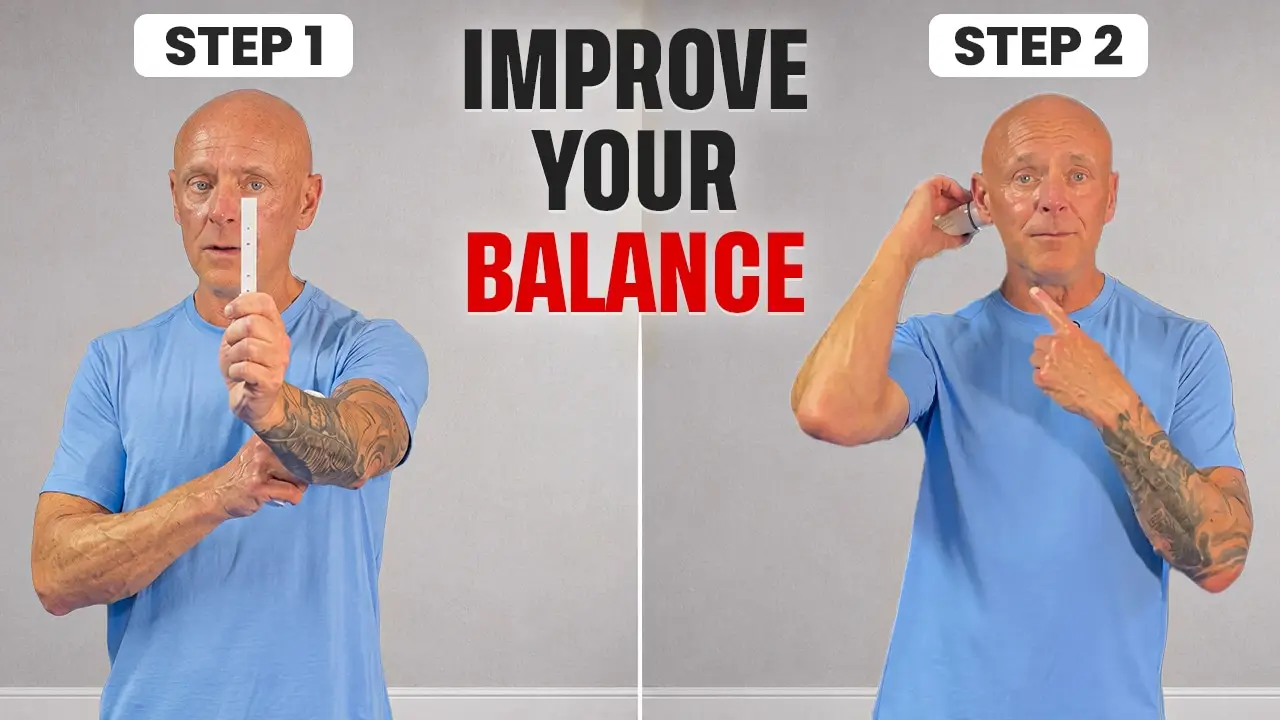
So I’m going to have you stand up nice and tall. You’re going to put your finger out in front of you.
You’re going to keep your head still, and you’re going to follow your finger to the right.
And then you’re going to make a beginning of an H and you’re going to follow the finger across and you can switch fingers to the left, keeping your head still.
And I want you to continue doing that for about 30 seconds. After you finish 30, maybe 45 seconds of that, what are you going to do?
You’re going to go back and test the movement again.
So retest cervical extension, retest spinal extension, retest your shoulders.
And for me, that actually made a pretty good difference.
I actually noticed less tension and actually noticed more range of motion.
If you notice the same thing, what did you just learn?
What you just learned is that what’s going on with your postural tone, the muscles in your back, your extensors is in part being driven by your eyes.
I’ve just spent about five or six hours on my computer prepping for this video shoots.
And so for me, getting my eyes moving seems to have an immediate positive impact on my postural tone.
Now, if that didn’t work for you, what did you just learn? Right now, whatever’s going on with your posture, maybe smooth pursuits, which is only one aspect of eye movements is not a key lever for you.
Either way you learn something. All right.
So we talked about the eyes. There’s lots of other things we can do with the eyes, obviously.
And I have hundreds of YouTube videos and stuff on that.
You can go watch other ones, but let’s now talk about your inner ear, your vestibular system.
Once again, see where you’re at, test your extensions, wherever you want to be.
And then I want you to do a very, very simple vestibular drill. This is called a VOR. This is for the vestibular ocular reflex.
All that you’re going to do is stand up nice and tall. You’re going to put your thumb out in front of you, and you’re going to focus intently on your thumb while you begin turning your head right and left. All right.
You don’t have to use a large range of motion and you don’t have to go as fast as I’m moving.
But basically, if you can keep your thumbnail very clear, it’s not getting blurry.
You can use that to gauge how fast to move.
Once again, we want to do 30 to 45 seconds of rotations, and then you’re going to retest again.
All right.
And see, did that make a difference for you?
Then you’re going to finish this whole vestibular thing up by simply doing nods, where once again, I have my thumb out in front of me, I’m looking at it, and I am simply nodding up and down.
Your job is to keep the image clear.
And so again, you use that as kind of your gauge for how fast you should be moving.
So after you’ve done your nods, once again, go back, do your test.
What a lot of you will notice is that rotation was maybe good for you. The nodding was maybe less good for you or vice versa.
This is a whole process that we use literally every single day with every single client throughout any training session where we’re saying, okay, brain, do this. Now try this intervention or this exercise or this drill, depending on your licensure, and then retest.
Because ultimately what we will figure out is that everyone needs some kind of specified stimulation in order for their brain to function better.
And when the brain is functioning better, it’s happier with the environment.
It’s understanding the signals it’s getting with more clarity.
All of a sudden, a lot of the postural issues that we often are complaining about or worrying about can just go away because the brain is utilizing now better information and has a better map of the world.
So again, posture is a dynamic living event and it is changing moment to moment.
It is time for our professions to move away from static positioning, static postures, as if those are the end all be all for helping people become better movers, better performers, and being out of pain. Because the research just doesn’t support that, number one. And number two, that denies the neuroanatomical reality of how posture is actually built and maintained in a real world environment.
So if you are a doctor, a therapist, a coach of any kind, a movement professional, and you want to dive very deeply into neurology and how it interacts with what we learned in school and what we need to do for real people in the real world, we would love to chat with you.
So go to the pinned comment and get in contact with us. Otherwise, hopefully you found some interesting benefits for yourself with the eye exercises, the vestibular exercises.
And remember, there are a lot of other systems involved as well.
If you have postural issues that you’re trying to address and your typical exercises just aren’t doing it, not a surprise.
All right, start expanding your thinking and you’ll be able to find a solution.