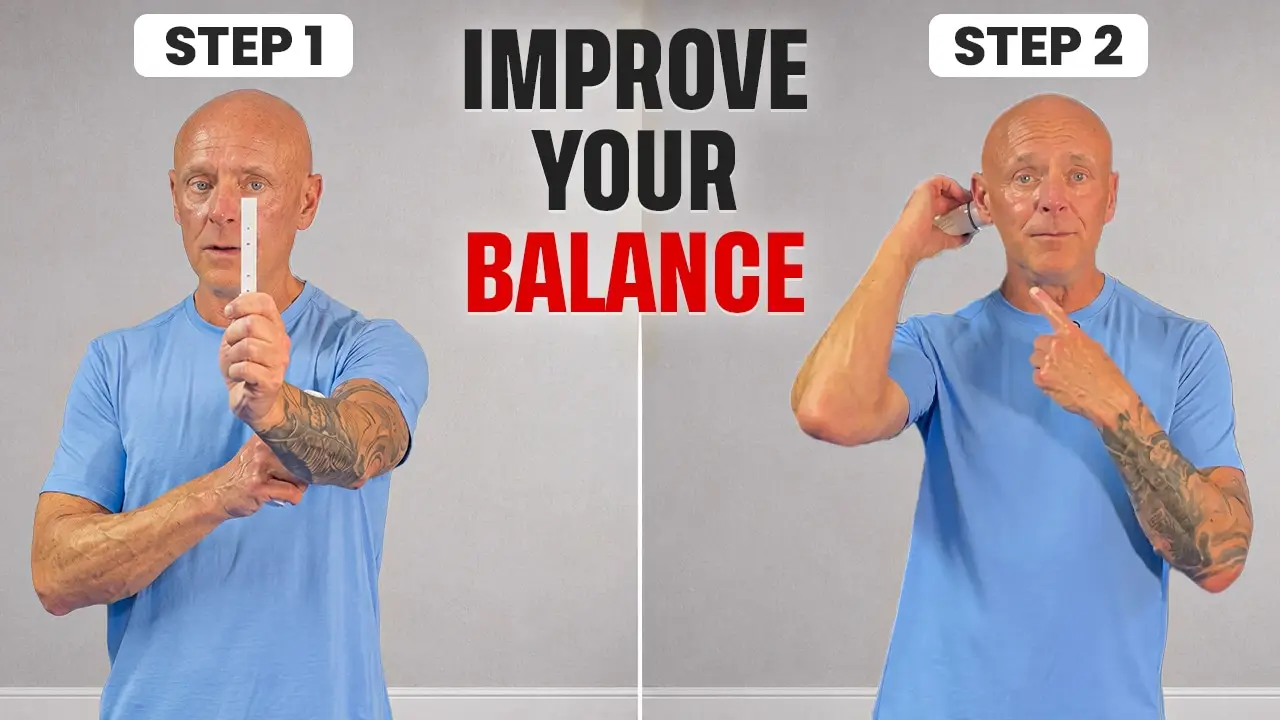
If you have hip pain that is not responding to more traditional exercises, I’m going to show you two brain-based ideas or approaches today that may make a huge difference. These are underutilized and often overlooked problems that actually generate hip pain. So we’re going to talk about them sequentially.
The first thing that I want you to understand is that your brain has maps of every body part in it. And whenever we look at how much space is dedicated to different areas and how much that area is able to interact with other areas in the brain, what we do know is that often our low back, our butt, our pelvis, and our hips are not as well mapped as we would like for them to be.
And when we have chronic pain, pain that has been going on for, let’s say, more than six weeks to three months, in the brain itself, if we do brain scans, we’ll start to see what’s called smudging of a cortical area.
That means that the amount of information there is becoming less precise. When things become less precise to the brain, the brain considers that more threatening. And the end result of that is it will lock down range of motion and will often generate more pain responses in an effort to protect you from yourself.
And we often see this happening in the hips. The hips are obviously incredibly important for force transmission and just moving through the world. So if we have poor cortical mapping of any type for the hips, it’s going to become potentially really problematic for us.
So how do we deal with this?
One of the first things that we talk about in the Z-Health system is that all movement is a symphony of sensation and movement, sensory and motor.
And whenever we look at a lot of the rehab approaches, let’s say someone has hip pain. The typical thing that people focus on is can you mobilize the joint, right? So can you move it? Can the muscles extend or move, flex in the way that they’re supposed to?
So generally what we see are people spending a lot of time working on joint mobility and working on the muscles themselves, trying to make them more flexible or activated or whatever term is most popular right now. And that’s all fine. But what is often missing is the foundation of just basic sensation.In other words, do you have a good map of where your hips are inside the space of your own body?
Now traditionally, whenever we do this, we tell people, okay, whenever we start looking at sensation, there’s a lot of different sensations that we could test. We could test just light touch, right?
So go to your hip that’s problematic. Go to the front of it. Lightly rub the skin. Go to the opposite side. Lightly rub the skin. Do they feel the same? The likely answer is no, especially if you’ve had pain for some period of time.
But what’s interesting is that most people they have never actually realized that that’s something that you can train. You can work on improving the sensation of light touch.
The other issue that often happens with hip issues is that people will only focus on sensation in one spot, like here or the lateral portion of the hip.
Your hip is a three-dimensional structure. So if you’re going to do sensory work and sensory testing, you need to test the front of the hip, the side of the hip, the back of the hip, and the inside of the hip.
Now, obviously, if you’re a professional, you start getting into making sure people are draped appropriately and have given appropriate consent. But it’s really important that we actually test three-dimensionally and train sensation three-dimensionally around the hip.
For a lot of people that I’ve worked with over the years, working on sensation was the number one thing that began to break the pain cycle.
Again, because these areas are very important, and if they’re poorly mapped, your brain will generate more pain. Now, we could do light touch. We can do sharp versus dull. We can do warm and cool. If you don’t know much about neurology or neurologic testing, take some classes with us or go on YouTube and learn how to do basic sensory testing because it’s hypercritical to movement.
All right, in that vein, if you are a movement professional, a doctor, a therapist, a coach of any kind doing Pilates, yoga, athletic training, or personal trainer, and you’re interested in bringing modern neuroscience into what you do, go to the pinned comment, subscribe to the channel, and contact us because we’d love to share with you some of the information that we provide.
Now, having said that, I’m going to show you one of my quick-start strategies that I typically find works really well with a hip.We have two different pathways in the spinal cord for sensation from the skin of different types.
But one thing that is often super effective in remapping the hip very quickly is the use of vibration.A lot of times, traditionally, we were taught, okay, let’s start off with light touch.The problem with light touch, from my perspective, is that we get light touch all day every day through clothing.As I’m sitting in a chair, walking, my skin is constantly being stimulated via the fibers of cloth. So I’m actually getting texture and light touch stimulation all the time.So I have personally found, and our students—we have about 16,000 of them—have found over the years that light touch, while somewhat useful in the hip, tends to pale in comparison to the use of vibration.
So I like to have people with hip issues begin using vibration for remapping first.What I will typically have you do is figure out, okay, what is my current comfortable range of motion?
So let’s say I’m having some right hip pain. And I go into this little bit of lateral lunge and I feel, okay, I’ve got some tension medially. As I go into an anterior lunge, that feels pretty good. But if I rotate, okay, I start to get a little pain there.All you’re going to do is take a small vibration tool.
This is one of my favorites. I do not want you using a massage gun. We’re not trying to thump the muscles into submission here.We’re trying to use something with a very small amplitude. So it’s basically just vibrating.
This is called the Mini Massager. You can get it on Amazon for about $25. It’s fantastic.You can take the tip off. I can use it on fingers. You can use it on jaws. And you can use it on hips.
Again, because we’re not trying to go deep. We’re actually just trying to make the brain aware.
So once you have this vibrating, you’re actually going to start working around the hip.
You just place it on the skin usually for 15 to 20 seconds.The key here is to actually focus and notice how it feels.You go to your less painful hip and you go, okay, wow. That’s interesting. I feel that more on that side.The side that’s more painful, I don’t feel it as well. So I’m going to spend a little bit more time.And then we’re going to map three-dimensionally.
So I’m going to go from the anterior portion. I’m going to go laterally. I’ll typically find my greater trochanter, the big bone here.I’m going to go just on top of that, just anterior to it, just below it, and just posterior to it.
And then I’m going to think about this angle and I’m going to take the massager and put it kind of in the gluteal fold.Once again, I’m just comparing it. I’m thinking about it. I’m going, okay, can I feel that?Once again, compare it to the opposite side.
And then finally, I have to go medial. So I’m going to get the clothes a little bit out of the way and I’m going to go as high as I can in the groin, up toward the bone and say, okay, can I feel vibration on the skin? How does that feel compared to the other side?
Spend about 30 seconds in each of these quadrants.After you’ve done that, go back and retest.
And what you may quickly find is the thing that was really painful to start doesn’t hurt at all.
If that is the case, what did you just learn?You just learned that your brain is saying the reason that I’m continuing to have your hip hurt is because I can’t feel it. I can’t map it.
All of a sudden, a $25 tool and two minutes later, you may have less hip pain than you’ve had for months or years.It is that powerful.So I’m going to really recommend that you start off with mapping the joint on the skin.Use a vibration tool, not a massage gun.Spend about two minutes and make sure to think three-dimensionally.
Now, the next thing I’m going to show you is very, very underutilized.We’re going to talk about a set of nerves that are more implicated in low back pain.These are nerves called the cluneal nerves.People really didn’t even start talking about these until about 10 years ago.
But what has been found is that people with chronic low back pain, particularly low back pain around the top of the iliac crest or in their sacroiliac joint where you have those dimples, often have involvement of one of three different sets of cluneal nerves. These nerves provide sensation to the skin of your low back, your sacroiliac joint, and into the sacrum and back of the hips.
Most people, if they’ve even heard of the cluneal nerves, have only associated them with low back pain.If you dive into some of the research on this, when the cluneal nerves are involved, between 47% and 83% of cases involve additional pain that was either sciatica or hip pain.
When you start looking for cluneal nerve involvement, I think it is extremely common to find it in hip pain. So the question then becomes, well, how do I work on a cluneal nerve?
It doesn’t anything or make any muscles do anything. It’s just a sensory nerve.It just gives information to the brain. That sounds a lot like what we were just talking about, right?
The cluneal nerve is providing a lot of data to the brain about your low back, pelvis, butt, and hip.
So what we have to do is make sure that the cluneal nerve is actually moving through tissue appropriately.
Often because of its surface nature and how our backs develop, it is common for the cluneal nerve to become entrapped.
So if we can make it move a little bit better, very often you’ll have a massive reduction in pain in the low back, SI joint, or hip.
So here’s what we’re going to do.
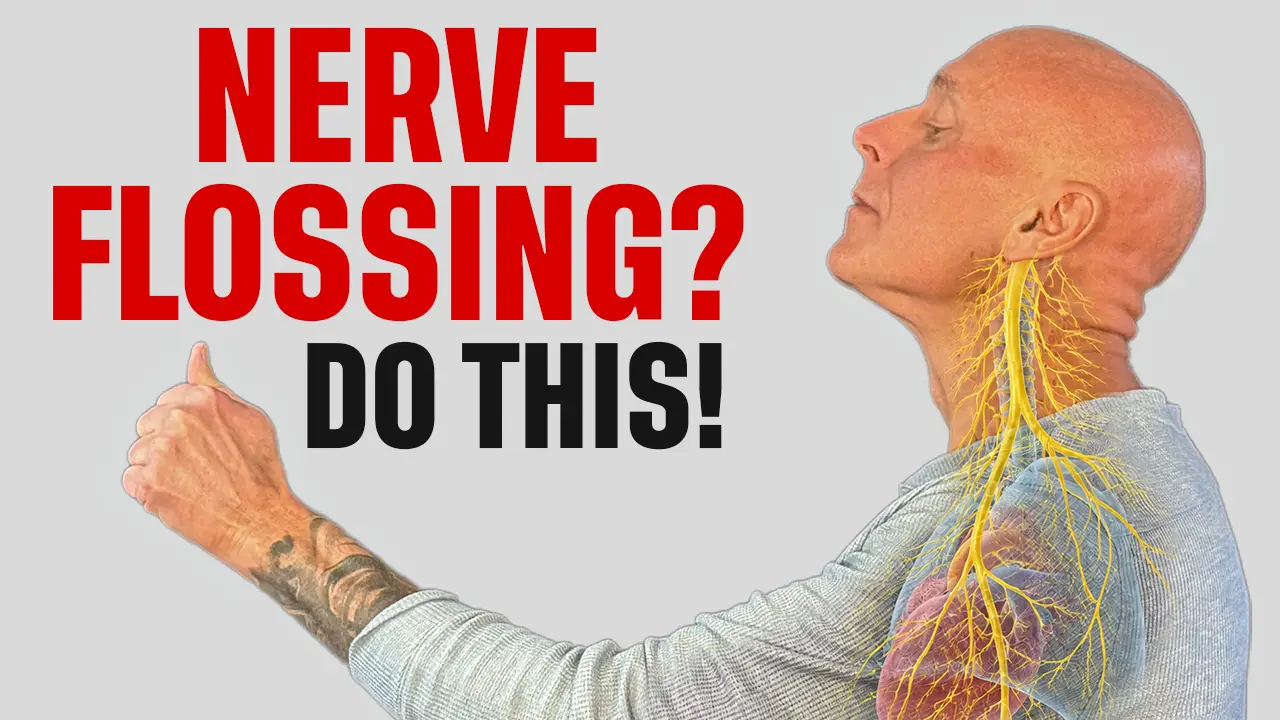
We’re going to combine some hands-on work with a specific version of a nerve flossing exercise. This is not a traditional nerve flossing exercise. There are only one or two research papers on it, but it actually works really, really well.
If you’re not familiar with nerve flossing, it basically means we’re going to put the body in position to place tension on a specific nerve and then do some things to move it through the tissue.
What I’d like for you to do first is test your hip. See where you’re uncomfortable or having pain. Now what we’re going to do is start by getting into position.The position I need you to get into as closely as possible is a basic figure-four sitting position.
Now, if your hip pain is significant enough or your range of motion is restricted enough that you cannot sit like this, do your best.You can slide your foot down. We need a little bit of external rotation. Whatever you can get to, that’s what we’re going to work with.All right.
Now, if this is a position that you can get into, your first test is just to see what it feels like when you lean forward.
If you have hip issues, you’re definitely going to feel some pulling, probably in your piriformis. You may feel things in the hip joint itself. That’s all fine. I just want you to get an idea of how far you can go, your current pain level, and your current comfort level. Once we know that, we’re going to go after the cluneal nerve.
Here’s what we’re going to do.
We’re going to take our hand and come just above our iliac crest. You can feel the bone of your pelvis. I want you to come just above it and take a broad grip with your palm on the skin. The cluneal nerves basically come out in this direction.
So while we’re in this position, we’re going to get a little stretch and then take our hand and actually tug the skin down and out a little bit.
Down and out.
I’m here. I’ve got a little stretch in my hip. I’m going to take the skin and pull it down and out.
Now, if your cluneal nerve is involved, and sometimes even if it’s not, this is going to feel really weird because when you pull down and out on the skin, you’re going to feel an increased stretch or nervous sensation into your piriformis, your butt, and your hip.
Once again, I’m here. I get into position. I go to the cluneal nerve. I’m going to distract it. Pull the skin down. Pull it out. And see if I can go further. I can. Pull down. Pull out.Down and out. Down and out. Down and out.
Five or six times.
And magically, almost every time, I’m able to get further and further into that position.
Now, once you’ve done that, if it has made a change for you, you can stop there.
If it did not make a significant change in your range of motion or pain, we’re going to go to position number two.
I’m now going to move down below the top of my pelvis.
I’m going to find the dimple around my sacroiliac joint.
You’re going to feel this bone sticking out where the dimple would be if you were looking in a mirror.
Find the dimple. Go to the outside of the bone and then just below it.
So we’re a little lower than before and we’re just using our thumb now.
I’m back in position. I get into my light stretch.
And once again, I’m going to pull my thumb down and out. Down and out.
And once again, if the cluneal nerves are involved for you, you’re probably going to feel a really significant change in what you’re experiencing in your hip.
You’re going to do that probably 10 to 15 reps. Stand up. Go back. Retest everything.
My guess is probably 50% of the people watching this who have hip issues or hip pain, as soon as you start working on this unusual cluneal nerve mobilization, you’re going to get up and feel a ton better. All right.
So, two brain-based approaches to working with chronic or nagging hip pain that’s not responding to traditional mobility and muscular work. This stuff is really, really powerful.
So I hope you find it super effective.
If you, again, are a doctor, therapist, coach, or movement professional of any kind and want to blend biomechanics with modern applied neuroscience, go to the pinned comment and get in contact with us.