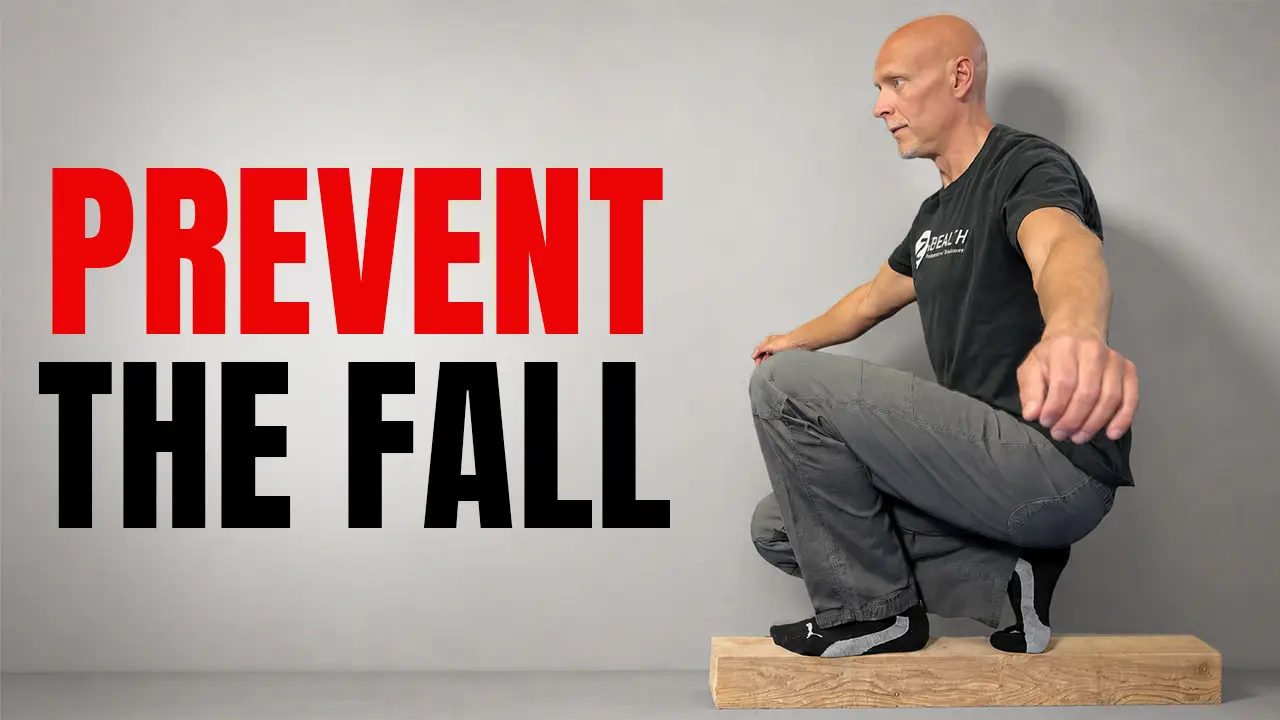
Hi Z-Health community. Today we’re going to talk about building stronger feet and balance in 60 seconds or less.
Hi guys, if you have been watching the last few videos I’ve done, I’ve talked a lot about this whole idea of the brain having three primary jobs, meaning it’s supposed to get input from the body, interpret and decide what to do with that information, and then create an output.
I keep talking about this whole idea that input’s really, really important and so you need to have mobile joints and you got to have mobile scars and other stuff on your body that really make a difference. Today we’re going to switch focus because I’ve talked a lot about mobility, now I want to talk about strength because strength is really the output event if you want to think about it that way, for the nervous system and at Z-Health we talk a lot about feet.
The reason we talk about feet is they’re important. Foundation of your body, foundation of life really to be able to move through the world and what we run into all the time with our clients are weak feet and in general we follow a standard progression of what we see.
People come in, they take off these nice, super expensive, clunky shoes, and as a result they have nice, expensive, clunky feet.
Their feet are immobile and then once we start getting them mobile again, what we often find is that they lack strength. We have a lot of different drills to improve foot mobility, we also have a lot to improve strength. What we’re going to do today is we’re going to combine some strengthening drills for your feet with your balance system because this is one of my favorite ways to really work on feet.
What you’re going to do is pretty simple, we’re going to start off with a base level assessment, you have to take off your shoes and preferably your socks as well. If you’re one of those people, you can’t stand to have your feet on the floor and you leave your socks on, that’s okay, but you need to be out of shoes at a bare minimum.
Once you’re out of shoes I want you to just stand on one foot with your eyes open. You’re going to be looking straight ahead and you’re going to stand there for fifteen seconds or so and you want to get an idea of how stable you feel. Is your foot wobbling around, are you wobbling around, or are you able to stay relatively centered and calm?
Then you’re going to switch to your opposite foot and go okay, let’s see what this one feels like and it may change day to day. One day your right foot may feel great, another day your left foot may feel great, doesn’t matter, you’re just trying to get a baseline of how difficult this is for you to stay here.
Once you have this, what I want you to understand is that we want to work on your weaker side in most cases.
If you can’t stand up at all without having something to hold onto then obviously be careful, don’t hurt yourself, but what we’re going to focus on here is we’re going to focus on reaching to different points of the compass with our other foot.
The reason that we’re going to do this is that balance is actually this kind of dynamic event and it’s supposed to happen somewhat unconsciously, but it really depends on your ability of your foot to grip the floor to maintain balance especially when the rest of your body is moving.

Let’s say I was having some issues with my right foot and it was a little wobbly when I was standing here so our exercise progression is going to be pretty simple
I’m going to come up, I’m going to stand on my right foot, I’m going to get nice and tall, keep my eyes open, and then I’m going to visualize points of the compass and I’m going to reach out and try to touch the different points of the compass. You can see I’m actually bending my knee a little bit as I start to work around here and the whole idea is to see when do I start to lose balance?
When do I have to work a little bit harder in order to maintain the position of my foot on the ground? You see I’m just kind of reaching around to different points, that one over there is really tough, just try to reach across like this and then come back. I try to reach for my eight points, got an idea of how that was feeling.
What you’re going to notice, I guarantee you, is if you get through that, the bottom of your foot’s going to feel like it’s working pretty hard. You’ll come up, you’ll go, “Oh, wow, I feel the muscles in the bottom of my feet and in the back of my legs.”
One of the things I find really interesting is I work with tons of very, very strong athletes from world class power lifters to sprinters and while they have strong feet, you have to understand that strength is very specific, so even if you’re able to squat six hundred pounds, it doesn’t necessarily mean that you’re going to be able to do these kind of drills.
It is important that you’re thinking about incorporating these into your program regardless of what you already do because balance is kind of a unique thing. While it relies on a lot of these unconscious processes, it also relies on information coming from the feet and the output event where your brain says, hey foot, contract right here. Like I said, regardless of your sport, regardless of your activity, doing some basic foot strengthening drills just by working around the compass can be amazing.
Once you’ve done version one, which is what I just showed you, you can then start to make this more complicated.
You can set up with your foot turned out to the side and that’s going to offer a different set of challenges and then you can set up with your foot turned inward, internally rotated and that’s again going to offer a different set of challenges.
If you’re feeling spicy, close your eyes. Once you start to close your eyes, everything is going to get a lot harder and you’re going to really feel the bottom of the foot working very, very intensely to hold you up.
That’s the basics of good foot strengthening combined with balance. I said in the beginning, sixty seconds a day, or sixty seconds at a time. You really don’t have to do this a lot, it’s about consistency that we’re looking for.
To summarize, here’s what I want you to do next. I want you to look at your day and I want you to plan at least three and potentially five minutes per day to do this balance work. It’s going to pay off huge dividends.
Session one you’re going to do your work with your foot in neutral and you’re going to spend, again, about sixty seconds, you’ve got eight different compass points, you’re talking somewhere between eight seconds and ten seconds per point, that’s session one.
Session two, do it with your foot turned out.
Session three, do it with the foot turned in and then sessions four and five, go crazy, do whatever you want.
Like I said, once you’re starting to improve make it a little harder, close your eyes as you do it, turn your head, do some other additional body motions, and don’t worry about not being perfect at it because balance is dynamic and we have to challenge it if we want it to improve.
Give this a shot, if you have any questions, let us know.
And one of the other things I do want to point out, if you play a sport, if you do something else that’s very active, pay attention to your results as your feet get stronger.
I think you’ll be really pleasantly surprised with what you find.
Thanks.