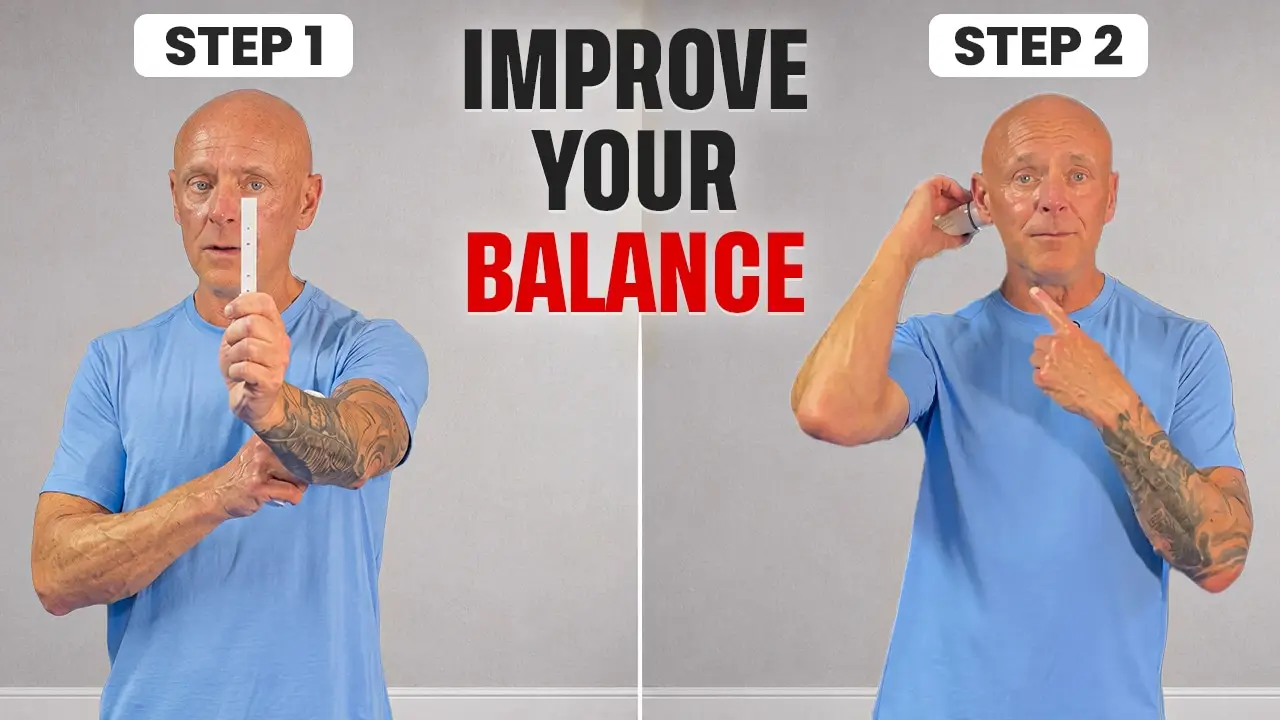
You’ve probably heard me talk about this before, but we’re going to use isometrics to deal with neck pain today. Whenever we talk about spinal pain, whether that is pain in flexing or extending, rotating, or tilting, whenever we evaluate people from a movement perspective, we will also often find that they have lost lateral flexion capacity.
Now, lateral flexion is also lateral bending or side bending. So in most cases, when people have neck pain, we are going to want to improve or work on their capacity to side bend the neck. Now, whenever we do this, we’re going to use a specific isometric protocol. Whenever you’re doing isometrics for pain, you’re going to do long hold isometrics.
Long hold isometrics typically means we’re going to do an isometric exercise, which means no movement for three to five minutes. So that’s an ongoing contraction that we have to maintain for that period of time. Obviously that means that we’re not going to be doing a full 100 percent contraction because you can’t do that for three to five minutes.
What you’re going to do is you’re going to go, okay, what would be a maximal intensity contraction? And what would 20 to 30 percent of that be? So if my maximum is a 10, then the amount of strength I’m going to use for these contractions is going to be a two or three out of 10. That’s what’s going to allow me to hold it for three to five minutes.
And from the research literature, these long hold isometrics seem to have a pretty profound impact. impact on pain. Also, from our perspective, we see tremendous changes in movement capacity from these long hold isometrics. Whenever we’re going to work on the neck, we’re going to divide the neck into two pieces, right?
We have an upper cervical spine. So in other words, if I was here and I was going to basically try to keep my chin relatively centered and bring my ear to my shoulder, And stop there. That is an upper cervical lateral tilt or upper cervical lateral bend. I can then also think about just above my collarbones and tilt my entire neck to the side, which would include more of my lower cervical spine. So if we’re going to do isometrics for neck pain, we’re going to do two versions. We’re going to do an upper cervical version and a full cervical version. All right.
So I’ve got my handy dandy little strap here. When you’re setting this stuff up, You basically can do or use anything that is a nice kind of fixed strap.
You just want to make sure that it’s comfortable on the head because you’re going to be pressing into this for a while. So if I’m here, I can start off with my upper cervical lateral flexion again, level two or three. Now what you see, is very little movement, hence isometric, right? There’s not supposed to be very much movement occurring.
So I’m here, I’m thinking about that upper cervical lateral tilt, and I’m just gonna hold that. This is about a 2 or 3 level of intensity for me, and I’d have to stay here, again, for 3 to 5 minutes, I’d turn my little timer on, and I’m good to go. For the full lateral flexion. I may have to adjust the strap height.
Uh, in this case, just for video purposes, I’m just going to actually bend myself down a little bit more so that you can now see, I’m going to now focus above my clavicles and I’m going to try to start the lateral flexion there. As the practitioner, the person doing this right now, I can definitively tell you that these are not the same contractions.
So if you’re doing this for yourself, Or you’re doing it with a client, all that you have to do is ask them, does that feel significantly different? That will tell you, are they triggering it from the upper cervical spine, or the lower cervical spine, and both are important. Last tip, if you’re a movement professional, you need to watch them from the side, because just like with the low back and the mid back, When we’re working on isometrics, we’re probably going to see their dominant muscular pattern come out, and we don’t want that to take over.
Here’s what I mean. If I see them begin to do a lateral tilt, you will often see them flex forward, or as they’re doing a lateral tilt, extend. Neither of those are appropriate. So I do not want to see this. I do not want to see this. I want as much as possible, a very pure lateral flexion. When you do that, you’re giving their brain the best opportunity to kind of remap that motion.
If you do the pre test, you do the isometric, you go back to the post test, you will often be shocked And they will be shocked at how much better they’re moving and how much it has reduced their pain. Great part about this is it’s incredibly inexpensive to, uh, to use. You can show people how to do this at home and in a pinch they can just use their own hand.
They don’t even need a strap. I don’t recommend that because that’s a lot of time for the opposite arm to be working to provide pressure. Very, very easy to implement and incredibly effective. If you are new to Z-Health, we are a brain-based education company. We focus on bringing and bridging, neuroscience into biomechanics. So if you’ve been looking at, okay, how do I integrate all this cool information about neuroplasticity and what you are, you’re good at, we may be the education company for you. We’ve been doing this for almost 30 years. We have about 550, 580, I don’t know, some of the videos on here that are free.
Check them out. We have a free mini course on our website and we have a ton of professional education available to you. So if we’re a good fit, make sure to get in contact with us. All right, good luck. Hope your neck feels wonderful after this. Uh, let us know if you have any questions.