Have you ever had a client who was doing everything right and they still were not progressing? Like they’re stretching, they’re mobilizing, they’re strengthening, they’re still having problems. If you have experienced that, which, if you’re a movement professional, I guarantee you that’s probably 90% of the people that you see that is not necessarily a tissue problem. It’s a trust problem.
Somewhere in the overarching view of the nervous system, the brain does not trust what is happening in the periphery. And if you want to solve those problems permanently, you wanna fix those performance issues permanently, you have to begin addressing the brain. Now, if that is of interest to you, we want you to talk to us. You can DM us on Instagram. You can check the pinned post. Give us a call or email us because we love sharing cutting edge neuroscience information and what we call applied neuroscience with movement professionals. It is key to the evolution of everything that we’re doing within this field. So if this is of interest to you, do that.
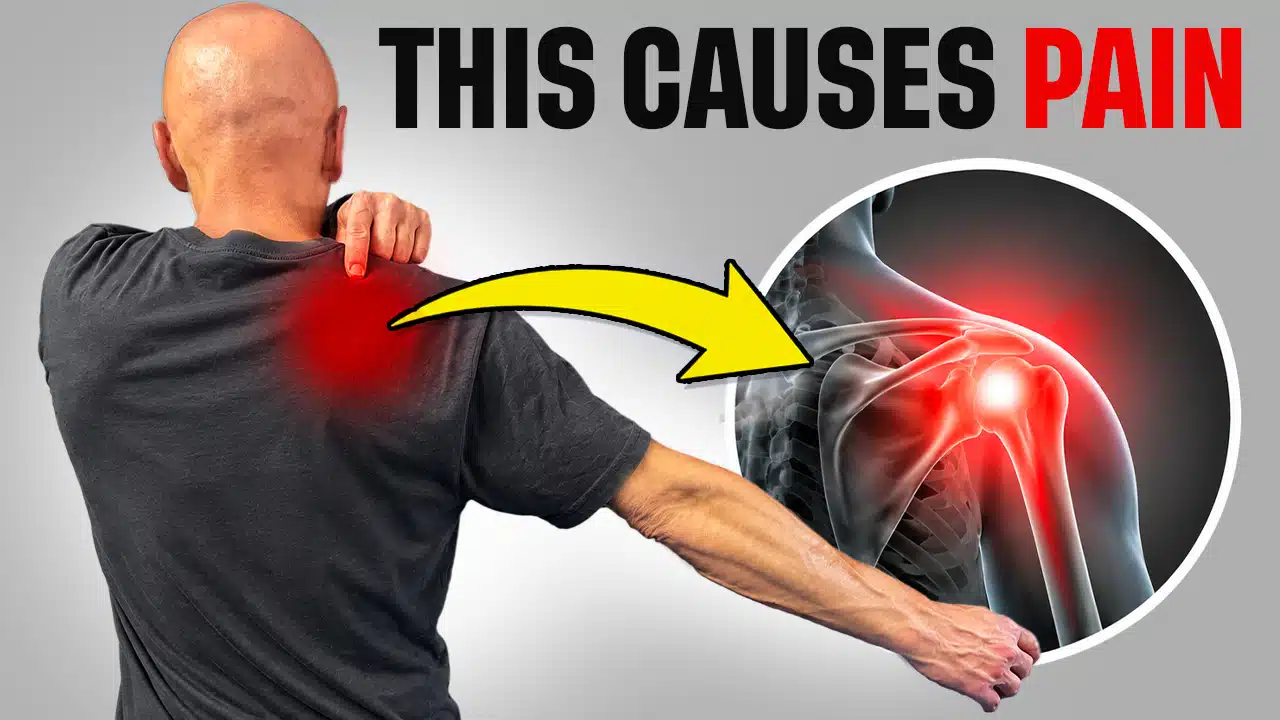
Now, let’s talk about this practically. I had a professional climber a while back as a client who was having right shoulder pain. All right, so it’s up on the wall, and as he was reaching for different holes with his right arm. Over time, he had been losing flexibility, mobility, and strength, and then he was starting to develop some pain.
Now, he had done everything right. Professional athlete, tons of, soft tissue work, the spine had been checked out, mobilizations, all these different things. He not only wasn’t getting better. He was actually getting worse. His performance was absolutely plateaued. The pain was increasing and he was in the, at a kind of desperate stage when he was sent to me, which is pretty much how things work.
So at that point we said, okay, you’ve already done all the stuff correctly, right? You’ve done all the right stuff. And often what I see with professionals is they repeat what other professionals have already done, assuming that they’re better at it than them. We try not to do that. We try to look at things from a brain-based perspective and say, okay, if you’ve had all the tissue work done, what else could be going on? So I talked to him. We got some context about this. Typically, his shoulder was worse when he was doing any kind of abduction work, particularly when he was having to look for the hold. Now, what that told me was I needed to evaluate his visual system.
So let’s quickly talk about something called a saccadic movement. A saccadic movement basically is this, I’m looking at something over here, and then I need to look at something over here. My eyes are gonna make a quick jump to that side, right? So if I go from my left to my right, that is a rightward saccadic movement of my eyes.
Why that’s really important is this. A rightward sacade is initiated in part by my left frontal lobe. What else does my left frontal lobe do? It makes movement happen on the right side of my body, right? This is basic neurology. Left side of the brain controls the right side of the body. Now that’s oversimplified, but that’s how it works.
So my guess for this athlete was this, I’m gonna test his eyes and if he has a frontal lobe problem, what I will see, and this is what you wanna look for if you’re testing clients, is his eyes would do this. If I said the target was here, his eyes would go almost all the way there, stop and then continue.
And that’s exactly what I saw. His eyes went, whoop. Ah, every time I had him move the eyes to the right. Now why that matters. And that is indicative of some dysfunction to some degree, at least in his left frontal lobe. Whenever we look at things from a brain-based perspective, we have to understand that a movement plateau not being a tissue problem, but a trust problem means that every system involved in movement can play a role in, in this case, it literally was a 20 minute solution.
We did the history. I watched him move a little bit. We did some testing, and then I tested his eyes and as soon as we found that, we just started drilling, started working on his frontal lobe, working on the saccadic motions, trying to increase the distance.
There’s a lot of different ways that we do that. We talk about this in our I-Phase class, in our S-Phase class, part of our core curriculum. So we go through that with him, like I said, 20 minutes later. The saccades were perfect. And guess what? All of his range of motion deficits were gone. The strength that he had lost was back and his, he was pain free. It was that simple.
But this was a year of him suffering. This is why we are absolutely committed to sharing brain-based information with movement professionals. So if this clicks with you, like this resonates with you, and you’re like, ah, super interesting, DM us on Instagram, or as I said in the pinned post or somewhere in the description. There’s gonna be an email, phone number. Get in touch with us because we want to talk with you. All right. Good luck.