Have you ever had an athlete or a client that looked awesome on the outside but moved poorly and you’ve checked everything that you know to check, but they’re still unstable and kind of weird in movement. If you have, and I know a lot of you already thinking, yeah, I have that, like I have, they look great, but if you try to ask ’em to do anything athletic, things go wrong.
If you have those kind of clients, then you need to be considering the vestibular system, their inner ear. What we see a lot of times is that people with inner ear issues like to gravitate toward fitness because it makes them feel very stable. They can use machines and they can use weights, and they can use things that hold them down.
And so we see actually in the movement world, in the fitness world, particularly a very high proportion, or I would say disproportionate number of the athletes or people participating in these kind of events in, in that arena have a lot of vestibular problems. Because it prevents them from doing things like playing golf and playing tennis and doing things that require a higher degree of vestibular competency.
So if you know nothing about the inner ear, but you are hearing this and go, yeah, that makes sense to me, then you need to learn about it. This is actually something that we spend a ton of time on throughout our core curriculum. We have four courses. You hear about the vestibular system in all of them because it’s literally the most basic sense that the human brain uses to keep us alive it’s the first one to develop, and it deals with the one constant of our lives, which is gravity. So if that is of interest to you, you want to learn all that there is to know about the vestibular system from a really practical perspective, DM us on Instagram. Or email us or call us,, following the, in the pinned comment or in the description of the video ’cause we wanna talk to you. If you’re a movement professional, this stuff is essential.
Let me give you a real world example of this. I had a gentleman a number of years ago, and he was an a decent, I’ll say decent amateur golfer. You know, he had a decent swing and he would do okay in his club, you know, tournaments and stuff that he would actually participate in. But over a course of four or five years, his game had been deteriorating. He was working out all the time. He played golf and he was wealthy, so he had a trainer that he worked with like five days a week.
And so he did a lot of stuff right, but despite the fact that he looked good, he ate well, he had all the the kind of external things going for him. His golf game kept deteriorating and deteriorating to the point that every time he would go out, he’d play a round then at the end he would feel terrible.
And then he started having a little bit of dizziness. Now he had been to the doctor, they were at first concerned about his cardiovascular system and all this stuff, and he was cleared of a lot of medical issues, but he still had this vague sensation of like, I just don’t feel like I can do anything, safely.
So referred to me and we started talking and very quickly I get that stuff out of his history. And the first thing again, because it’s what we teach. I had him walk and I watched him walk and his head was bouncing around. If you see heads bouncing around during gait, that’s typically not a good sign.
It tells you that their inner ear and their eyes are not actually doing a good job of stabilizing them against gravity. So I saw that I had this history, so I knew immediately I needed to check his vestibular system. We literally did two of the most basic tests that we teach in our I-Phase certification.
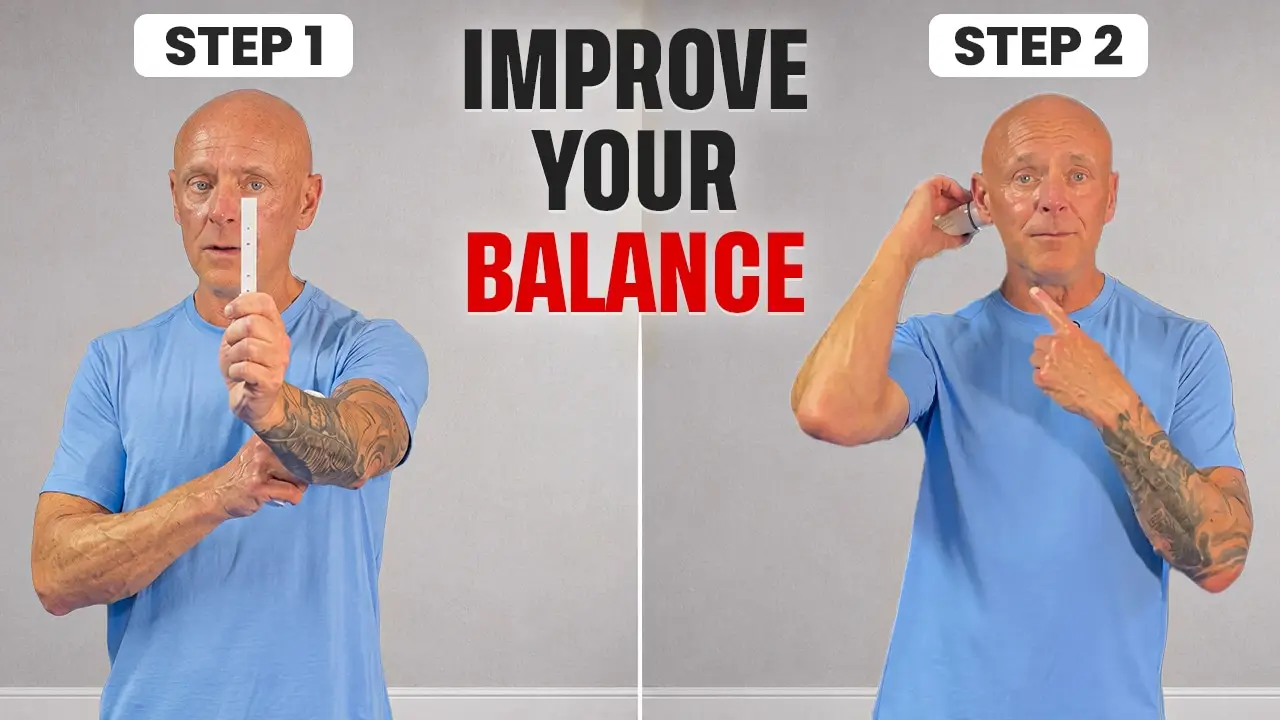
One is called a VOR, vestibulo-ocular reflex, which basically means you look at something and then you have them turn their head left and right while their eyes remain on the target, and then you have them go up and down, and then you have ’em go side to side. Then you have them do diagonals. It’s that simple.
Now you have ’em go a little bit faster depending on their, on how they respond to it. And we do it typically with like a Snellen chart chart that you put up on the wall that you see at the eye doctor that’s got all the lines of letters, the big A, all the way down to the little letters in the medical field we know that if I have someone look at the letter, let’s say b. On the 2020 line, and they can see it clearly at this distance. And then they begin turning their head and they get so blurry that now they can only see up the clearly at 2030 they go two lines up. That’s a, a diagnosable vestibular deficit.And in his case, he lost three lines of clarity as soon as his head started to move. Oops.
So doesn’t it make sense then that as he’s trying to do anything athletic because of the vestibular deficits, his brain’s super confused and he’s losing the capacity to deal with forces of gravity.
So the solution for him was really simple. We actually identified two different directions ’cause you have a bunch of canals in your inner ear. You got three on each side, and you have to know is it this direction or this direction, or this direction? So you gotta test all that. That’s what we teach. Once you know those, then you can begin doing drills for those canals.
It took seven days from the first time I met him. I gave him the exercises. Seven days later. Came back his head as he was walking completely normal, wasn’t bouncing around anymore. He was no longer losing lines of clarity on the chart. And then whenever I actually had him practice some golf swings and some other stuff, he felt tons better.
Now I followed up with him. Three months later he was like, Hey, I’m back playing some, shooting some of my best scores ever. Total time invested, honestly from our, our point of view in terms of figuring it out and knowing what to do. About 15 minutes, Five years of problems solved in 15 minutes because we understand how the brain and body interact.
Movement professionals. I don’t care if you’re a coach, doctor, therapist, we have to know this stuff. This is where the movement fields are evolving. So if this is of interest to you, it’s clicking to you. You are a pro. You want to in, in, uh, bring applied neuroscience into what it is that you do. Make sure to DM us on Instagram.
Call us or email us. We would love to talk with you.