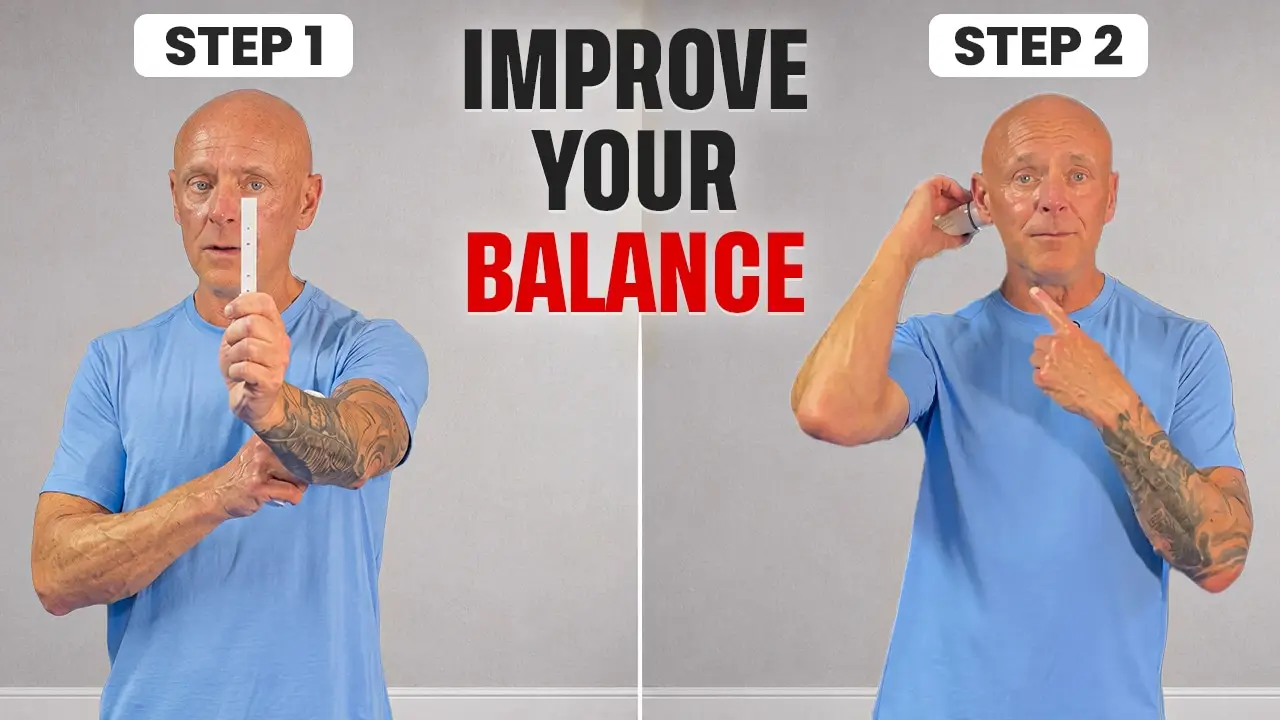
If your clients stumble or sway when they close their eyes or they turn their head or they turn their body and they tend to lose their balance, their brain is screaming at you that you need to evaluate their cerebellum. If you don’t know what the cerebellum is, the cerebellum is a little brain that sits at the back of the big brain and it is responsible for an enormous amount of the results you’re either getting for your clients or you’re not getting for your clients in terms of pain and in terms of performance. So if you are a professional, you’re a doctor, a coach, a therapist, you’re awesome with biomechanics, but you’re looking for that next step of, Hey, how can I get even better results from my clients? Neuroscience may be the answer.
And if this is interesting to you, make sure to go to the pinned comment and either DM us on Instagram through there or email us because we’d love to talk to you.
Now, let’s talk about the cerebellum in more depth. Uh, most people that have done any kind of neurology, uh, study, they’ve heard about the cerebellum.This, as I said, little brain that sits in the back of the big brain, and for many years the cerebellum was kind of thought to be like this accessory thing, organ, almost like an appendix, like it did nothing. When in fact we now know that it has an enormous neuronal density and is involved in almost everything that makes us human.
Now, whenever we look at the cerebellum, we can divide it up really easily into three primary areas. The first area is called the spinal cerebellum, uh, and a lot of people would call it the midline cerebellum. Then we have what’s called the cerebro cerebellum, and then we have what’s called the vestibular cerebellum.
So guess what these three parts do? The spinal cerebellum basically is the midline, and it deals with midline structure. So whenever you’re talking about the spine, you’re talking about the ribs, you’re talking about the internal organs, you’re talking about breathing mechanics, spinal stability. You’re looking at, um, your capacity to resist perturbation in the world.
A lot of that’s gonna be determined by the competency and ongoing activity in the spinal cerebellum. As you might guess, because it’s dealing with balance and posture. It also has a huge interrelationship with your eyes and your inner ear.
Then we go laterally, like we’re looking at the cerebellum from the back We go laterally into what’s called the cerebrocerebellum, and this part of the cerebellum is involved in a lot of limb control. In other words, how well my shoulder and elbow and wrist and fingers and hands coordinate together to create any movement. And then finally we have the vestibulocerebellum, which is a dedicated area by itself that is involved in managing the information coming from our inner ear, to allow us to orient correctly against gravity.
So whenever we are thinking about a client. A client comes in, they have pain, they have movement dysfunction. We watch them. They seem like they stumble a lot or maybe they trip over their own feet. One of the questions you can ask them is, do you like walking around in dark environments? A lot of people with cerebellar deficits, um, can’t, can’t get around that way.
They always have to turn the lights on. They’re always using their flashlight because they feel very unsteady or unsafe because their cerebellum is not functioning well enough to allow them to keep their balance. If you watch someone and you’re trying to teach them a movement and they just seem clumsy, they seem, um, uncoordinated very often, that’s, again, pointing toward the cerebellum that they cannot regulate their movements or control their movements well.
People that have poor movement accuracy, you say, Hey, I want, let’s say you’re teaching a boxing class or something and you go, okay, I’m gonna hold up this pad and I want you to hit it with the right cross. And they always are skimming over the top or missing the bottom or missing and hitting you in the face, whatever, people that cannot move accurately toward a target.
Again, everything about that is screaming at you. If you understand neurology. Test the cerebellum. Help the cerebellum. Because that really is what is gonna drive a lot of these dysfunctions. So at a very basic level, how do you get started with testing the cerebellum? The easiest test, been around for hundreds of years now, uh, in neurology, is called Romberg’s test.
With Romberg’s test, you take the client, typically have them take their shoes off because you wanna see what happens without the benefit of their shoes, giving them information and from the ground. So they’re barefoot. You have them put their feet together, you have them cross their arms over their chest.
Or keep ’em down at their sides or whatever you wanna do. Um, typically not like this in the beginning, and you’re gonna have them stand there for 30 seconds with their eyes open, and they’re gonna have them stand there for 30 seconds with their eyes closed. Now most people who have even a relatively competent cerebellum should be able to do that.
So then we have to complicate it a little bit. How do we complicate it? With their eyes closed, we begin to adding quick head turns. Uh, and whenever we’re doing our head turns, we’re stimulating the vestibular system. So now we can turn our head left, we can look up, we can look down. All with the eyes closed, and we see how much sway is created. And most importantly if they have to take a step, if they have to take a step, that tells us definitively that there’s major problems here, because they can’t even control their own body without a lot of, uh, without external perturbation. So if you have more athletic clients, you may have to make this more challenging where their feet are together, or maybe they’re in a tandem stance, their eyes are closed, and then you get to sneak up behind them and tap ’em on the shoulder, tap ’em on the shoulder, and create some perturbation.
That is a great way to get a window of information into how well the midline cerebellum is functioning, uh, because then if you see that, hey, they’re consistently falling one way, or I tap ’em on the shoulder and it takes them 10 seconds to come back up to the middle, which we’ve seen. All of a sudden, I know I have to do some things to upregulate that midline cerebellum.
Because if they don’t have that, they’re not gonna be stable. Their balance isn’t gonna be good. And no matter what I do for them, uh, anytime they close their eyes, they’re gonna be in more danger. So whenever we’re dealing with the midline cerebellum, what do we do? Well, we do eye exercises. We do vestibular exercises, we do breathing exercises.
We do a lot of spinal mobility work of all the different joints, and we do a lot of that stuff stacked together. Because if I’m giving you a vision drill at the same time I’m making you move your spine, all of a sudden, it’s a big coordination challenge, but more than anything, it’s beginning to activate that spinal cerebellum area, which can have enormous benefits for your clients.
This is just uh, couple minute lecture on something that we spend hours and hours and hours and hours on in our curriculum because we understand that if you want to be an elite practitioner, helping people in pain, getting, uh, the best performance out of athletes. Understanding the nervous system at every level is one of the most critical pieces from our perspective that you can have, uh, in your toolbox. So again, if you’re new to all this, make sure to kind of review it, think about the cerebellum, do some reading about it, and then again, contact us. Go to the pinned comment, email us, DM us on Instagram if you are a movement professional, ’cause we’d love to share more of this information with you.