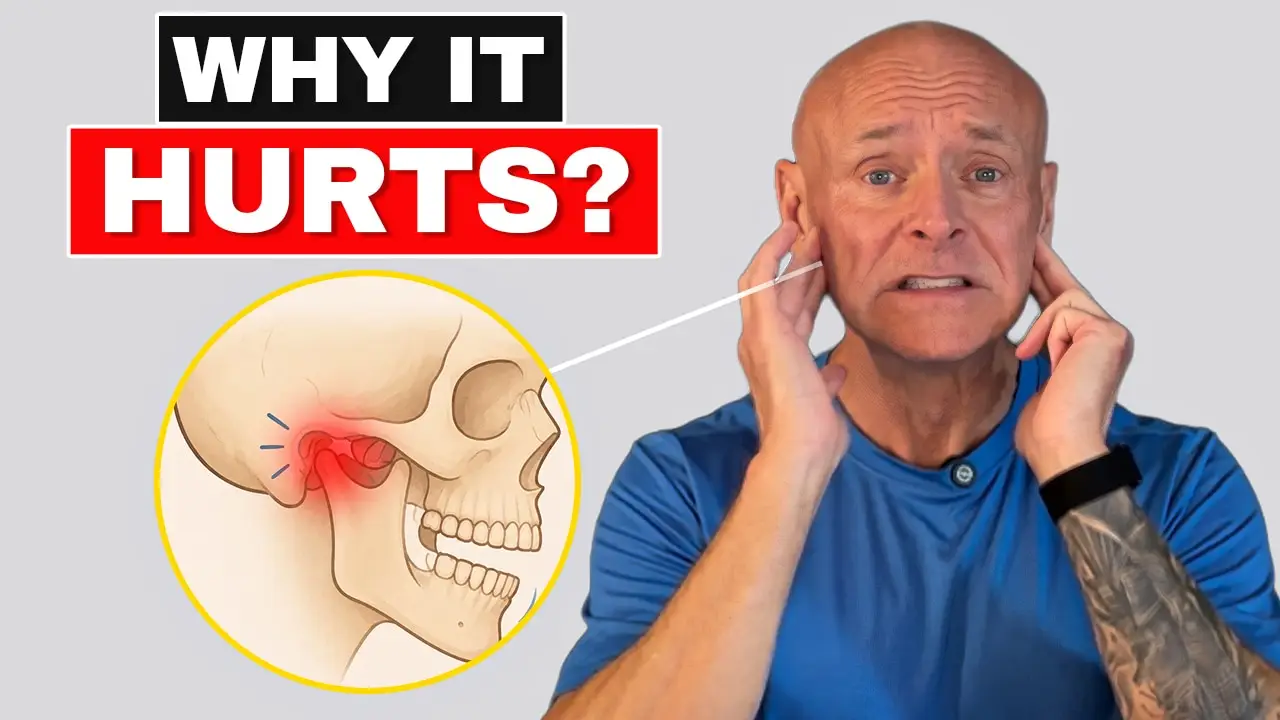
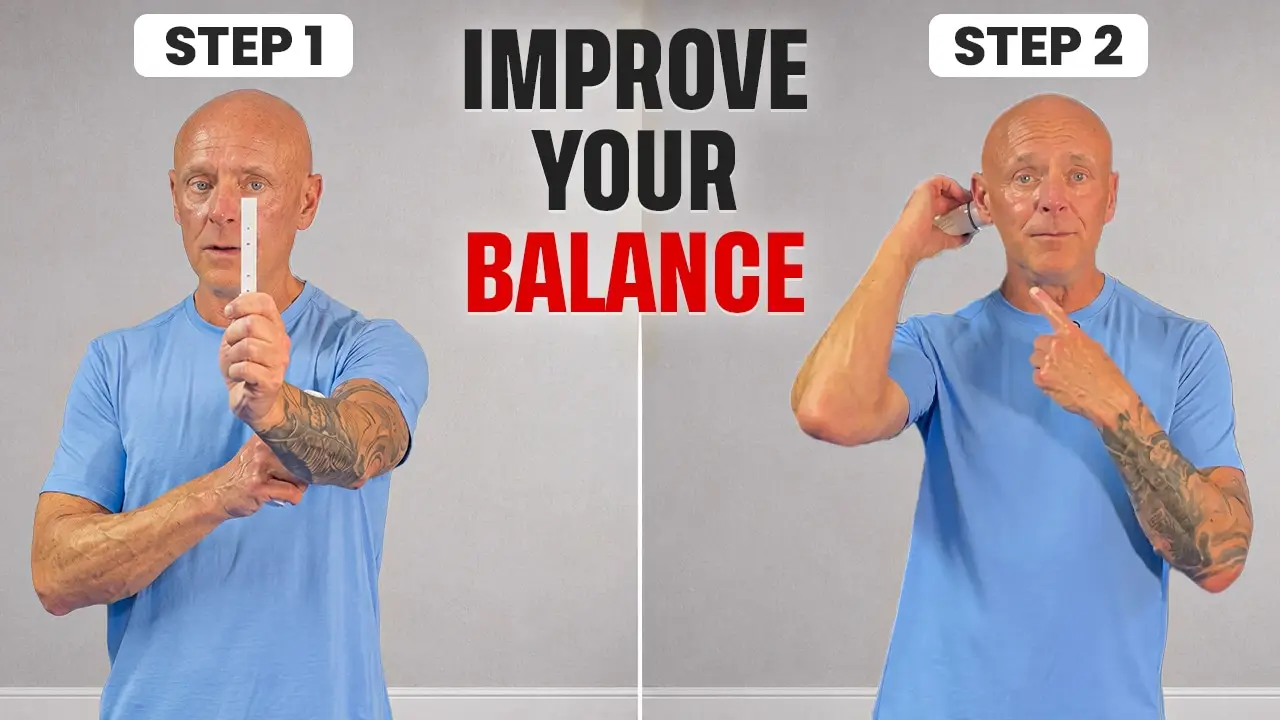
Many balance training programs actually fail clients and patients because they are focused on one subset of systems that control balance, and that is an enormous mistake. Whenever we look at balance in the real world, it is a cognitive, multi-sensory process that allows us to move through the world safely.
So if you want to really enhance the effects of any balance training you’re doing for yourself. For your patients or your clients. I wanna go through kind of the five mistakes that I see with regularity, and basically what it comes down to is people are just ignoring the brain. They’re ignoring the neuroscience of balance and all the component pieces so we have to address each one individually and then we have to put them together.
Now, if you are a doctor, a coach, or a therapist interested in bringing neuroscience and what you already do. Kind of bridging the the gap between current educational models, biomechanics, and what we now know over the last 20 years of taking pictures of people’s brains. Make sure to DM us on Instagram or drop us an email in the link below ’cause we would love to chat with you.
Now let’s talk about the mistakes that we often see. Mistake number one, when people talk to me about balance training, I’ll ask them what they’re doing. And very often there was a high emphasis on what we call static training. So in other words, we’re gonna, they take people. Put ’em into a stance. Maybe it’s a, a, you know, narrow based stance or they’re putting ’em in a tandem stance or doing one leg work. All these things hear me closely, are great. Okay? So it’s not a problem to do static balance work, but most people do not fall when they’re just standing up.
So this is a rudimentary kind of foundational level of control. We want people to develop. So it’s okay to have people doing static balance work, even having people do static work on maybe something that isn’t a little bit of an unstable surface, although the research on that’s a little problematic because what we actually see in the, in the research literature and in the real world is that balance is contextual.
It is environmental, which means that I can have someone stand on an unstable surface, but if their bigger danger is tripping after they step off a curb, it’s not gonna do a lot for them. So we have to make sure that yes, we can include static work in what we’re doing with people, but please don’t spend vast amounts of time over emphasizing it. We wanna start adding in some dynamism to it. Alright, so number one, we need to avoid balance training programs that have a huge emphasis just on staying static. We want people moving. We wanna be working on their dynamic balance capacity.
The second issue I see is that very often, if you go in any, anywhere in the world, any clinic, any gym, where people are doing a lot of rehab work on their balance, you will often see people working very hard to stay balanced on something.
And if you watch their head and neck, their head and neck is very still. They’re focused on a single point and they’re trying to use that frame of reference. To keep themselves from falling over. Cool. That is a big part of how balance is built neurologically using our eyes, but when the head remains still. And is not being asked to turn to, to rotate, to flex, extend, et cetera we’re actually ignoring the vestibular system. So the big problem number two is not knowing enough about the inner ear.
When we look at the inner ear, which is truly the foundation of our ability to know which way is up, right? It’s how we deal with gravity. We have five sensors on each side. We have three in each ear that are dedicated to knowing how my head is moving, angular acceleration of my head. So we have these three canals on each side, and they are specifically gonna tell my brain about rotations flexions and extensions, and in combinations of those which are gonna be diagonal movements.
So as a part of a balanced training program, people have to be able to do the drill. Maybe that is standing on one foot while their head is going through different iterations of motion, because that is going to challenge the vestibular system much more specifically.
Now, in addition to that, we have two additional sensors called the utricle and saccule. These are otoliths and those involve motion forward and back. They sense forward and back motion. That’s going to be your utricle and the saccule.. Since its up and down motion, so not only do we have to turn the head, we have to transport the body through space. Forward and backward, laterally, diagonally, and up and down in order to significantly challenge the otolith organs.
So already, hopefully you’re getting an idea that balance training that does not involve different elevations and steps with head motions is going to be of relatively limited value because it is not challenging enough. The single system that’s most useful for us in maintaining our balance, so don’t ignore the inner ear.
Number three then is the eyes. Often we see the visual system ignored as well. What I mean by that is, again, go back to that example. You go in, you’re watching someone do static balance work, and they’re staring very hard at a point. Cool. But in the real world, we have to maintain balance while our, while our eyes are doing a lot of different movements.
So I may be walking and as I’m walking, I am watching a car, you know, slowly roll past me, my eyes tracking something moving across in a relatively slow manner. It’s called a smooth pursuit, maybe. I’m walking along and I am reading a text message, and then I’m looking up to see where I’m going. So that means that my eyes have to converge in order to read the text message and then look in the distance they have to diverge. So we have convergence and divergence.
I may now be looking at my phone, hear something that happens over there and need to quickly jump my eyes over to figure out what’s happening. And that’s called a saccade. So we have all these different eye movements. That must be incorporated into balance training. If you wanna just challenge yourself, do something that you’re already pretty good at, say do a single leg stance. And now while you’re doing that, you know, grab your phone, read a text message, and jump your eyes from your phone to something in the distance, or move the phone side to side and see if the addition of the smooth pursuit makes you lose your balance.
Whenever we look at the research literature on people that fall, people that get injured, usually it’s while they’re moving and it’s while they’re doing something different with their eyes than staring at a fixated point.
So a part of every balance training program must include saccades, smooth pursuits, convergence, divergence, while we’re in motion and in a, in a dynamic setting. Because when you put all that together, all of a sudden your balance training is becoming contextual for real world environments.
We have those three major things that I see as problems as people start to look at, balance training. Now, on top of that, we have other issues like sensory capacity. How often do you see people going, you know what? We need to work on your balance. And they sit the patient down to the client down. They take off their shoes and their socks, and they do sensory testing to make sure that they’re able to feel the ground with their toes, with their foot, and that it’s relatively symmetric side to side. So we also have to have neurological integrity of the both lower and upper limbs to make sure that our brain is able to pick up information from the ground, transmit it to the brain so the brain can assess it and understand it.
I see a lot of people that fail to improve from any kind of balance rehabilitation program simply because they can’t feel anything. And there are some really cool research studies that show when you look, you see that you will often also see problems with eye movements, and in fact, doing more eye movements can actually improve sensation in the feet. It’s an integrated system.
And then finally, the fifth thing that we have to be concerned about is cognition. Taught a big, course last year on fall prevention and fall preparation. And one of the things that came out of the most current research that I found really interesting was that the highest rates of falls usually happened when someone was walking and talking to someone else.
Right. So they’re walking along and they’re having a conversation with a friend that is called dual tasking in a neurological environment. Because basically it means that I have to be doing something with my body. I’m moving while I’m also thinking, and sometimes doing another motor activity like talking or carrying something.
So another part of every single balance training program must include cognitive challenges. There’s a lot of ways that you can do this. You can use classic neurology stuff where you say, okay. I’m gonna have you stand on one foot, maybe we’re gonna add some vestibular work. And as this is happening, I’m also gonna have you count backwards from 100 by three, so 100,97, 94.
And what you’ll find very often is a lot of clients who have balanced problems or balanced challenges as soon as you add the cognitive challenge to it. All of a sudden they start to fall and you now can be the elite professional who goes, huh. It looks to me like your biggest problem with your balance is the fact that you cannot dual task and that is trainable.
So everything about balance, we can kind of look at from a neurologic perspective and say, if I’m not including these five components, I am missing something in the balance training program, which may mean bad things for my clients in the future. So I’m gonna encourage you that if you’re working with patients or athletes, clients of any kind that need to improve their balance, don’t just stick to one method of training.
Make sure that you’re looking at every single system. You’re working each system independently, and then you’re asking them to combine them all together, because that is what’s gonna prepare them best for the real world. All right? So again, if you’re a doctor, client, the doctor, therapist, or coach you’re interested in bridging the gap between biomechanics and neurology.
We would love to chat with you. So DM us on Instagram, follow us here. Subscribe, watch all the stuff. We’d love to chat with you.