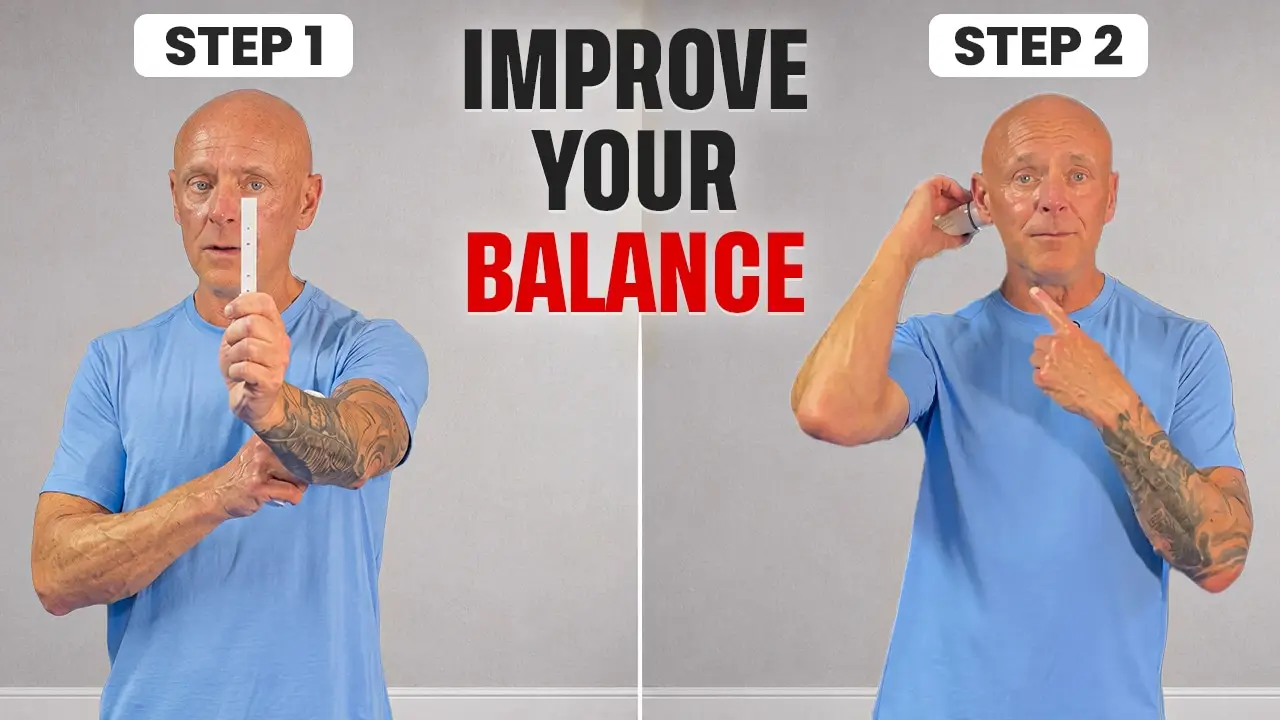
Whenever we’re moving through the world, we have to see well, we have to balance well, we have to move well, and then put all that stuff together to function in the real world. So, today we’re going to talk a little bit about both the vision and vestibular systems.
Now, I have done probably a hundred videos on YouTube about vision training and vestibular training. So, you can go back through our blogs, but really what I want you to just understand today is that when we talk about the visual system specifically, we need to make sure that we’re improving acuity. Now, acuity is my ability to see clearly, right? and that acuity is in bright sun, that acuity is also in a dim lighting condition because those are not exactly the same thing.
So, if you have clients that you want to improve their balance, you need to make sure that you’re testing and referring out if necessary to improve their acuity in the different environmental conditions they’re going to encounter in life.
From there, we then need to start talking about eye movements. Whenever we talk about eye movements, there are a couple of critical ones with regards to balance. The first one is called a smooth pursuit. If you can imagine that there is a a very slow fly moving across in front of my eyes and I am following that that is called a smooth pursuit. And then we have what are called saccades. Saccades are very rapid changes shifts in my visual fixation points. What we see in people with compromised balance is they often have problems with both of those issues both smooth pursuits and saccades.
So what we’d like to have people do just as a basic training program is to consider the eight points of the compass. Right? We have north, south, east, west, and then our ordinal directions. We want to have clients practicing smooth pursuits in each of those directions. We want to have them practicing saccades in each of those directions. This is very easy to set up. You could go on your gym wall, go in your garage wall, and put some tape up just making sure that you cover the kind of eight positions from a compass. And then you just have your client spend about 30 seconds per line doing smooth pursuits. Smooth pursuits. And then you switch to saccades.
Now, that doesn’t sound like a lot, but I guarantee you that five to eight minutes of work with a visual system is going to be very fatiguing for a lot of people. So, that’s a great place to start.
Now, how we transfer that in kind of more dynamically into balance is we want to make sure that we’re making the stance more challenging. So, in the beginning, if someone’s really compromised, they’re going to hold on to the wall, hold onto a chair, have a nice wide base, their knees are going to be bent, and they’re just going to be doing their eye work. We then progressively start to take away all that stability. We move the chair away so they’re only using a fingertip. We bring their stance closer together. We have them straighten up. We have them stand on one foot or with the feet directly in front in line as if they’re on a balance beam. And we just make it slightly harder over time.
At that point, we I like to have people then transition and adding a little bit of strength work to this. So now we would imagine taking those post-it notes and bringing them down the wall, maybe a foot, and then we’re going to have our clients repeat the same exercises, but in an isometric squat and in an isometric lunge and in a different isometric lunge. And maybe we’re doing multiple angles. Remember I said 30 seconds. So if they’re doing 30 second smooth pursuits while holding an isometric position, they’re going to be getting a little bit of strengthening work. it’s going to be more of a dual tasking problem, which means they have to think about staying in that squat because what will happen is as they’re doing more eye work and it’s getting harder, they’ll stand up.
So, this is actually a progression that you can work on for 8 to 10 weeks with a lot of people and make tremendous progress in building their strength, building their resilience, and also beginning to improve their balance. That’s just from the eye work.
Then if we move to the balance idea using the vestibular system, we would repeat that exact process, but now we would be focusing on what’s called the vestibular ocular reflex, which now means that I’m going to put a dot or another post-it note directly in the center of the compass, like where the needle would be on an actual compass. Now, instead of having my clients keep their head still and move their eyes, they’re now going to keep their eyes still and they’re going to move their head on all of those compass lines. And we would again go through that same process using the wall or a chair, wide stance, nice and comfortable and safe, and then progressively making it more challenging.
If you take the time to have people work through this, again, it’s going to take weeks, even months, depending on how compromised they are. You always have to do it to client comfort and make sure that you’re not creating pain or nausea.
But it is critical that you start to get people using the eyes, using the head and neck, challenging the vestibular system and building that together into more challenging stance positions as well as beginning to do some basic strength work. This is a great starting point for a lot of people who are compromised already. Maybe they’re elderly, maybe they haven’t exercised in a long time. And we also use this program often for athletes recovering from a concussion because the visual system and vestibular system are often compromised after head injury.
So you need to learn this and make sure that you start implementing it.