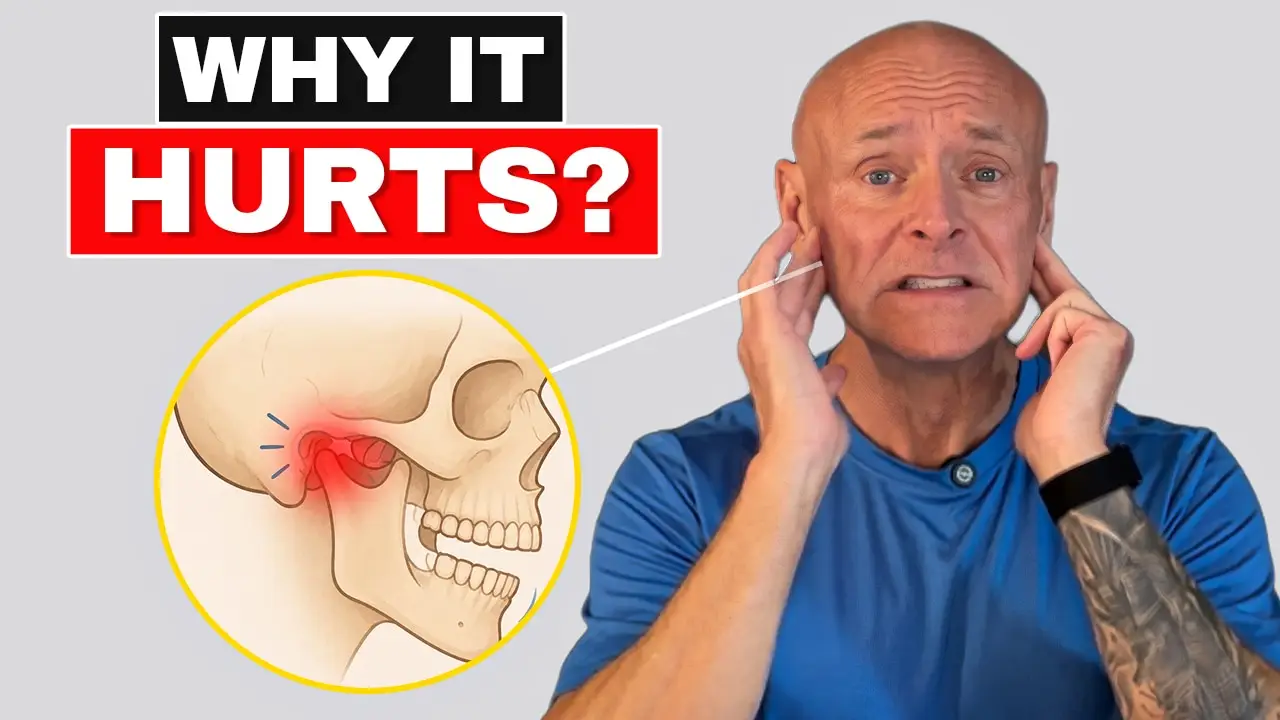
I want to cover another topic with you today, which is a very brain based approach to improving mobility and pain. The example we’re going to use today is the neck. Let’s say someone has pain in the right side of the neck. They’ve had some mobilization, manipulation, massage, acupuncture, cupping, tens, Ice, heat, right?
Whatever. And it’s still not going away. Now there could be deeper issues, so all this obviously has to be cleared with a physician, make sure that there’s nothing insidiously bad going on. But often what we’ll see with pain that keeps recurring and recurring that does not have a, you know, kind of red flag nature to it, is that we need to look at the brain’s capacity to inhibit
pain on that side of the body. There are what are called anti nociceptive pathways coming out of the brain that will help diminish our perception of stuff that may be bothering us. The way that this works in a, in a very simplified fashion, I understand I’m oversimplifying greatly here, but we want to think of it this way.
We have a right side of our brain and left side of our brain. You’ve heard that right hemisphere, left hemisphere. So we have a hemisphere that’s sitting on top. And then underneath that we have our brainstem and the brainstem is also divided into a right side on the left side. So whenever we look at anti nociception, a pain inhibition pathway, we can think of it in many cases as being primarily ipsilateral, meaning my right cortex, right?
My right major hemisphere is going to send signals down to my right brainstem. And my right brainstem, uh, is the path by which this kind of pain inhibition, um, will occur. And it’s usually on the right side of my body. So we’re thinking ipsilateral. So that means, then, if I’m trying to improve someone’s mobility, let’s say you have right side neck pain and you have pain when you turn your head to the right, I could do a lot of things.
But one of the first things that we might want to try is, okay, if I stimulate the right side of the brain, does that improve the range of motion and the pain? So you can try this with me. Here’s a very, very simple approach. First thing I’m going to do for a right side neck pain person is we’re going to work on a combination of vestibular stimulation for the right side and a visual exercise
for the right side. We’re going to use our left hand for both of these. Why? Because the right side of the brain controls the left arm or left side of the body. So if I’m moving my left hand, that’s going to also increase activation in the right hemisphere. So we’re gonna get kind of a three for one deal.
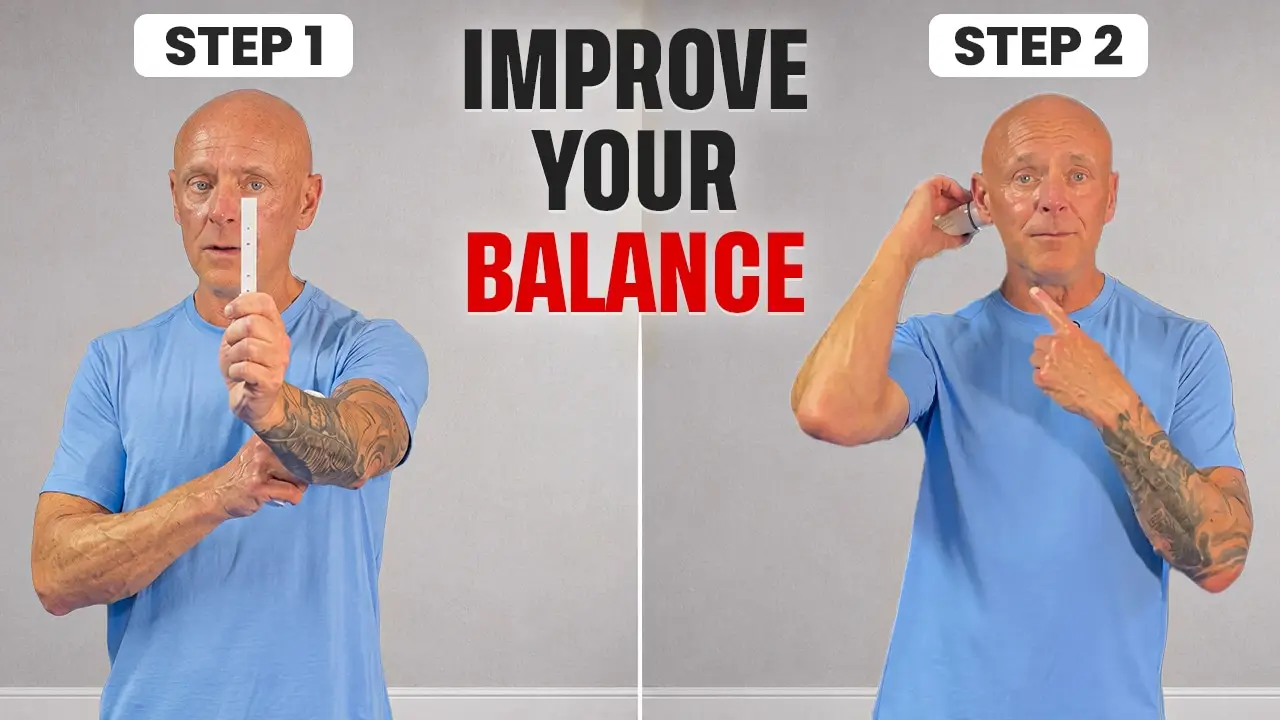
We’re going to do some right side vestibular work, uh, some right side visual, and we’ll be using our left hand for all of that. All of that should upregulate the right hemisphere, decrease pain on the right side of the body, and hopefully improve range of motion. You’re welcome. All right, so here we go. Uh, what I’m gonna do is I’m gonna hold my hand up in front of my face.
I’m going to be looking at it. So our first exercise is a right vestibulo-ocular reflex movement. I’m just going to do a turn, quick turn of my head to my right while my eyes stay focused here, right? That is going to stimulate, uh, the horizontal canal on the right side, which is a right side, um, right hemisphere stimulation.
So I’m going to do this. I’m going to turn. I’m going to close my eyes. I’m going to count to three, one, two, three. As I come back, I’m going to open my eyes and then I’m going to move my thumb to my right. That’s called a smooth pursuit. And a smooth pursuit to the right is also going to activate the right cortex.
So I have a right VOR, close my eyes back for three seconds, open my eyes and Smooth pursuit looks super simple. Uh, it’s a little hard to coordinate at first, but it looks like it couldn’t possibly do anything, right? Well, it actually can do a lot. Normally I’d have people do this for 10 to 20 maybe even 30 repetitions.
And as they do that, they’re going to stimulate the right side brainstem tremendously. A couple of different levels. They’re going to get right hemispheric frontal lobe and um, parietal lobe stimulation by moving the left hand. All of that’s going to upregulate that right hemisphere. And hopefully, give us some pain inhibition on the right side of the body.
So then you can go back and retest. And what you’ll often find as well, the range of motion’s improved and the pain is better. And if you’re wondering, could I do this for my right knee, my right hip, my right foot. Uh, my right SI, my right shoulder. Yes. All right. Anywhere on the right side. Now, if it’s the left side, guess what?
You have to do a little cognitive work and you need to reverse the directions. All right. Uh, if you are new to Z Health, we’re a brain based education company. We love blending practical neuroscience, practical neurology, right? Vision work, vestibular work. We love blending that with what you already know to make you better at providing fast, efficient results for your clients.
So if you are a doctor, coach or therapist interested in adding cutting edge neurology to what you do, please check out our mini course below. If you are interested in specifically movement quality, Uh, building better movers in your own life or in, uh, the, you know, for your clients, we do have a course coming up very soon called No More Mindless Mobility, where we will be looking at little, little things like what we’ve just gone through in this video and so much more.
So you can check that out also in the link below. Otherwise, make sure to sign up to the page, uh, and. You know, if you’re brand new to this stuff, we have a free mini course that will give you a very nice introduction into the whole concept. So I hope you find all this useful. We’ll see you soon.