Most people, even professionals, misunderstand pain full stop, even though there are now 30 plus years of revolutionary ideas around pain neuroscience. Every single day I deal with people, whether that’s a doctor, a therapist, a coach, or their patients or clients who completely misses the point of everything we now know about pain neuroscience.
As an example, I had a client just a few days ago, came in with nine months of knee pain. It started non traumatically but it got really bad. Sent to the emergency room, then to an orthopedist. Went through the typical route of x-rays and MRIs. Was told that they have a meniscus problem. Obviously was now being referred for physical therapy and surgery. That happens, I get it. Like structural issues do occur.
But my second question was, well, tell me about how it started. Uh, what did you notice first? Did you notice the pain or something else? And she said, well, it was kind of weird because like for a week or so before the pain started, it felt like I couldn’t control my foot. I didn’t know how I was planting it on the ground, that I couldn’t really control it.
And as a brain person, a neurology person, that should immediately tell you something different than potential meniscus. Should say something like, hmm, sounds to me like your brain is losing control of a limb, which typically points to a receptor or peripheral nerve issue or something in the spinal cord, et cetera.
We’re gonna talk a lot about this because it is in a perfect example of everything that we’re discussing and how pain involves how pain works in the brain. Uh, but the end point of all this is that people blame tissue tissue damage for pain. When in fact it’s the brain feeling threatened that in99 times out of a hundred is what’s actually creating the pain experience.
Now, if you are a doctor, a coach, or a therapist interested in modern pain neuroscience and bringing that into what you do, we wanna talk with you, right? We’ve spent 20 years building a brain-based training program, and at its root, its foundation is understanding pain and movement from a neuroscience perspective.
So if that’s you, please DM us on Instagram or email us at, follow the link in the comments ’cause we wanna chat with you because this is vital stuff for creating results that last and becoming the person that everyone wants to refer to for the difficult cases. That’s the type of people we like to work with.
Now it’s back to my client. So did a very quick exam, did some sensory examination, and very quickly figured out that she had a loss of sensation in the distribution of the saphenous nerve, which is one of the long nerves going down into the, the lower limb. What’s interesting about it is it’s not a motor nerve.
It doesn’t control muscles, it just gives sensory input, but this is a huge point. Lack of sensation, lack of sensory information can make the brain feel in danger. If you’re walking through the world and all of a sudden because you have a small entrapment of your saphenous nerve and your brain can no longer sense the inside of your leg or the inside of your foot, and it doesn’t know how to place it, doesn’t that seem like that would be scary?
Hopefully the answer is yes. Your brain relies on maps, it relies on internal maps of where you are in space so that it can move efficiently through the world and safely through the world. So what do you think a human brain does when it feels threatened? It wants you to change your behavior. It wants to stop you from doing what you’re doing.
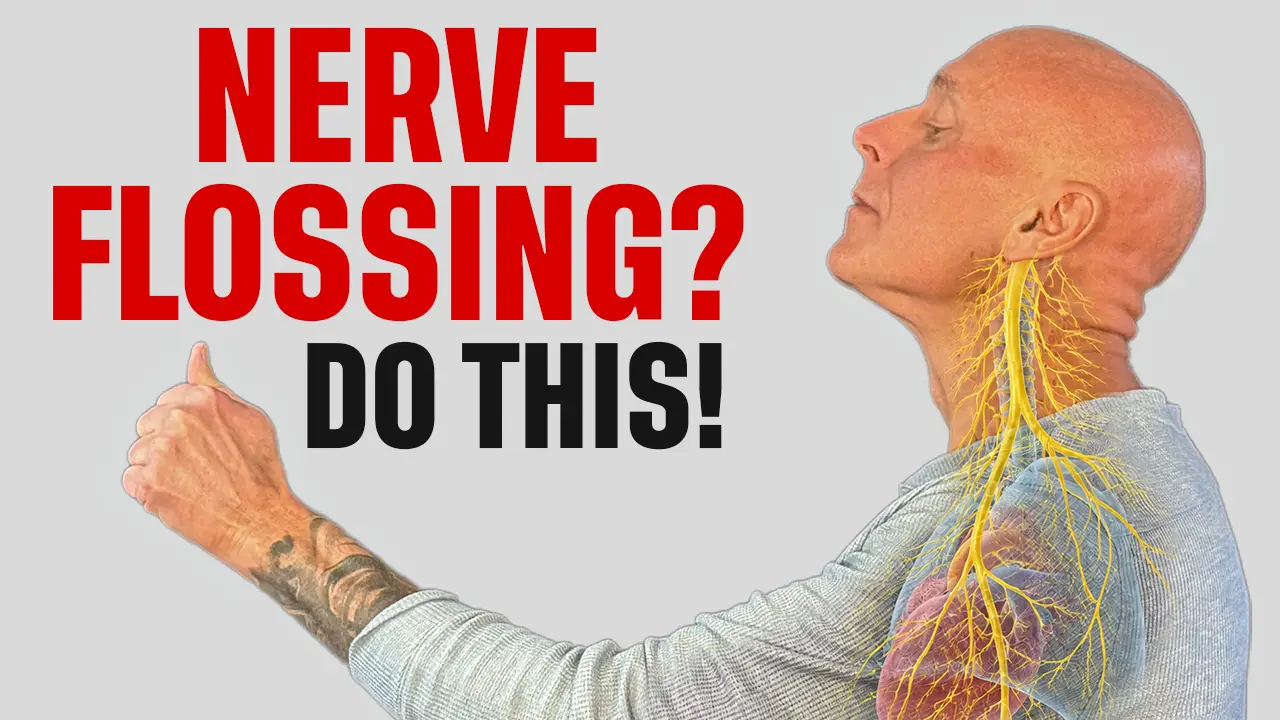
What is the best tool that it has to do that? Simple answer. Pain. And this is again what modern pain neuroscience has been showing us for three decades, at least actually back in the 1960s now. And what we understand is that what we have to do as professionals, whether you are a doctor, a therapist, or a movement professional of any kind, yoga, Pilates, personal trainers I don’t care what you do. If you deal with people who have a body, you’re dealing with people who have pain. If you deal with pain, you have to understand pain neuroscience, and you need to recognize that their brain is saying, I’m feeling threatened by something. In this particular client’s case, she had a minor entrapment of the saphenous nerve just above the knee. We did some cupping, some decompression. We did some exercises specifically to mobilize that nerve and her pain dropped. Went from about an eight down to a one. In about mm five minutes, her gait completely changed and I was able to give her some stuff to take home.
But the most important part of it was education. It was telling her, look, I understand that sometimes you see pictures and the pictures look scary, but it is rarely the tissue that is the sole driver of what you’re experiencing. It’s all the other threats that have accumulated. So this is a reminder to you to look into the literature and recognize that what we look like on the inside often has very little to do with what we are experiencing from a pain level.
There’s tons of research literature around this that shows, hey if we, uh, MRI thousand asymptomatic knees, depending on the age, up to 80 to 90% of them will show a torn meniscus. Now, again, that’s depending on age, but even in a younger age group, that number is still around 40%. And remember, asymptomatic, they don’t have any pain.
So often we blame pain on tissues. When it is from something much more broad, it is an increased threat to the brain from something I can’t feel the ground because I have a peripheral nerve entrapment. Maybe I have an inner ear issue that is subtly disrupting my balance. The list goes on and on and on, and that’s what we spend our entire professional life doing, is giving you education and extensive list of all the different threats that can drive pain and performance issues in human beings.
So again, if you’re a doctor, a coach, a therapist, please DM us on Instagram, if you find this super interesting or follow a link below because we wanna talk with you because I believe that people understanding pain is literally the very best gift you can give to anyone because it will change their entire life, and we’d love to share that with you.