Today we’re going to talk about dual tasking and improving balance. We’re coming up on fall awareness week or month or something, and that’s something we should be thinking about all the time. Like don’t fall. Don’t let people fall. That’s a bad thing. In general, what we want to think about here is working on something that is called motor motor dual tasking.
Now, dual tasking is a neuro term. It gets thrown around. You’ll see it in psychology, see it in neurology, and dual tasking basically means that we are asking you as a human being To do at least two or three different things at the same time. Now everyone in general is familiar with the idea that dual tasking may not be the safest thing that you can do.
How do we know that? Well, in the United States we have in virtually every state a don’t text and drive law. Why? Because when people text and drive, they have more wrecks. What are they doing? They’re trying to operate a machine while operating a different machine. That’s called dual tasking. So, we know that dual tasking allocates memory.
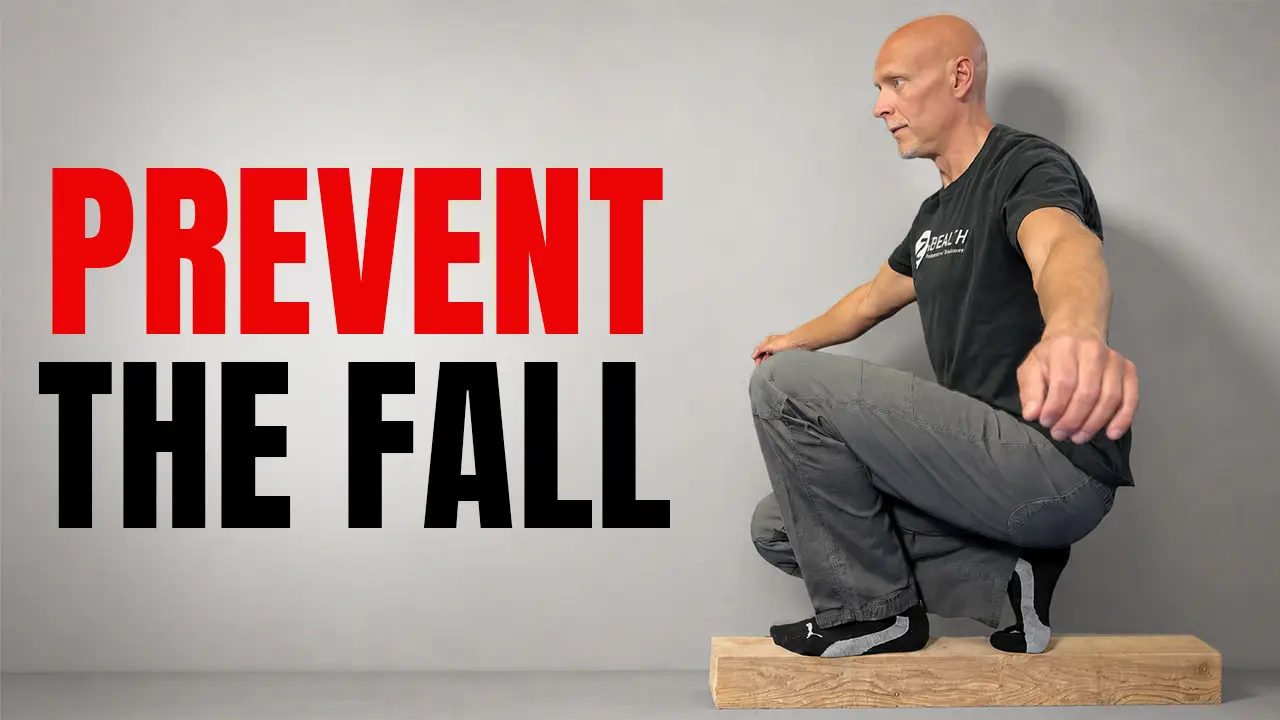
It allocates resources to different things. And that can compromise movement. We see the same problem in people walking. So, in other words, when we do, look at fall prevention research, Here are a couple of things that make people fall a lot. Talking to your friend while walking and texting while walking.
So in other words, get rid of your friends, throw your phone away, you’ll be much safer. But what we really need to think about is, all right, if that’s an issue, then how do I train it? In the neural world, we have different forms of dual tasking. We have what is called the cognitive motor. So in other words, I’m asking you to do something with your brain.
So, uh, tell me the dates, uh, or the months of the year, do some mental calculation as you’re walking or doing other stuff. So that would be a cognitive motor dual task. Motor motor means that I’m asking you to walk or stand and balance while doing something else motor related in the most current reviews.
What we see is that if we really want to improve balance, particularly in older people, we, improve balance more quickly doing motor motor dual tasking. As opposed to cognitive motor dual tasking.
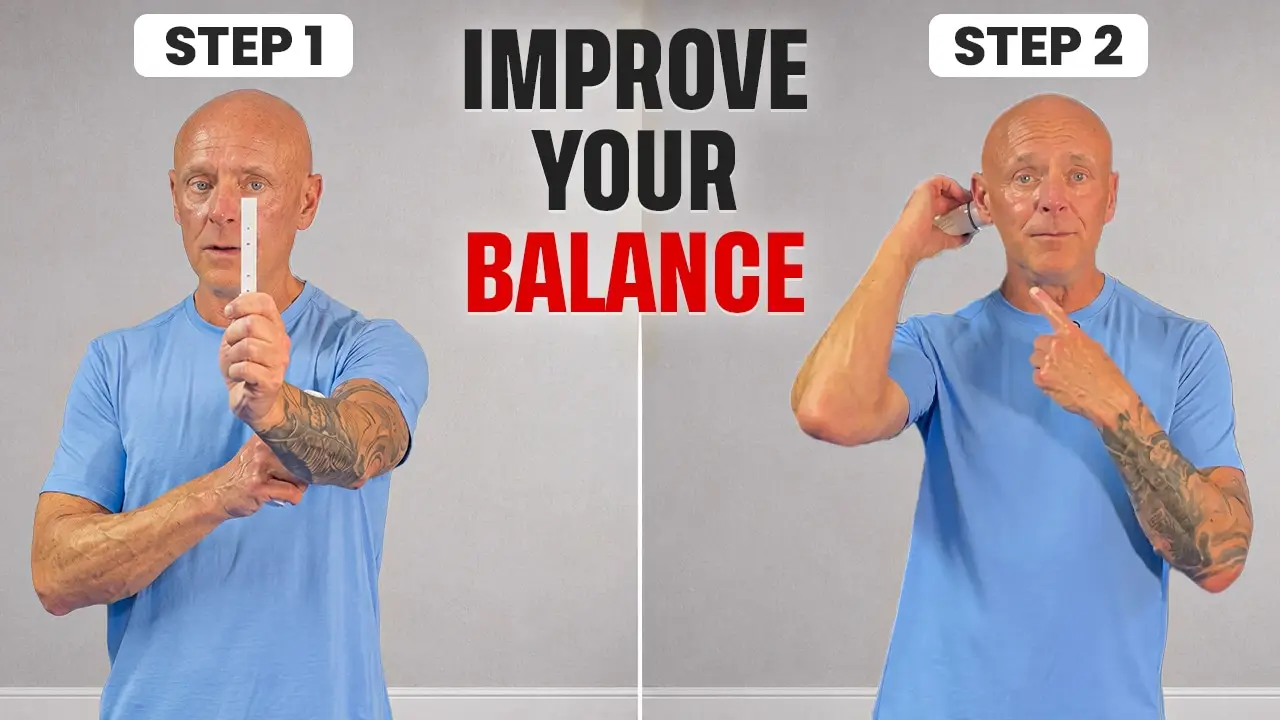
So here are some very easy things that you can start to incorporate for your training, for yourself or for your clients. I normally will start people off just with something simple like, Hey, I’m going to have you hold this ball in the palm of your hand and I want you to get into a challenging stance for you.
Now, a challenging stance balance wise might be, Hey, I’m going to have you put your feet together and close your eyes. Now the goal here is number one, don’t fall over. Number two, don’t drop the ball. Really, really simple idea. From there, we need to make it more complex, okay? So I’m gonna say, alright, close your eyes, and now I want you to turn your head back and forth.
Look up at the ceiling down and you’ll see that as I add more head motion, I’m swaying a little bit more, but I’m, I’m still not dropping the ball. So, so far I’m doing pretty good from there. We want to increase the difficulty, right? So the goal of motor motor is to always be pushing the envelope of what you’re capable of.
So the next thing that I typically would have people do is staying in this Close stance is I’m going to have them begin transferring the ball. So they’re basically now just tossing the ball back and forth hand to hand, but I can make it more challenging by actually starting to do this, where I’m now moving my head and my eyes at the same time.
And you’ll see, I start to sway a little bit more because I’m now destabilizing my base, my midline. I’m requiring more of my eyes, more of my vestibular system. Next step would then be to go into a harder stance that could be a staggered stance where we have the toes of one foot. Uh, contacting the heel of the opposite foot, this actually will cause a lot of people to start to lose their balance, fall over.
We can also do all of this on one foot. We can do eyes open, eyes closed. There’s lots of different ways that you can start to do this without ever taking a step. If people are great with their hands, which I almost dropped the ball, uh, cause I thought that was funny. I got distracted cause I was looking at my other device.
Uh, you have another option here as well, which I like to do often for people, uh, who needs a little bit of work with their legs, hip flexors. Uh, and dorsiflexion is to have them stand on one leg and then balance something on the opposite, uh, knee while they’re going through all their different, you know, things.
And then you can make it even harder by putting something on top of it. But then eventually, if we want to prevent falls while moving through the world, you want to start including all the different dual tasking ideas that you can come up with. While people are walking forward, backwards, and sideways.
This is something we cover extensively, um, along with a lot of other brain-based activities in our fall prevention course. But I just wanted to share this with you because it’s so easy. It costs you nothing other than a little bit of time, a little bit of thinking, but it can save someone’s life. Because we know that particularly as people get older, uh, falls become, uh, one of the leading causes of death around the world.
So while I made a little bit of a, made light of it a little bit in the beginning, it’s really not a topic that I take lightly. Falling is not always dangerous, right? It’s just that they’re so common that the odds are that if people fall at some point, something bad may happen. So we want to make sure that people are really well balanced, that they’re able to move through the world safely.
And we teach them how to fall, which is all the stuff that we try to talk about all the time in our fall prevention work. If you are new to Z Health, we are a brain-based education company. We have students in 100 plus countries, 110, 112, something like that. About 13, 000 students now. We love showing you how to bring modern, cutting-edge neuroscience into the classroom.
If you’re a movement pro, we’d love to meet you and hopefully be able to provide some value for you. All right, have a great week.