I wanna talk about where perception becomes a reality in your brain, in relationship to movement. We’re gonna talk about your cortex. A lot of people that have studied neurology for many years, fall in love with the cortex. The cortex is the cool part of the human brain. It’s got the frontal lobe, the parietal lobe, occipital, temporal.
It’s the stuff that we see, right? Every picture you see of the brain, that gray matter on the outside. Got all these cool features that it it takes care of, and people tend to think of it as the part of the brain that makes us most human. And there’s a lot of truth to that. Now, as brain-based practitioners, remember we talk about our eight levels model, which is we start all the way at the receptors and then we the peripheral nerve, and then the spinal cord, and then the cerebellum and the brain stem, and the thalamus, the insula, and we think the cortex for last, not because it’s the least important, but because we know that the cortex is dependent upon all the rest of the system functioning at a high level in order to do its job. But today I do wanna talk about the cortex. I wanna give you a specific exercise that you can undertake because I said this is where perception becomes reality in relationship to movement.
Whenever we look at the cortex, we’re gonna talk about the frontal lobe, what lives there is called executive function. All the stuff that allows us to do kind of logical planning, make decisions, make good decisions. We can make bad decisions with other parts of our brain, but the frontal lobe kind of is the CEO in charge of everything. And one of the CEO’s primary jobs is what’s called inhibition. In other words, whenever we look at other aspects of the brain, the CEO is saying, Hey, calm down. We don’t have to pay attention so much to that.
So whenever we have clients that struggle with inhibition, they can’t control their emotions, they can’t control their movements, whatever, we’re always interested in, hey, how is their frontal lobe functioning? This is particularly important whenever we’re dealing with pain clients, and this is where I said, perception becomes reality, and this is really what I want us to focus on today.
Now before I do that, if you are a doctor, a therapist, or a coach, you’re interested in blending neurology or modern neuroscience, pain neuroscience, performance neuroscience, into what you’re already great at. Go to the pinned comment, DM us on Instagram or email us from there because we’d love to talk with you more about our education to see if we’re a good fit for you.
So we’re back to the frontal lobe, and we’re talking about this idea of perception becoming reality. What does that really mean? Well, other parts of the frontal lobe, and structures that low, lie below it, are talking to another part of your brain about everything that’s currently happening in your body.
So that little discomfort that you feel in your knee or that little tension that you feel in the bottom of your left foot or in the back of your shoulder, all of that is being assessed. If everything else is generally functioning decently, it’s going up, it’s going through your thalamus. Now your thalamus, is your switchboard operator. It’s sending signals from the thalamus to the frontal lobe. But before it does that, it’s also sending, uh, information to what’s called the insular cortex. The insular cortex is a part of your brain that’s putting emotional valence what does that mean? It means is it’s giving emotional attachment to the feelings that you are currently having.
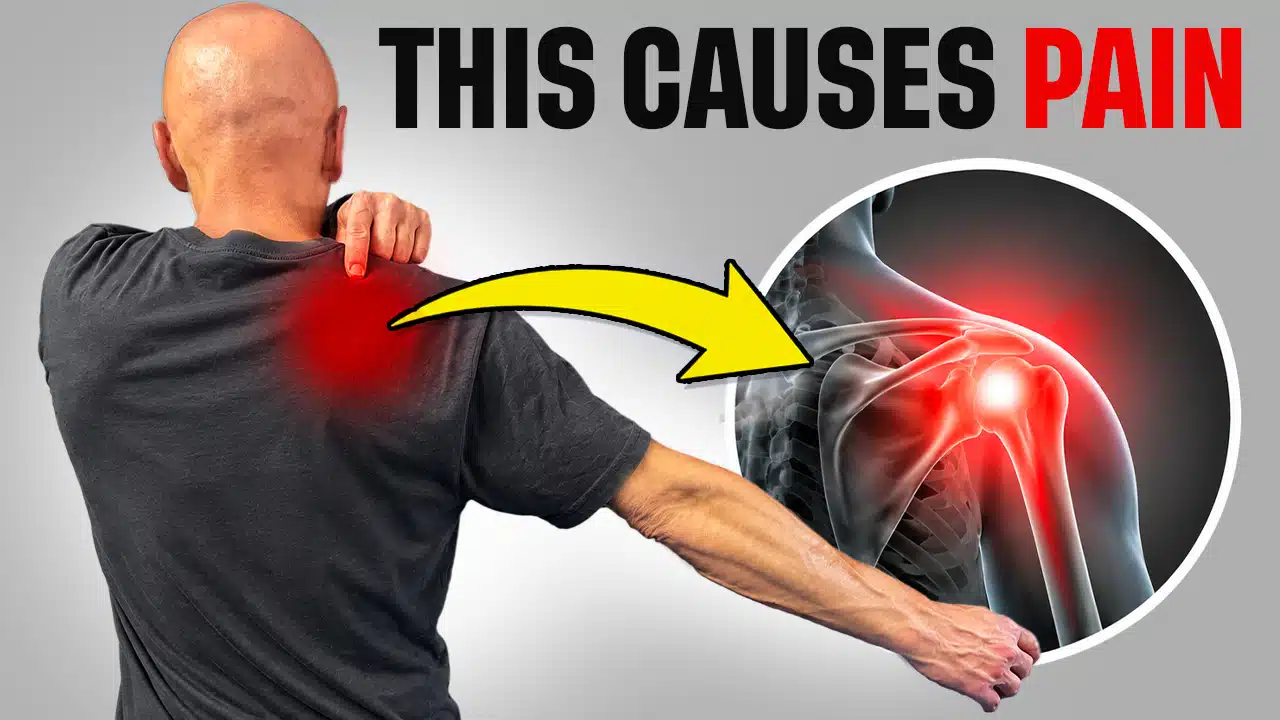
So we always tell people that your movement is not just about the mechanics, it’s not about the muscles, the bones, the tendon, the ligaments, the nerves. It’s also about how you feel about the movement. So if you believe that something is gonna be painful. Or you’ve had an experience where a movement was painful. Guess what? That is built into, in some cases what’s called a neuro signature within the brain. So in order for us to begin helping our clients who have long histories of bad movement, who have long histories of pain, we sometimes have to work not only locally and then all the way up to the eight levels, but we also have to begin having them build awareness and improve their inhibitory control around that area, alright. I can get into a lot of the mechanics of this, but I want to get practical now. So what does that mean? It means that, let’s say I have someone that has left shoulder pain every time they go into flexion, or every time they go into internal rotation and they’ve had it for years and they came to see you and you’re awesome at what you do, and you were able to get them maybe a 50% reduction in pain.
You got them an improvement in range of motion the next time. Thing that you may need to do beyond working through all the other stuff that we’ve been talking about, is you may have to begin addressing their frontal lobe. Now, one way to do that is through the use of visualization, and this sounds really strange and it’s not crazy. This is neuroscience. All right?
What we’re gonna do is we’re gonna actually have them sit down. We’re gonna have them visualize. The painful movement, alright? Or the, the movement that is typically painful for them, in this case, shoulder flexion or shoulder internal rotation. And this is where now the inhibition process comes into play because we’re gonna ask them to visualize the movement as if it happens normally, right?
So I come up to here, ah, and that’s where the pain occurs. They’re not doing the movement, they’re just thinking about it. Now, the next thing you’re gonna ask ’em to do is I want you to now visualize that movement. And as you’re getting close to the area where the pain would begin, I also want you to pay attention to any other changes that you’re either visualizing or feeling in your body.
Meaning are you holding your breath? Are you tightening up different areas of your body? Because what we often find is that pain patterns, what we call a neuro signature, they’re body wide. So this shoulder pain that’s occurring here. It’s often going to be, uh, coupled with or linked to loss of maybe spinal extension or increased tension around the diaphragm. Increased tension in the opposing hamstring or gluteus mean whatever it is.
So if we can use the frontal lobe to analyze the movement and then begin to inhibit the unwanted intentions, very often that’s painful movement suddenly becomes less painful or not painful at all because we are taking a chunk that is currently my chronic bad left shoulder and we’re splitting it apart. We’re not allowing it to utilize the same pattern.
And all of this, again, is based off understanding neurology. This is just understanding how the frontal lobe works and engaging its inhibitory capacity to improve a chronic issue. we’ve done this hundreds of thousands of times honestly, throughout our community, with people, it works incredibly well.
It sounds a little bit weird in the beginning, but it’s a very simple process, so I really encourage you to give it a shot this week. Best place to do this actually is in your own body. Pick something that’s hard. Sit down, visualize it, have awareness of what’s going on in your body. Use your frontal lobe to inhibit anything you don’t want to have happen, and then try it. In the real world and very often it will be a lot better.
All right, so again, if you are a movement professional, you’re interested in bridging the gap between modern biomechanics and modern neuroscience, we would love to chat with you. So DM us on Instagram or send us an email. Other than that, subscribe to the channel, check out all of our free resources ’cause we love sharing this information.