Hi, I am Dr. Eric Cobb with Z-Health Performance, and we are back discussing digital eye strain and computer vision syndrome, yet again, this is a huge topic and so there’s so many different aspects to it that are vital for us to discuss today. What we’re gonna look at is the simple idea that you need to have your vision tested by a professional, and you may actually need some additional eye exercises as well as lensing to make looking at screens less burdensome and alleviate Eye Fatigue for you.
So whenever we start talking about the eyes, we start talking about digital eye strain, computer vision syndrome. It should be obvious to you that if you already have visual dysfunction, that staring at a screen for seven hours a day is going to potentially make that worse, right? It’s gonna make the whole process more challenging. So the way that I wanna demonstrate this today is using a little tool called a Brock string.
Now, the Brock string has been around for a very long time in optometry in different versions of vision training, vision, rehabilitation. We’ve been using it for many, many years in Z-Health as a great tool to tell people or explain to people what’s going on with their eyes, as well as a tool, almost like we would use a a dumbbell for weightlifting.
You can use this to train some of the extraocular muscles as well as the brain about how to make the eyes coordinate. So one of our big concerns in dealing with screen use is what is called binocular visual dysfunction or binocular vision dysfunction, simple idea. We have two eyes, basically they’re operating independently. One camera lens here, one camera lens here.
So the first thing that we want you to do today is to look at something in the distance and then look at something up close. You’re gonna do this, two different tests. Ideally, whatever you’re looking at up close will be a screen, be your phone, your tablet, your computer. I want you to look at a word and I just want you to cover your left eye.
And then I want you to cover your right eye. I want you to notice if the visual image you receive from each eye is distinctly different, one’s really clear, one’s really blurry. And then I want you to repeat that. Looking at something in the distance cover the left eye cover the right eye, because what I want you to understand is this.
If you have two very distinctly different images, your brain’s job is to take those images and merge them together to give you depth of field binocular vision and depth perception, if you wanna call it that. So whenever we have significant deficits in one side versus the other, sometimes the brain will actually ignore that image. It is called visual suppression.
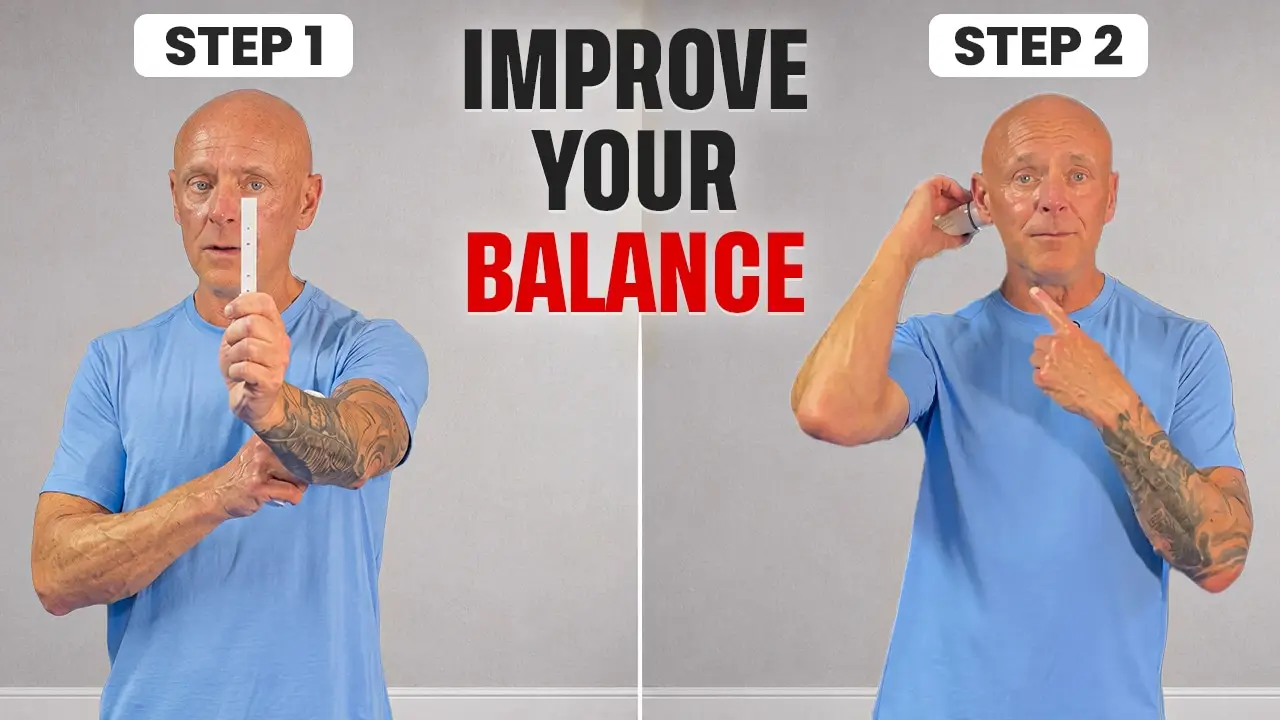
And for that, we’re gonna actually use this string as a simple way to test. And you can test this on your own at home as well. You don’t need one of these super cool Brock strings with a handle and a rope and beads. You can just take a string, maybe some paracord, tie a knot in it. That’s enough for this initial test.
So here’s what we’re gonna do. We’re gonna take the string, we’re gonna hold the end of it to our nose, and then we’re going to use hopefully both eyes, and we’re gonna gonna look in this particular case directly at the hole in the center of this bead. Now this is gonna sound very strange, but if your eyes are experiencing fatigue and functioning correctly, you should see two strings going into the bead, a single bead, and then two strings exiting the bead. And this is because, again, we have two different cameras focusing on a single point, and then we also have visual information passing beyond that. So whenever our eyes are functioning correctly, we should see an X whenever we look at that bead. And that X should cross directly at the bead.
Now, if you are one of these people who is struggling with very distinctly different right eye, left eye images, or if your brain’s very tired and is not able to make the images join together, what will happen is you’ll look at this and you’ll see one string. Bad. You’ll see a string that is fully there and one string that’s half there. Also bad.
You may see a string that looks like a ghost. It’s flickering in and flickering out of existence. Also indicative of the fact that your brain is working really hard to make these images merge. Now imagine in terms of dealing with computer vision syndrome, I’m looking at my phone or my tablet or my computer all day, and that is at a certain focal length away from my eyes.
If my eyes are constantly competing ’cause I have a clear image and an unclear image, or my brain is constantly trying to use both eyes, but then it’s not able to use one of my eyes in its visual picture. So it’s suppressing it all day, but it’s still trying to use it. Guess what that adds up to enormous amounts of energy use enormous amounts of fatigue.
So binocular visual dysfunction can play a huge role in eye fatigue, computer vision syndrome, and digital eye strain. This is not definitive, but it is a very simple way for you to see if your eyes are functioning relatively normally. If you have any issues, you only see one string, you see a ghosting string, you see half a string. The X is in front of the bead, behind the bead. I would strongly recommend that you visit your eye care professional for an evaluation, and we would particularly recommend that you also consider working with someone who specializes in vision rehabilitation because you can make tremendous improvements with lensing with some of these more basic issues. But for a, from a long-term perspective, it is a fantastic idea to also learn some exercises and so that you have tools that you can use on your own, just like working any other part of your body.
All right, so this is again, basic idea around binocular visual dysfunction and computer vision syndrome, which can contribute to eye fatigue. Make sure to get those eyes tested after you have done your test at home. And finally, if you are new to Z-Health, I should have said this in the beginning, we’re a brain-based education company. We specialize in working with doctors, coaches, and therapists from around the world who want to introduce very, very cool brain-based assessments and training into their work with clients, including addressing issues like eye fatigue with exercises such as the Brock String. So if there’s of interest to you, subscribe to the channel, check out all of our free resources, and we will see you again soon.