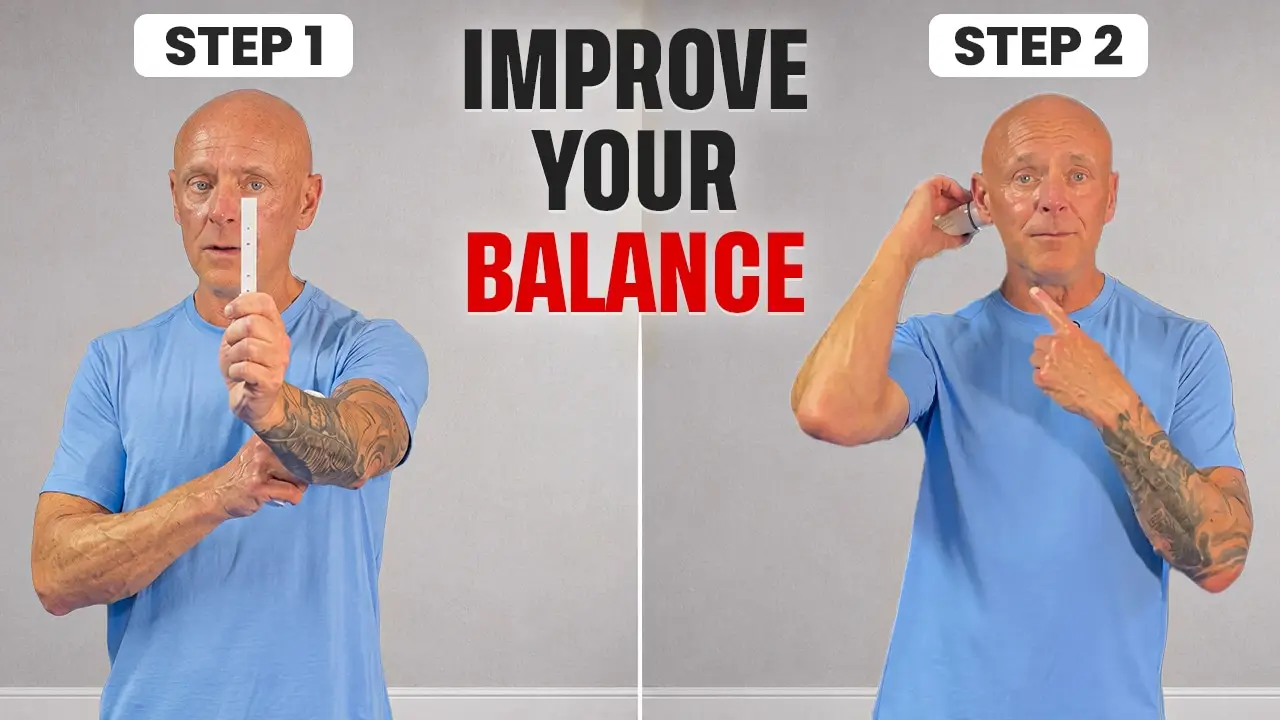
Today we’re going to be talking about eye, head and neck coordination. This is a pretty fascinating topic because for your eyes and head to work well together as you’re moving through the world requires a great deal of neural circuitry to be functioning really, really well. Thankfully, there are a couple of easy exercises that we can do that will improve multiple areas of brain function that are involved in separate control components.
And number two, it will challenge your brain, it will challenge your cognition, your reaction times, etcetera. So it’s actually a really easy conceptually set of exercises, but they’re very powerful. If you are new to Z-Health, we are a brain-based education company. Obviously, we work with professionals, coaches, doctors and therapists from around the world. We have about 12,000 students in 100, I think, 13 countries now. So if you’re interested in learning how to integrate brain-based approaches with what you currently do, check out our free mini-course. We also have a free masterclass coming up soon. There’s a lot of different ways to learn what we do to see if it integrates with what you’re interested in. So check us out.
Now, today, like I said, I want to talk more about coordinating the eyes and head motions. Whenever we deal with people with headaches, neck pain, shoulder pain, mid back pain, and gait abnormalities, eventually we always have to look up to the eyes, the inner ear and the neck, because really, this is our, you know, it’s a rudder that kind of drives the whole ship.
Longtime martial artist and what, you know, one of the phrases I learned probably when I was five or six years old in jiu jitsu, was that where the head goes, the body follows. And so controlling the head, making sure that our eyes and our head can do exactly what they’re supposed to do with precision, is really a key step in almost any form of movement rehabilitation, pain rehabilitation, or improving sports performance.
So here’s what we’re gonna do today. We’re gonna do a very, very simple, like I said, exercise. The way that you’re going to do this is you’re going to place three targets in front of you. Now, typically, you can do it on a wall, put three post it notes, put one in the center, and then about one to 2ft away on each side, you’re going to put one to the right and to the left.
The next thing that you’re going to do is you’re going to grab a metronome. The metronome is going to be set somewhere between 60 and 120 beats per minute. It’s all going to depend on your ability to move well. And then you’re going to do three different exercises. Now, the way this will begin is we’re going to first focus on what’s called eyes only movement. So you’re going to be looking at the center, post it note on the wall.
And whenever you hear the click of the metronome, you’re going to shift your eyes to your target. And then the next click, you’re going to come back to the middle. And then the next click, you’re going to shift to the opposite side. You’re just going to do that over and over. All right, so that’s an eyes only movement that requires a certain portion of the brain to be very active.
Next, we’re going to continue that. And in the second portion of the exercise, rather than just moving your eyes, you’re now going to keep your eyes focused on that center post it note or dot or whatever you’re using. But on the click of the metronome, it will be a head turn toward the target on the left, back to the center, and to the right. And in each case, your eyes are staying focused in the center.
Now, a lot of people, when they start doing this, they’ll realize that they’re having a very difficult time separating head and neck motion from eye motion. That tells us a lot about your vestibular system. So we’re first working on how’s your motor control of your eyes? Then we’re saying, how well are your eyes and inner ear working together? And then third, we’re going to see how your eyes, your inner ear and your head and neck are working together by doing an integrated, what’s called gaze saccade.
So now I’m going to be looking at that center target, and on the click, it’s going to be my eyes and my head and neck turning so that I’m facing the target. So it looks really, really dumb and simple, but it actually is pretty complex. Now, what makes this harder? Obviously, number one is increasing the tempo so you can speed up your metronome. A better and actually much more challenging version of the drill requires a partner or it requires something, you know, an app.
I have a random dice app on my phone, and I can just say, hey, give me a number between one and three. And so every time the button gets punched, it can do that. And there’s some others that are actually just automatic number generators that you can have call out numbers. Because if we add some level of uncertainty to this, it is a really much more intensive drill.
So the way that we typically would do it with an athlete or a client is I would be standing in front of them. I say, okay, I want you to look at my nose, and I’m going to have my hands up like this. And I’ve instructed them that if they see a one, one means move your eyes. If they see a two, it means move your head, but leave your eyes focused on my nose.
If they see a three, they are supposed to turn both eyes and head and neck to look at the target. So now we have the random portion of me going, maybe a two here, and they’re back to me, to my nose, and then I give them a one on this side and then a three on this side and then a one on this side. So now we’re adding in right and left discernment.
Plus they’re having to see this out of their peripheral vision because they’re supposed to be staring at my nose. And on top of that, they have to be able to interpret, okay, what was the instruction there? And make that motion happen. This requires a great deal of what is called inhibition. This is a huge, hugely challenging exercise for the frontal lobe, the part of our brain where executive function live, the part that supposedly makes us most human and allows us to make good choices.
One of its primary jobs is inhibiting incorrect motion, inhibiting bad choices. So we really love using this particular drill, particularly for clients that have had head injuries, people that have sometimes had addiction issues. Often we will see frontal lobe deficits in those clients, as well as people that just have poor motor function. Because, guess what? A lot of our voluntary movement also is driven by frontal lobe activity.
So this is, again, a very simple looking exercise that has some profound ramifications for your visual system, for your inner ear, and for how both those systems integrate with the muscles, tendons, and nerves of our neck. In terms of application, you would do this typically around two minutes, once a day, between two and five minutes, depending on your particular issue. It’s very important, as always, to assess and reassess.
So if you’re having neck pain, give this drill a try. Do 30 seconds of the eyes, 30 seconds of the head, and then 30 seconds of combination, and then go back and recheck your neck. And you may find that your neck, your back, everything feels a lot better because we’ve activated areas in the brain that are responsible for providing additional control to this area, which lowers threat, which overall makes the brain go, you know what? I don’t think we need that pain anymore because we’re free to move.
All right, give this a shot. I hope you enjoyed it, and I hope you find it really, really useful.